
 George Anjay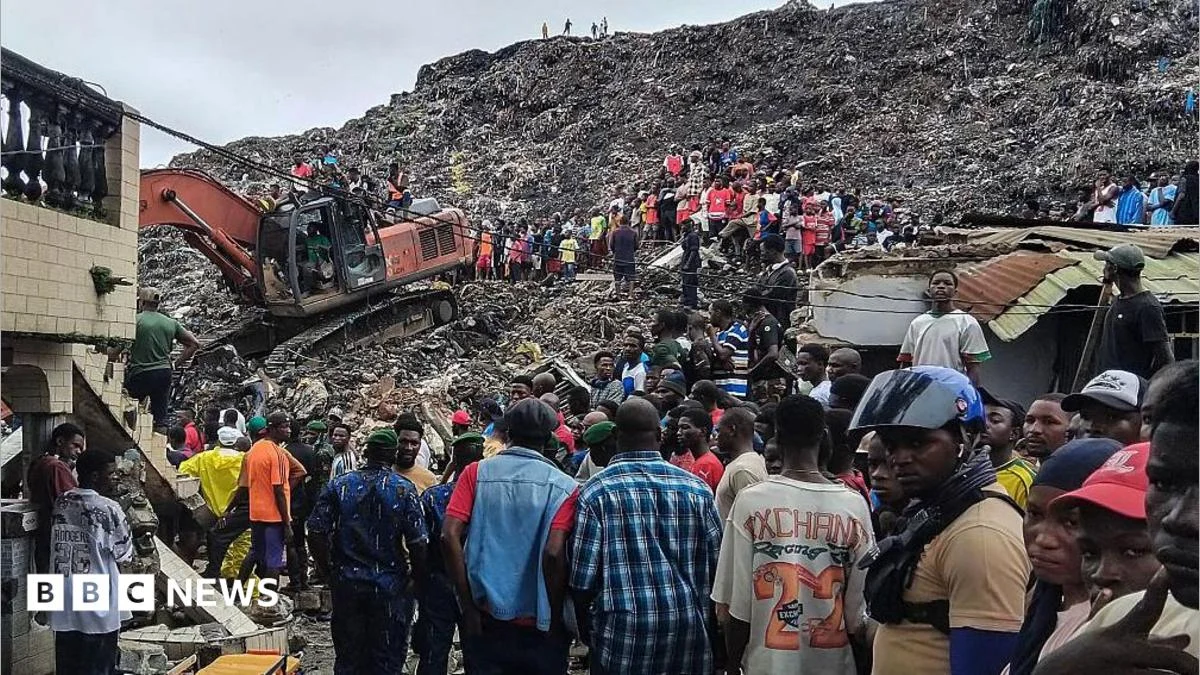
In response to the unfolding disaster, the Guinean government has mobilized substantial resources and personnel, including elements of the military, to conduct an exhaustive search for any potential survivors amidst the immense debris. The statement from the government underscored the gravity of the situation, emphasizing the immediate deployment of emergency services and a concerted effort to rescue those trapped beneath the colossal landslide of garbage. The sheer scale of the collapse has created a hazardous and unpredictable environment for rescue teams, who are working against time and under immense pressure to locate any signs of life.
The human cost of the disaster is heartbreakingly evident. One woman, speaking to local media outlets in the harrowing aftermath, shared the unimaginable grief of losing all five of her children in the collapse, a testament to the indiscriminate nature of the tragedy. The fear that the current death toll is likely to rise is a somber reality, as the full extent of the destruction and the number of people unaccounted for are still being determined. The mountainous piles of decomposing waste, now a deadly avalanche, have buried homes and livelihoods, leaving families shattered and communities in mourning.
Eyewitness accounts and images from the scene paint a grim picture of the rescue operations. Rescuers, armed with heavy machinery such as excavators, have been observed diligently sifting through the vast expanse of scattered rubbish, meticulously searching for survivors. The sheer volume of waste presents a formidable challenge, transforming the search into a painstaking and emotionally taxing endeavor. Local residents, their faces etched with a mixture of shock, sorrow, and desperate hope, have gathered near the disaster site, anxiously awaiting news of loved ones and offering what little support they can to the overwhelmed emergency responders. The sight of the community united in the face of such profound loss highlights the deep interconnectedness of the neighborhood.
The gravity of the situation has prompted a swift visit from Guinea’s Prime Minister, Mamadou Oury Bah, who arrived at the scene to personally assess the extent of the damage and to oversee the ongoing search and rescue efforts. The Prime Minister’s presence underscores the national significance of the tragedy and the government’s commitment to providing aid and support to those affected. His engagement with the rescue teams and local authorities is crucial in coordinating a comprehensive response and ensuring that all available resources are effectively utilized.
The dire predictions of a high death toll were voiced earlier by neighborhood leader Lancine Sylla, who spoke to the Agence France-Presse (AFP) news agency. He reported that as of his statement, 18 bodies had already been recovered and transported to the morgue, a grim confirmation of the catastrophic loss of life. His words provided an early indication of the scale of the disaster, painting a stark picture of the devastation that had befallen the Dar-es-Salam area. The chilling reality of these initial figures has sent ripples of fear and despair throughout Conakry.
This is not the first time that the fragile ecosystem of the Conakry landfill has posed a deadly threat to the surrounding population. Tragically, another landslide at the same site in 2017 resulted in the deaths of 10 people, a stark reminder of the inherent dangers associated with inadequate waste management and the precarious nature of living in close proximity to such an unstable environment. The recurrence of such a devastating event raises serious questions about the long-term sustainability of the landfill, the effectiveness of previous safety measures, and the urgent need for more robust infrastructure and urban planning to prevent future tragedies. The history of past incidents at this site amplifies the current tragedy and highlights a persistent failure to address critical safety concerns.
The Dar-es-Salam area, a densely populated district in Conakry, has been particularly hard-hit by the collapse. The proximity of homes to the waste mountain meant that the impact was immediate and devastating for many families. The sheer weight and volume of the collapsing refuse would have overwhelmed structures with little to no warning, leaving residents with no chance of escape. The aftermath reveals homes crushed and buried under tons of garbage, creating a surreal and horrifying landscape. The economic implications are also significant, as many of the affected residents likely lost not only their homes but also their livelihoods, further compounding the suffering caused by the disaster.
The accumulation of rubbish at the Conakry landfill has been a long-standing issue, exacerbated by rapid urbanization and inadequate waste disposal infrastructure. The sheer volume of waste generated by the growing population, coupled with insufficient management strategies, has led to the formation of increasingly unstable and hazardous mounds. Heavy rainfall, a common occurrence during Guinea’s rainy season, acts as a potent catalyst, saturating the waste and increasing its weight, ultimately leading to structural failures like the one witnessed in Dar-es-Salam. The environmental consequences of such a landfill are also severe, including the potential for groundwater contamination and the release of harmful gases, posing a long-term threat to public health and the environment.
The current tragedy serves as a stark wake-up call for the Guinean government and its urban planning authorities. It underscores the urgent need for comprehensive solutions to the city’s waste management challenges. This includes investing in modern waste disposal technologies, implementing effective recycling programs, and developing sustainable waste-to-energy initiatives. Furthermore, stringent regulations regarding the siting and management of landfills are essential, along with regular safety inspections and the relocation of communities living in close proximity to hazardous waste sites. The long-term vision must include a fundamental shift in how waste is managed, moving towards a circular economy model that prioritizes reduction, reuse, and recycling.
The international community is also likely to be called upon to provide assistance in the recovery and rebuilding efforts. The scale of the disaster may necessitate humanitarian aid, technical expertise in disaster management, and financial support for the affected communities and the reconstruction of damaged infrastructure. The lessons learned from this tragedy must be translated into concrete actions to prevent similar catastrophes in the future, ensuring the safety and well-being of the citizens of Conakry and Guinea as a whole. The memory of those lost must serve as a powerful impetus for change and a commitment to building a safer and more resilient future. The stories of loss and survival that emerge from Dar-es-Salam will undoubtedly shape public discourse and policy decisions for years to come, a somber reminder of the devastating consequences of neglecting critical infrastructure and environmental safety. The resilience of the human spirit will be tested in the coming days and weeks as the community grapples with the immense loss and begins the arduous process of recovery.




 atisusanti
 Ramos Leo
 Roy Suryo
 Nana Banana
 Nakalama John