
 George Anjay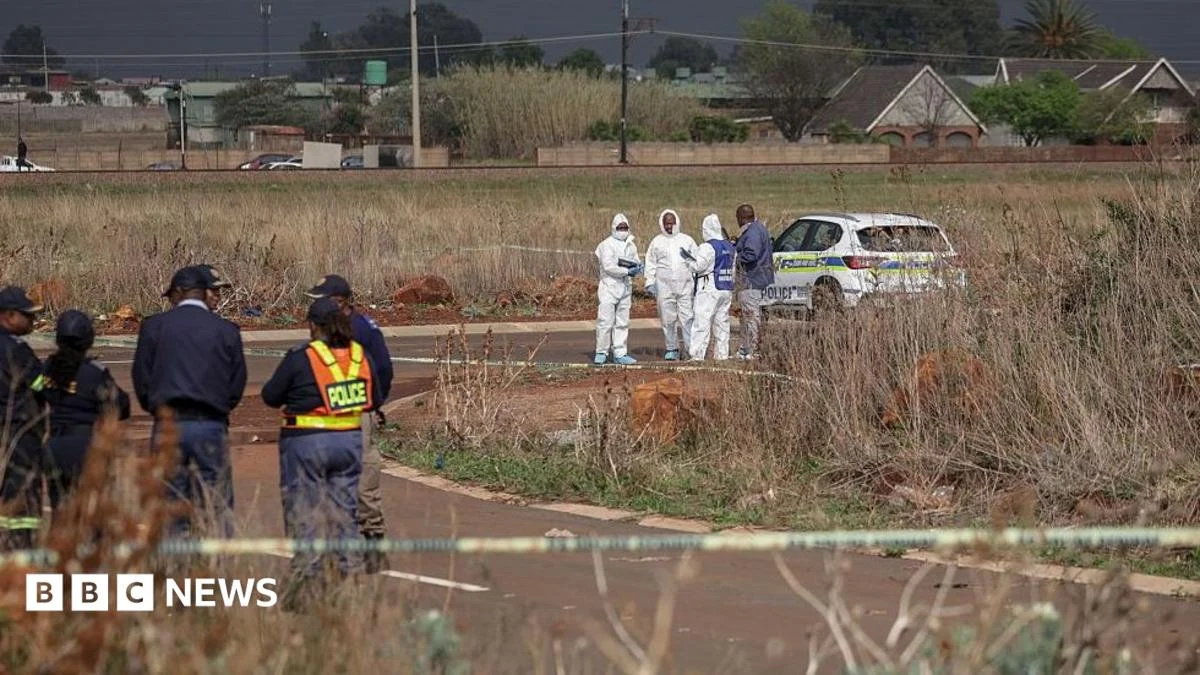
In a development that has sent ripples of both relief and continued apprehension through South Africa, authorities have apprehended three individuals in connection with the brutal murder of a woman in Dawn Park, an area east of Johannesburg. This arrest, described by police as a significant "breakthrough," comes amidst mounting pressure to address a chilling spate of nine recent homicides in the Ekurhuleni region, a cluster of killings that has starkly illuminated the pervasive and devastating levels of violence against women in the nation. The victims’ bodies, often discovered abandoned and partially clothed on the roadside, have painted a grim picture of the escalating crisis, prompting urgent calls for action from a deeply concerned public.
The detained suspects, comprising one man and two women, are slated to appear in court on Monday to face charges related to the murder of Jabulile Ntimba. Her half-naked body, discovered last Thursday wrapped in a sheet in Dawn Park, has become a focal point for the ongoing investigation. While several recent victims have been found in similar states of undress and bearing visible injuries, police have cautioned against premature conclusions, emphasizing that the exact connection between all nine cases and the potential involvement of a single serial perpetrator remains under rigorous scrutiny.
Lieutenant General Puleng Dimpane, the acting police chief, addressed the media on Monday, articulating the relentless efforts of her officers. "We are working tirelessly to bring those responsible to justice," she stated, underscoring the gravity of the situation and the commitment to achieving accountability. The arrests represent a crucial step forward in this arduous pursuit, offering a glimmer of hope in a climate marked by fear and outrage.
Elaborating on the complexities of the investigation, Deputy Police Chief Lieutenant General Tebello Mosikili revealed that a dedicated team of analysts is diligently working to establish any potential links between the nine cases. However, he indicated that the murder of Jabulile Ntimba "appears to be an indication of a murder that stemmed from a relationship… this includes… a possible love triangle." This suggests that while the broader pattern of killings is being explored for serial connections, individual motives and dynamics, particularly within intimate relationships, are also being thoroughly investigated. The possibility of a love triangle, a common catalyst for domestic disputes escalating to violence, adds another layer of complexity to the already harrowing circumstances.
South Africa grapples with a disturbingly high rate of gender-based violence, a crisis that has earned it a grim reputation on the global stage. This pervasive issue is compounded by an alarmingly high overall murder rate, creating a volatile environment where the safety of all citizens, and particularly women, is constantly under threat. While official statistics do not always disaggregate murder victims by gender in real-time, a recent, sobering estimate from the country’s Human Rights Commission painted a stark picture: between April and June of this year alone, an average of six women were murdered every day. This staggering figure underscores the daily reality of terror faced by many women across the nation.
The recent grim discoveries in Ekurhuleni have amplified a national outcry that has been building for years. The sheer brutality and the unsettling circumstances surrounding these deaths have intensified the feeling of insecurity among women, many of whom now feel their safety is precarious even in familiar surroundings. Social media platforms and community forums have been abuzz with discussions, protests, and pleas for greater protection and swifter justice. Women’s rights organizations have been at the forefront of these calls, demanding more robust policing, improved support systems for victims, and comprehensive strategies to address the root causes of gender-based violence.
The pressure on the South African Police Service (SAPS) to deliver tangible results has been immense. For weeks, the nation has been following the unfolding events with bated breath, oscillating between shock, anger, and a desperate hope for resolution. The announcement of these arrests, therefore, carries significant weight, not only in terms of potential justice for the victims and their grieving families but also as a signal that the authorities are responding to the crisis with a heightened sense of urgency.
The investigation into the Ekurhuleni killings is multifaceted. It involves meticulous forensic work, extensive witness interviews, and sophisticated data analysis to piece together the puzzle of how these women met their tragic ends. The discovery of bodies on roadsides points to a deliberate effort to conceal evidence or to send a chilling message, adding a macabre element to the crimes. The "breakthrough" announced by the police is likely the result of painstaking detective work, perhaps involving informants, surveillance, or the identification of a common thread that links the suspects to the victims.
The involvement of two women among the arrested suspects in a case that has predominantly been framed around violence against women by men is noteworthy. It highlights the complex dynamics that can exist within relationships and potentially points to a wider network of individuals involved in or aware of these crimes. This aspect of the arrests may also broaden the scope of the investigation, suggesting that the motives and methods employed might be more varied than initially assumed.
The upcoming court appearance on Monday will be closely watched by the public and the media. It will be the first formal step in the legal process, where the evidence against the accused will be presented, and their detention will be challenged or extended. The outcome of these proceedings will be crucial in determining the next phase of the investigation and in providing some measure of closure, however painful, for the families of the victims.
Beyond the immediate legal ramifications, these arrests have reignited the broader conversation about the societal factors that contribute to the epidemic of gender-based violence in South Africa. Issues such as patriarchy, toxic masculinity, socioeconomic disparities, and the legacy of historical injustices are frequently cited as underlying causes. Experts and activists argue that while law enforcement plays a vital role in apprehending perpetrators, a long-term solution requires a fundamental shift in societal attitudes and behaviors towards women.
The South African government has, in the past, implemented various strategies and launched campaigns to combat gender-based violence. However, the persistent high rates of these crimes suggest that these efforts, while well-intentioned, have not been sufficient to stem the tide of violence. The Ekurhuleni killings serve as a stark reminder of the urgent need for more effective interventions, including improved access to justice for victims, comprehensive prevention programs in schools and communities, and robust support services for survivors of abuse.
The feeling of insecurity for many women in South Africa is a palpable and pervasive reality. The constant threat of violence, whether in public spaces, at home, or even at the hands of intimate partners, casts a long shadow over their lives. The recent spate of murders has exacerbated these fears, leading to increased calls for greater police visibility, community safety initiatives, and stronger legislative measures to protect women.
The coming days and weeks will be critical in determining the full extent of the police’s success in this investigation. The hope is that these arrests will not only lead to justice for Jabulile Ntimba and potentially other victims but also serve as a catalyst for more comprehensive and effective action to combat the deeply entrenched problem of gender-based violence in South Africa. The nation watches, waits, and hopes for a future where its women can live without the constant fear of violence.



 Nakalama John

 Ramos Leo
 Roy Suryo