
 Ramos Leo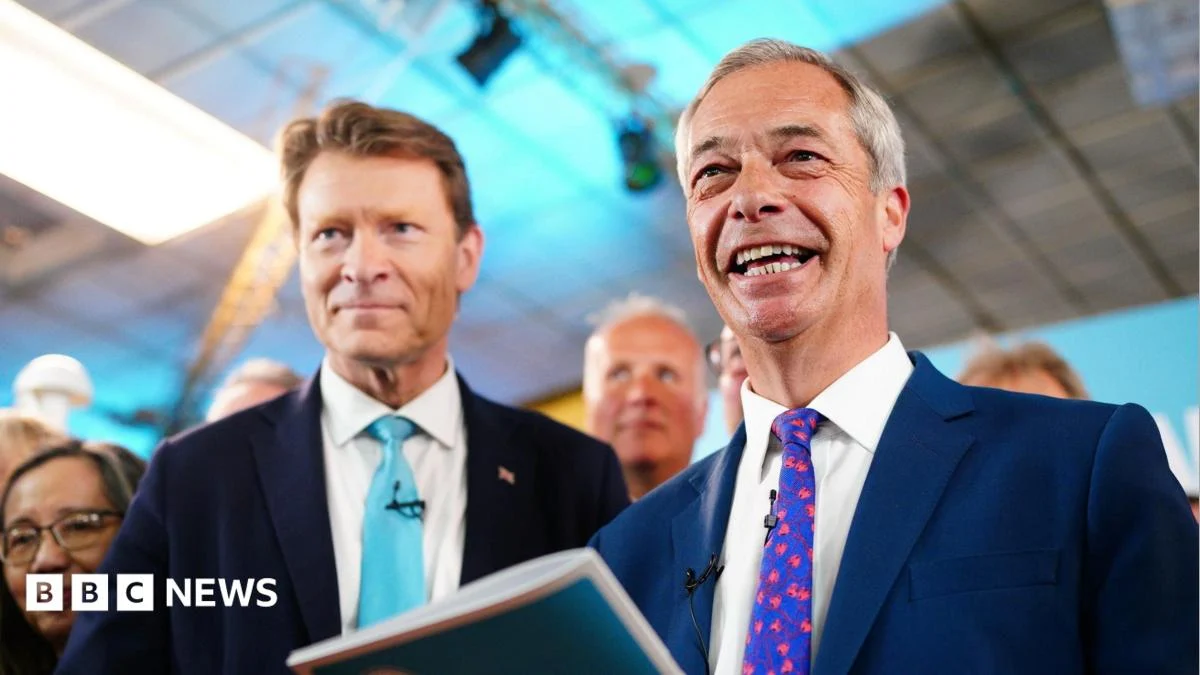
Speaking to Talk TV, Tice detailed the nature of the alleged breaches, claiming that highly sensitive information, including "individual bank statements, bank transfers, [and] details of conversations with bank managers from different banks," had been improperly disclosed to the media. This revelation marks a significant escalation in a controversy that has cast a shadow over Reform UK and its prominent figures, highlighting concerns about the integrity of official data handling within a key law enforcement body.
The legal action stems from a series of events that began last month when Tice formally wrote to the NCA. His letter requested an internal investigation into whether the agency was responsible for the leaking of private financial information that subsequently appeared in various media outlets. This proactive step by Tice was prompted by news reports indicating that certain payments made to his company, Britain Means Business, had been flagged to the NCA. These payments, originating from the mother of convicted fraudster George Cottrell, were reportedly identified as part of the NCA’s Suspicious Activity Reports (SARs) programme.
It is crucial to understand that SARs are not crime reports but rather intelligence submissions by financial institutions to alert law enforcement to potential instances of money laundering or terrorist financing. Their very nature necessitates strict confidentiality to protect ongoing investigations and the privacy of individuals whose activities are flagged. Tice underscored the seriousness of the alleged leak, stating that he only became aware of the SARs concerning his company when he was contacted by The Guardian newspaper, which was preparing to break the story. This suggested to him that the information could only have originated from within the sensitive SARs network.
In response to Tice’s initial complaint and subsequent media scrutiny, the NCA had initiated an internal investigation through its Professional Standards Unit. However, Tice conveyed his dissatisfaction with the pace and progress of this internal inquiry, telling Talk TV that the agency was "playing for time and we’ve said we’re done with it." This perceived lack of timely resolution appears to be a driving factor behind the decision to pursue legal recourse through the High Court. A Reform UK spokesperson confirmed that claims had been officially filed, though BBC News has not yet had access to the specific details of these claims. The NCA, in a formal statement, acknowledged the ongoing nature of its internal investigation, stating: "Following complaints brought by Richard Tice MP and Nigel Farage, the NCA’s Professional Standards Unit is conducting an investigation. That work is ongoing. It would not be appropriate to comment further at this time."
The backdrop to these allegations involves a complex web of financial transactions that have drawn scrutiny. As initially reported by The Telegraph, Tice’s company, Tisun Investment, received a loan amounting to £80,000 from George Cottrell in late 2023. Furthermore, in the same period, another of Tice’s companies, Britain Means Business, received a substantial £1 million donation from Cottrell’s mother. Electoral Commission data further illuminates this financial pathway, showing that Britain Means Business subsequently donated £500,000 to Reform UK within the same month. It was these specific payments that were flagged to the NCA under the SARs programme, triggering the chain of events that led to the current legal battle.
The relationship between Reform UK, Nigel Farage, and George Cottrell has been a subject of intense media and political interest in recent months. The Sunday Times previously reported that Cottrell had provided significant support to Farage, including security personnel and social media staff, in the year leading up to Farage’s recent election as an MP. This alleged support raises questions about parliamentary transparency rules. Under these regulations, newly elected Members of Parliament are required to declare any gifts or benefits received in the 12 months preceding their election, particularly if these relate to their "parliamentary or political activities." However, the rules include an exemption for gifts and benefits that are deemed "purely personal" in nature. Reform UK has consistently maintained that Farage did not breach parliamentary guidelines by failing to declare the support from Cottrell, arguing that the assistance was provided in a "purely personal capacity." This distinction is critical to Farage’s defence against any potential breaches of conduct rules.
The National Crime Agency (NCA) is the UK’s lead agency against serious and organised crime, with a broad mandate covering areas such as drug trafficking, cybercrime, child sexual exploitation, and economic crime, including money laundering. The integrity of its operations and the confidentiality of the intelligence it gathers are paramount to its effectiveness. Allegations of leaks from within such an agency are extremely serious, as they can compromise ongoing investigations, deter whistleblowers, and erode public trust in law enforcement. The SARs regime, in particular, relies heavily on the trust of financial institutions that the sensitive information they provide will be handled with the utmost discretion. A breach in this system could have far-reaching implications for the UK’s ability to combat illicit financial flows.
The decision by Tice and Farage to sue the NCA is a bold move, especially given the agency’s role and the politically charged environment. It signals their determination to vigorously defend their reputations and challenge what they perceive as an abuse of power or a dereliction of duty by a state agency. The lawsuit places the spotlight not only on the alleged leaks but also on the underlying financial transactions and the transparency of political donations. In an era where political financing is under constant scrutiny, the connection to a convicted fraudster, even if indirect through his mother, inevitably draws public attention and raises questions for the party involved.
For Reform UK, this lawsuit comes at a critical juncture. With Nigel Farage’s recent re-entry into frontline politics and his party’s surging popularity in opinion polls, any controversy surrounding financial dealings or the integrity of its leaders carries significant weight. The party aims to present itself as a clean, anti-establishment force, and allegations involving opaque financial dealings or breaches of privacy by state agencies can either undermine or galvanise their support base, depending on how the narrative unfolds. The legal process is often protracted and complex, and the outcome of this High Court claim will undoubtedly be watched closely by political observers, the media, and the public alike, as it could have profound implications for the individuals involved, the National Crime Agency, and the broader political landscape.

 George Anjay
 Nakalama John
 atisusanti
 Roy Suryo
 Nana Banana