
 Nakalama John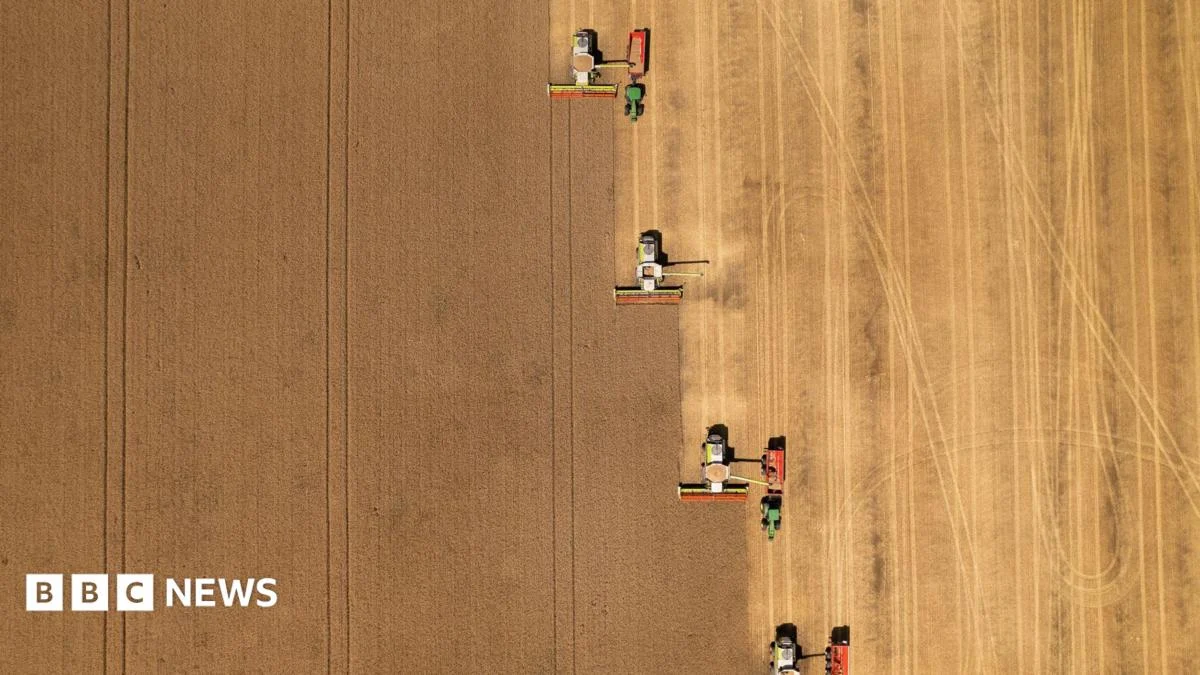
The severity of the situation is underscored by official meteorological data. England and Wales experienced their driest July since records began 190 years ago, a stark indicator of the prolonged lack of rainfall. This prolonged aridity has led to a drought being formally declared across vast swathes of the country by the Environment Agency, impacting water availability for both public consumption and vital agricultural use. The declaration of a drought triggers specific measures, including potential restrictions on water usage for households and businesses, and significantly complicates farmers’ ability to irrigate crops and water livestock.
The agricultural sector is already quantifying the devastating losses. The Energy and Climate Intelligence Unit (ECIU), a respected thinktank, estimates that the UK’s cereals and oilseed harvest could be 2.5 million tonnes less than earlier, more optimistic forecasts. This deficit translates into substantial financial losses for farmers, with the ECIU estimating a staggering £390 million in lost revenue. Such a significant financial hit threatens the livelihoods of countless farming families and could destabilise rural economies already grappling with rising input costs.
Tim O’Malley, the seasoned chairman of Nationwide Produce, a major supplier, described the current conditions as "as bad as its ever been." His assessment points to a future where shoppers will undoubtedly encounter the tangible effects of this crisis at the checkout. Higher prices are almost a certainty, but the more insidious impact, O’Malley warns, will be the widespread adoption of shrinkflation – a tactic where product sizes decrease while prices remain constant or even increase.
The impact extends across fundamental food staples. The harvest of barley, oats, and rapeseed – crops crucial for a range of products from beer and breakfast cereals to vegetable oil and livestock feed – is projected to plummet to just 19.5 million tonnes. This figure represents the worst yield since records for these crops began in 1984, surpassing the previous low of 19.8 million tonnes recorded in 2020. The decline in these staple crops has a ripple effect throughout the entire food chain, particularly impacting the cost and availability of meat and dairy products due to increased feed prices for livestock.
O’Malley elaborated on the looming shrinkflation, telling Radio 5 Live’s Wake Up to Money that consumers would feel the pinch acutely in the vegetable aisle. "I think we’re going to see shrinkflation," he asserted. "The problem we’re going to have this year is a massive reduction in yield and major quality issues." He explained that the stress on crops from the lack of water and extreme heat results in smaller sizes and compromised quality for fresh produce. "We’ve got crop with stress or we’ve got quality issues. So you will see a smaller crop," O’Malley stated, implying that the aesthetically pleasing, uniformly sized vegetables consumers are accustomed to may become rarer.
Supermarkets, O’Malley believes, will initially "do everything" in their power to absorb costs and maintain existing price points, conscious of the broader cost of living crisis affecting consumers. However, he cautioned that this strategy is unsustainable in the long term. "Eventually they will probably have to come to the party and increase the price, particularly if they start importing." This prediction is already manifesting, as grocers are increasingly forced to source produce from abroad to compensate for the abysmal conditions at home. "We’re importing broccoli and iceberg from Spain at this time of year, which in August [is] unheard of," O’Malley revealed, highlighting the abnormal reliance on international supply chains during what should be peak British growing season. He expects this trend to intensify, lamenting, "I think we’re going to see more of that, unfortunately."
The veteran produce chairman painted a grim picture of the overall agricultural landscape. "Loud and clear, it’s grim out there. I think it’s as bad as it’s ever been… Every record is being broken." He drew a crucial distinction between this year’s challenges and previous periods of extreme weather. "The difference in this year and last year, last year we had four heat waves. But in between them we had a bit of rain." This year, the relentless dry spell, coupled with successive heatwaves, has offered no respite for parched fields or struggling crops.
Farmers typically rely on a combination of stored winter rainfall and abstraction – drawing water from natural sources like groundwater, rivers, and streams – to sustain their crops and livestock during the summer months. However, this summer’s unprecedented low rainfall has drastically reduced the availability of both surface and groundwater. The Environment Agency’s declaration of drought conditions across half of England and the entirety of Wales reflects this severe water scarcity. Wales has received a paltry 8% of its average rainfall so far this month, while England has fared even worse with just 7% of its average, a figure that drops to a critical 1% across southern England. Compounding the problem, the high temperatures and repeated heatwaves have significantly increased evaporation rates, particularly impacting river levels and further diminishing available water resources.
The scientific consensus is clear: climate change is a key driver behind these increasingly severe weather patterns. The UK is expected to experience more intense, frequent, and prolonged heatwaves in future summers, which will inevitably lead to more acute water shortages for the agricultural sector. This necessitates a fundamental re-evaluation of farming practices and infrastructure to build greater resilience against a changing climate.
Tom Lancaster, land, food, and farming analyst at the ECIU, highlighted the profound disappointment among farmers. "At the start of spring farmers were hopeful of a better year, but the dry April and July and record-breaking heat have left farmers facing down the barrel of a third awful harvest in a row." This successive run of poor harvests puts immense strain on businesses, eroding financial reserves and making future investments precarious. Lancaster unequivocally stated, "Farming is now the sector most exposed to climate change and the risks and damage that it brings." This exposure manifests not just in drought, but also in increased pest pressures, unpredictable rainfall patterns, and extreme weather events.
Martin Lines, head of the Nature Friendly Farming Network and a farmer from Cambridgeshire, echoed the sentiment of despair, describing this year’s harvest as "a real kick in the teeth." He recounted the initial optimism that quickly turned to crushing disappointment: "After two terrible harvests in a row, the crops this year were looking good and full of potential coming out of spring, only for months of drought and heatwaves to destroy any prospect of a decent harvest." The personal toll on farmers is immense, as years of hard work and investment are jeopardised by forces beyond their control. "I’ve never known it this dry and hot on our farm," Lines confessed, his words underscoring the unprecedented nature of the current crisis. Perhaps most significantly, he observed a shift in perspective even among those previously sceptical of climate change: "Even farmers I know who were sceptical of climate change are now saying they’re really worried about the future of their businesses and production, it’s just been completely brutal for our industry." This widespread concern points to a growing recognition of the urgent need for adaptation and mitigation strategies across the agricultural sector to safeguard the nation’s food security and the future of farming.



 atisusanti
 Nana Banana
 George Anjay
 Ramos Leo