
 Ramos Leo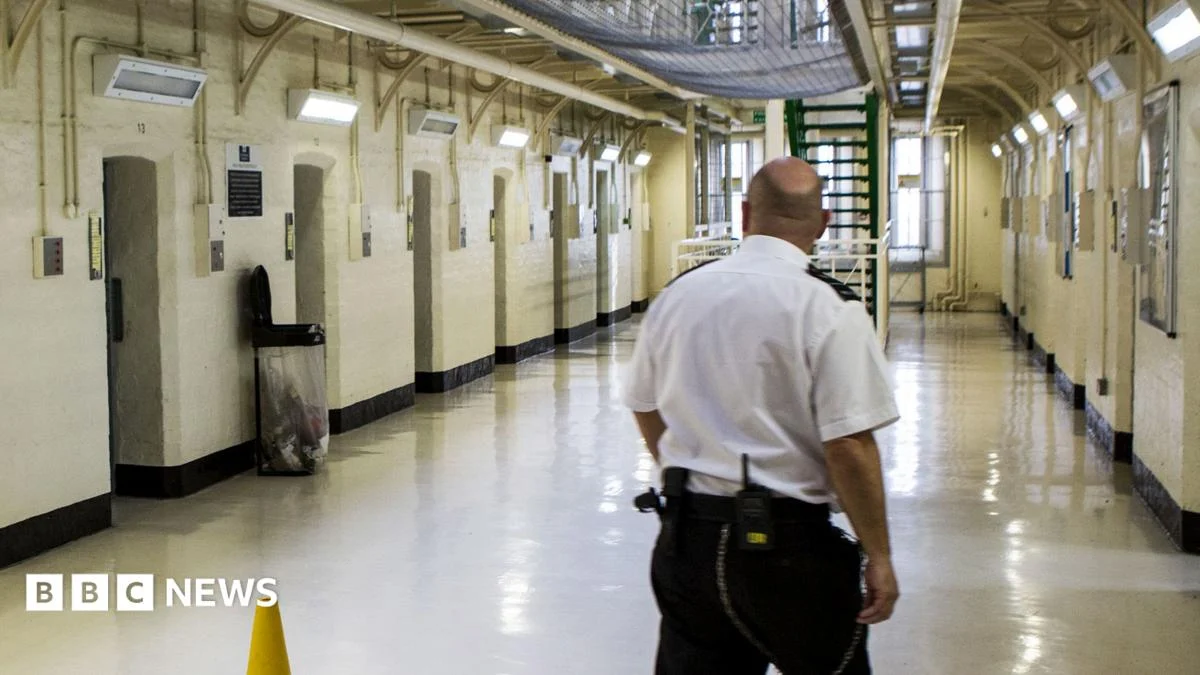
The escalating crisis has placed considerable pressure on the government, with the Justice Secretary, Andy Burnham, at the forefront of efforts to navigate the complex landscape of public safety, victim advocacy, and correctional capacity. Recent weeks have seen Burnham face intense scrutiny after he was compelled to make more prisoners exempt from a proposed early release scheme following widespread backlash, particularly from victims’ groups and the wider public who feared a dilution of justice. This scheme, designed to alleviate the severe strain on prison places, has become a political lightning rod, exposing the deep divisions between the pragmatic needs of the justice system and the public’s demand for punitive measures.
The controversy reached a fever pitch with the revelation that the individuals responsible for the tragic death of PC Andrew Harper might still be eligible for early release under the original parameters of the scheme. This particular case has become a touchstone for the debate, symbolizing the perceived injustices that victims and their families fear could be perpetrated by such policies. PC Harper, a 28-year-old police officer, was tragically killed in the line of duty in August 2019. He was dragged for more than a mile down a country road in Berkshire by a car as three teenagers fled the scene of a quad bike theft. The horrific nature of his death, and the subsequent convictions of his killers for manslaughter rather than murder – a verdict that itself sparked considerable public anger and calls for reform – has etched the case into the national consciousness. The prospect of these individuals being granted an early reprieve from their sentences has ignited a fierce public outcry, demanding immediate government intervention.
Last week, Justice Secretary Burnham publicly expressed his "confidence" that PC Harper’s killers could be effectively excluded from the government’s early release scheme, a statement aimed at reassuring a deeply concerned public and mitigating further political damage. This assertion, however, hints at the complex legal and administrative hurdles involved in carving out exemptions from a broad policy. It requires a delicate balance of legal interpretation, ministerial discretion, and a robust defense against potential challenges. The government’s ability to implement such an exclusion without undermining the legal integrity of the broader scheme, or setting problematic precedents, remains a critical test of its resolve and competence.
In a written article published on August 3rd, Burnham elaborated on his personal struggle with the policy, stating that he had "wanted to go even further" in restricting eligibility but had "pushed to the very limits of what is possible to do." This candid admission reveals the inherent tension between a minister’s personal convictions and the constraints imposed by existing legal frameworks, judicial independence, and the practicalities of a system teetering on the brink. The "limits" he refers to likely encompass the intricate web of sentencing guidelines, human rights legislation, and the operational capacity of the probation and tagging services. Expanding these limits often requires legislative changes, which are time-consuming and politically charged, or a re-evaluation of fundamental principles of justice.
A spokesperson for the Ministry of Justice echoed the government’s official stance, asserting unequivocally that "public safety will always be our priority." They further detailed the proactive steps being taken: "We are fast-tracking a plan to keep more of the most serious offenders behind bars, on top of murderers, anyone on life sentences and those in prison for rape, serious child sexual abuse and grooming offences who are already blocked from any changes." This commitment outlines a tiered approach to managing the prison population, ensuring that the most dangerous and heinous offenders remain incarcerated, regardless of the capacity crunch. The statement implicitly acknowledges the public’s anxiety and seeks to differentiate between categories of offenders, emphasizing that the most severe cases are not being considered for early release.
The MoJ spokesperson also articulated the government’s shared frustration with the predicament, stating, "We share the public’s anger that these options are even being considered, after we inherited a prison system on the brink of collapse." This phrase points to a narrative of inherited problems, deflecting some of the immediate blame onto previous administrations and framing the current government’s actions as a necessary, albeit undesirable, response to a pre-existing crisis. The "brink of collapse" rhetoric is a powerful one, designed to impress upon the public the severity of the situation and the constrained choices available to policymakers.
The underlying causes of this unprecedented overcrowding are multifaceted. A sustained increase in the prison population, driven by longer average custodial sentences, a greater number of individuals being sent to prison for various offences, and a backlog in court cases exacerbated by the COVID-19 pandemic, has converged with a historical underinvestment in prison infrastructure. For years, the number of available prison places has struggled to keep pace with the rising inmate numbers. This structural imbalance has created a system operating at or near full capacity for an extended period, leaving no margin for error or unexpected surges. The "less than 1,800 free spaces" figure represents not merely a statistical point but a critical failure of long-term strategic planning and resource allocation.
The consequences of such severe overcrowding are far-reaching and detrimental to all aspects of the justice system. Overcrowded prisons are inherently less safe environments for both prisoners and staff. They lead to increased instances of violence, self-harm, and mental health crises. The ability to offer meaningful rehabilitation programmes, crucial for reducing reoffending, is severely hampered when facilities are stretched beyond their limits. Education, vocational training, and therapeutic interventions become luxuries rather than standard provisions, ultimately undermining the very purpose of incarceration beyond mere containment. This creates a vicious cycle where a lack of effective rehabilitation increases the likelihood of reoffending, further perpetuating the demand for prison places.
The government’s strategy to address this crisis involves several prongs. The commitment to "building more prisons" is a long-term solution, with plans for several new facilities and expansions of existing ones. However, prison construction is a slow and expensive process, often taking years to complete, meaning these new places will not alleviate the immediate pressure. The "expansion of electronic tagging" offers a more immediate alternative, allowing individuals to serve parts of their sentences in the community under strict supervision. While this frees up prison places, it also raises questions about public confidence in monitoring systems and the potential risks associated with releasing offenders earlier into the community. The balance between effective monitoring and public safety is paramount.
Politically, the prison crisis has become a significant liability for the government. Opposition parties are quick to criticize the perceived mismanagement of the justice system and the potential erosion of public safety. Victims’ rights groups, bolstered by powerful campaigns, exert immense pressure on policymakers to prioritize justice and security over administrative convenience. The Justice Secretary finds himself in the unenviable position of balancing these competing demands while attempting to implement pragmatic solutions to an acute operational problem. The narrative of "inherited problems" can only go so far; ultimately, the current administration will be judged on its ability to stabilize and reform the system.
Looking ahead, the challenge for England and Wales’s justice system extends beyond simply finding more beds. It necessitates a comprehensive re-evaluation of sentencing policies, rehabilitation strategies, and the role of incarceration in modern society. Are current sentencing lengths appropriate? Could more non-custodial sentences be effectively utilized for certain offences? What investment is needed in probation, mental health services, and addiction support to prevent reoffending? The immediate scramble for capacity, driven by the fewer than 1,800 free spaces, serves as a stark reminder that a reactive approach to criminal justice is unsustainable. A long-term, holistic strategy is desperately needed to ensure public safety, deliver justice, and create a correctional system that genuinely rehabilitates rather than simply warehouses offenders. The fate of PC Andrew Harper’s killers, and indeed the broader prison population, hangs in the balance as the government grapples with one of the most pressing domestic policy challenges of its tenure.



 George Anjay
 Nakalama John
 atisusanti
 Roy Suryo
 Nana Banana