Ramos Leo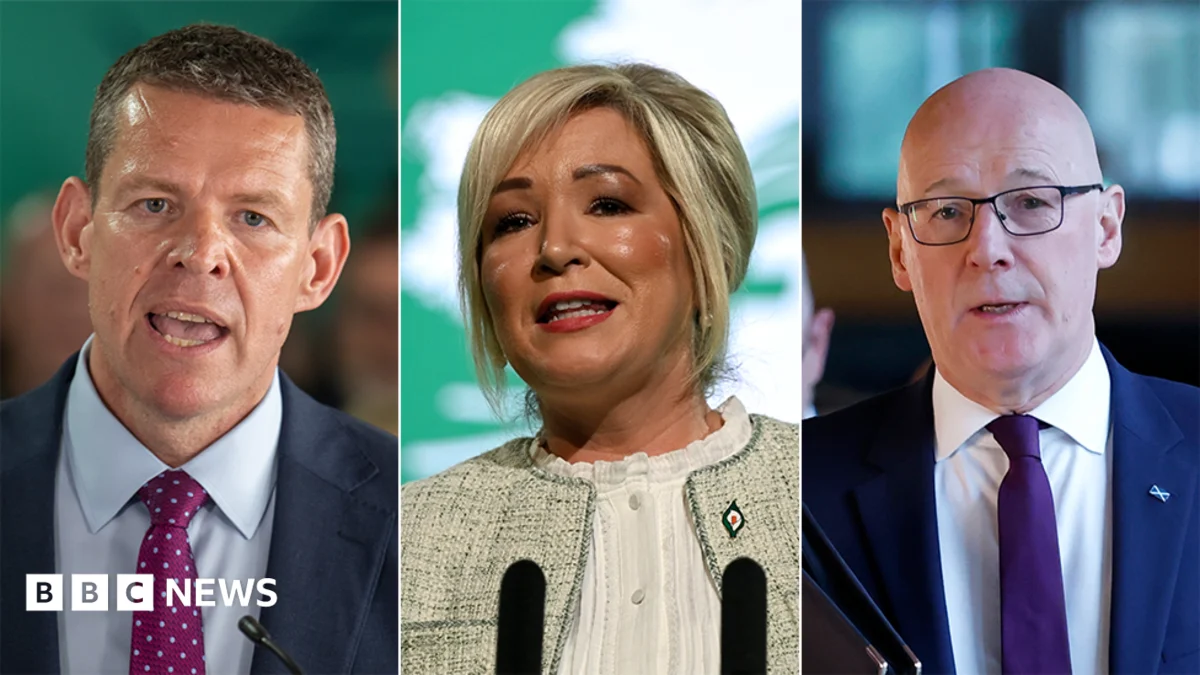
The summit will see Plaid Cymru’s Rhun ap Iorwerth, in his capacity as the First Minister of Wales, welcome the Scottish National Party’s (SNP) leader and First Minister of Scotland, John Swinney, alongside Sinn Féin’s Michelle O’Neill, the First Minister of Northern Ireland. Adding further weight to the Sinn Féin delegation and underscoring the party’s strategic intent, its president, Mary Lou McDonald, will also be in attendance. This gathering gains particular resonance as it is the first such trilateral meeting since Rhun ap Iorwerth assumed the leadership of Wales in May, marking a historic shift in Welsh politics as the first non-Labour First Minister.
The morning session is slated for these four prominent nationalist leaders to engage in wide-ranging discussions. A Plaid Cymru spokesperson articulated the core objective, stating the meeting presents "an opportunity for the leaders of Plaid Cymru, the SNP and Sinn Féin to come together and talk about how we can work more closely on the issues that matter to people across our nations." This commitment to practical cooperation extends beyond immediate governance issues to encompass more profound constitutional considerations. The spokesperson further elaborated, citing the "historic Senedd election in Wales and the changing political landscape across these islands" as creating "a strong case for practical political cooperation on areas including energy, the economy and our relationship with Europe, as well as on the wider political and constitutional questions facing our nations and on the right to self-determination."
Following the joint session, First Minister ap Iorwerth is scheduled to hold further bilateral talks with Scotland’s John Swinney in the afternoon. This focused discussion is anticipated to culminate in the signing of a formal agreement outlining "future collaboration in areas of shared interest." While the precise details of this accord remain under wraps, it is expected to formalise channels for joint policy development, shared lobbying efforts to Westminster, and potentially even coordinated approaches to international engagement, all aimed at amplifying the collective voice of the devolved nations.
The profound significance of this meeting cannot be overstated. For the first time since the advent of devolution in the late 1990s, all three devolved administrations are led by parties whose long-term aspirations include a fundamental reimagining of their relationship with the United Kingdom, ranging from increased autonomy to full independence. This shared constitutional ambition provides a potent, unifying undercurrent to the discussions, even as the immediate political and economic realities of each nation differ.
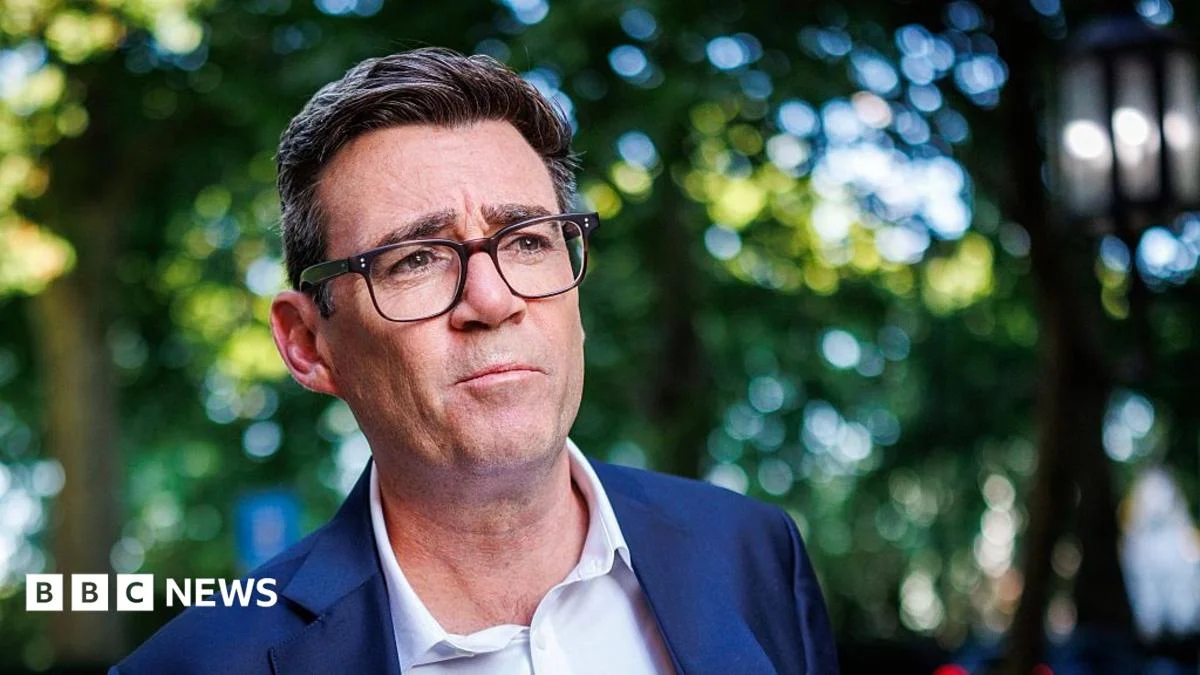
John Swinney, a veteran of Scottish politics, has been particularly vocal about the perceived momentum behind constitutional change. "Every nation across these islands is standing at a moment of incredible constitutional opportunity," he asserted, reflecting a sentiment shared by his Welsh and Northern Irish counterparts. He critically assessed the prevailing governance model, stating, "There is a growing consensus that the Westminster system simply is not fit for purpose and does not work for ordinary people." Swinney even referenced Prime Minister Andy Burnham’s own acknowledgments regarding the system’s shortcomings, arguing that "the people of Scotland, Wales and Northern Ireland have made it clear at the ballot box."
The timing of these meetings is especially pertinent, occurring just days after the contentious issue of Scottish independence once again took centre stage in the House of Commons. During a recent Prime Minister’s Questions, Andy Burnham appeared to indicate a potential softening of his stance on a second Scottish independence referendum. He suggested that such a vote could be held if there was "clear public support," drawing a parallel with the conditions stipulated for a border poll in Northern Ireland under the Good Friday Agreement. Burnham explained that the Agreement mandates a border poll be "considered by the Northern Ireland Secretary when there is a clear consensus in the country, when public opinion has changed to the point where the call has to be considered," adding, "I would say that it is exactly the same situation in Scotland."
This apparent shift in tone was initially welcomed by Swinney and other pro-independence figures, who interpreted it as a significant concession. However, the optimism proved short-lived as Prime Minister Burnham subsequently clarified that another Scottish referendum remained firmly "off limits," reiterating the UK government’s consistent position. This episode highlights the delicate and often contradictory nature of Westminster’s engagement with the constitutional aspirations of the devolved nations. The last referendum on Scottish independence, held in September 2014, saw 55% of voters opt to remain part of the UK, with 45% voting for independence.
In Wales, Rhun ap Iorwerth’s ascent to First Minister following May’s Senedd election represented a seismic shift, ending decades of Labour dominance. While he has prudently ruled out pursuing a referendum on Welsh independence during his party’s initial term in government, he has committed to initiating a "national conversation" about the issue. His administration intends to establish a national commission specifically tasked with "laying the foundations" for future plans concerning Welsh independence. Simultaneously, Welsh ministers are actively lobbying for a transfer of additional powers from Westminster to Cardiff, including crucial responsibilities over policing and youth justice – a move Prime Minister Burnham has indicated he is "open" to considering.
Northern Ireland’s unique power-sharing arrangements mean that the First and Deputy First Ministers hold identical powers and responsibilities. Michelle O’Neill, representing Sinn Féin, serves as First Minister, while Emma Little-Pengelly of the Democratic Unionist Party (DUP) holds the position of Deputy First Minister. Little-Pengelly, a prominent voice within the unionist DUP, publicly criticised O’Neill’s attendance at the Cardiff meeting, underscoring the deep political divisions that persist within Northern Ireland regarding its constitutional future.
Beyond constitutional matters, Monday’s talks are expected to delve into the contentious issue of how the devolved nations are funded by the UK government. The long-standing Barnett funding formula, which determines allocations to Scotland, Wales, and Northern Ireland, has been a persistent source of friction. Welsh ministers have consistently argued that the formula disadvantages Wales, leading to underfunding of essential public services. Conversely, it is often argued that Scotland benefits disproportionately from the Barnett formula. Prime Minister Burnham, prior to assuming his current office, had advocated for reform of the formula, but during his recent visit to Wales, he played down the immediate prospect of such changes, illustrating the political complexities inherent in any reform efforts.
The devolved leaders are scheduled to meet with the Prime Minister next month, an engagement that will undoubtedly be shaped by the outcomes and unified messaging emerging from the Cardiff summit. In anticipation of these discussions, the UK government reaffirmed its commitment to the Union, with a spokesperson stating, "The prime minister is committed to delivering change across all four nations of the United Kingdom and believes strongly in the union."
The gathering has not been without its critics. Darren Millar, the leader of the Welsh Conservatives, expressed his disapproval, stating, "Instead of obsessing about independence, the first minister should be focused on dealing with the crisis engulfing the Welsh NHS and the declining standards in Welsh schools." Similarly, Reform UK Wales launched a scathing critique, asserting, "Plaid Cymru is showing its true colours by meeting with Sinn Féin and the Scottish separatists." These reactions highlight the deep ideological fault lines within UK politics regarding the future of the Union and the legitimacy of collaboration between nationalist parties.
The Cardiff summit represents more than just a formal meeting; it is a powerful symbolic act of solidarity among the devolved nations’ nationalist leaders. It signals a growing intent to forge a united front, not merely to articulate grievances against Westminster, but to actively explore and collaborate on alternative constitutional futures. Whether this collaboration translates into tangible policy shifts or accelerated constitutional change remains to be seen, but its significance as a precursor to potential future actions cannot be understated. The discussions on shared challenges like energy policy, economic development, and post-Brexit relations with Europe further underscore a desire for practical cooperation that transcends mere constitutional debate. The world will be watching to see if this alliance can indeed shift the "constitutional opportunity" Swinney speaks of into concrete steps towards a reconfigured United Kingdom, or perhaps, a collection of independent nations.



 George Anjay
 Nakalama John
 Nana Banana