
 George Anjay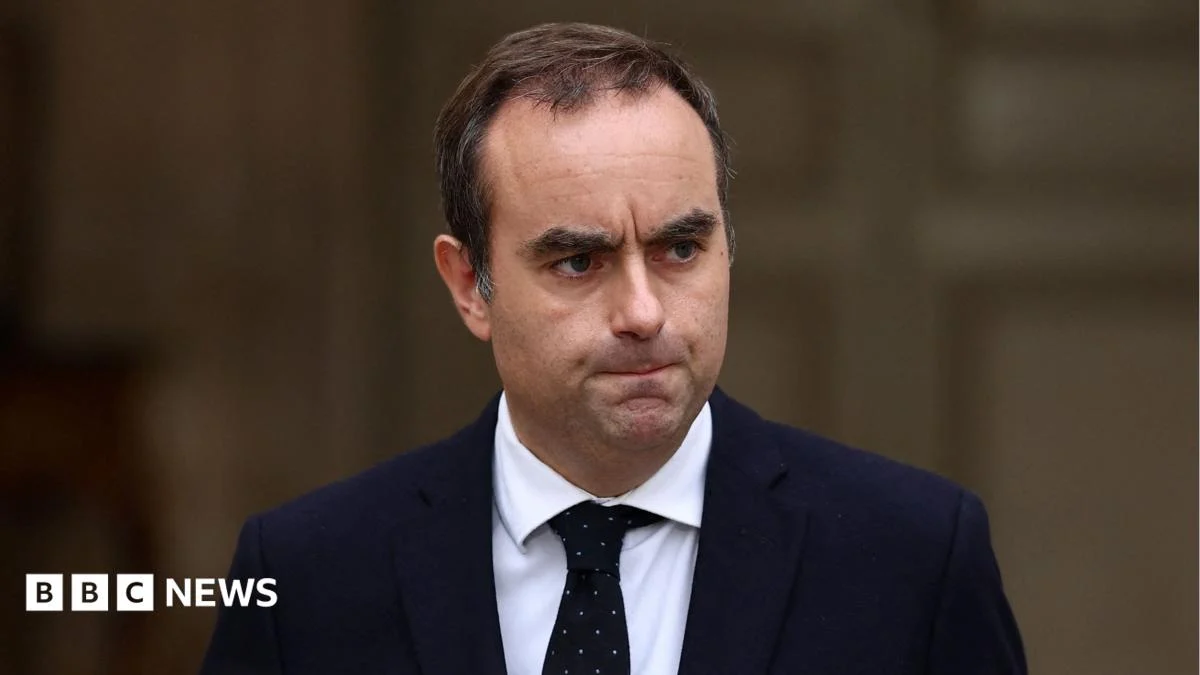
France’s Prime Minister Sébastien Lecornu has issued a stern warning against any escalation of the current wave of student protests gripping the nation, deeming such actions "irresponsible" following the arrest of 164 individuals on Monday. The demonstrations, which originated in Paris and have seen teenagers engaging in school blockades for several consecutive days, are fueled by deep-seated grievances including chronic overcrowding in classrooms and a persistent shortage of qualified teachers. Prime Minister Lecornu, in a pointed statement on the social media platform X, highlighted reported incidents of unrest at protest sites, declaring, "Fireworks, fires, violence near high schools: nothing justifies endangering students, staff, or police officers." His remarks underscore the government’s concern over the increasingly volatile nature of the protests.
However, a prominent French union dedicated to advocating for the rights and interests of high school students has countered the government’s narrative, characterizing the demonstrations as a "legitimate response" to the deteriorating educational conditions faced by young people across the country. This union argues that the current situation is not an isolated incident but a direct consequence of years of underfunding and policy decisions impacting the national education system.
The scale of the unrest was further underscored by Interior Minister Laurent Nuñez, who reported that on Monday alone, 12 members of the security forces, 12 students, and three school staff members sustained injuries. Furthermore, a significant 180 schools were reportedly affected by the protests, highlighting the widespread disruption. While Minister Nuñez provided figures for arrests, he refrained from offering further details regarding the identities or specific charges faced by those taken into custody.
The movement, predominantly occurring in French lycées—institutions analogous to sixth-form colleges in the United Kingdom or high schools in the United States—initially gained momentum last week in the Île-de-France region, encompassing Paris and its surrounding areas. Reports have emerged of vandalism, the deployment of fireworks directed at police officers, and a general escalation of tensions. These localized disturbances have since rippled outwards, spreading to other regions throughout France, indicating a growing national discontent.
According to reports from the Agence France-Presse (AFP) news agency, at least four high schools in the southern departments of Alpes-Maritimes and Var were blockaded. Protests have also been documented in major urban centers such as Marseille, in the northern Lille area, and in Sedan, located in the northeastern Ardennes region. This geographical diffusion of the protests suggests a shared sentiment of dissatisfaction among students nationwide, transcending regional boundaries.
The Union Syndicale Lycéenne, a key representative body for students, has vociferously defended the protests, articulating their concerns in a public statement on social media. The union squarely attributed the current educational crisis to what they describe as "10 years of Macron’s policies and the lack of resources in the national education system." Their statement detailed a litany of persistent issues plaguing French schools, including a severe "lack of teachers and staff, dilapidated schools, overcrowded schedules and classes, [and] stress caused by Parcoursup." Parcoursup, the government-mandated online platform used for university applications in France, has become a particular point of contention, exacerbating student anxiety and pressure. The union asserted that these problems are not inherent but are the direct outcome of policy choices and insufficient financial investment. In a clear call to action, they urged students to continue blockading schools on Tuesday, framing it as a necessary defense of "their rights and against budget austerity."
The timing of the student protests is also significant, as it coincides with broader industrial action. On the same day that Prime Minister Lecornu issued his warning, unions representing teachers, hospital staff, and civil servants also organized a day of walkouts. These collective actions aim to voice grievances related to low wages, deteriorating working conditions, and a perceived lack of adequate public sector funding. The convergence of these disparate protest movements suggests a wider societal discontent with the government’s handling of public services and economic policies.
In his response to the student movement, Prime Minister Lecornu acknowledged the validity of some student concerns, stating that "the difficulties of high schools must be heard and addressed." However, he drew a firm line, emphasizing that "violence must be condemned unequivocally, and its perpetrators must answer for their actions." This dual approach—acknowledging grievances while denouncing violence—reflects the government’s attempt to manage the situation without conceding to what they perceive as illegitimate tactics.
Adding a political dimension to the unfolding crisis, the Prime Minister accused the far-left La France Insoumise (LFI) party of actively encouraging students to broaden the scope and intensity of the movement. This accusation points to a deepening political polarization surrounding the protests, with different political factions seeking to leverage the student unrest for their own agendas. Jean-Luc Mélenchon, the leader of LFI, has vehemently denied these accusations, instead blaming the Lecornu government for initiating a "crackdown" on what he described as "harmless" high school students. Mélenchon’s rhetoric frames the students as victims of an overzealous state response.
Minister Nuñez, however, offered a starkly different assessment of the protests, characterizing them as "not very typical protest movements." He elaborated on his concerns, stating, "It is much more like urban violence, with a number of individuals who were masked, equipped with fireworks in tubes, equipped with projectiles, who clearly wanted to confront the internal security forces." Nuñez went further, asserting that the actions observed were not aimed at articulating specific demands but constituted "violence in its purest form." This portrayal seeks to reframe the protests from a legitimate expression of student grievances to a more generalized outbreak of lawlessness, justifying a more robust law enforcement response.
Since the commencement of the protests, numerous incidents involving confrontations between students and police officers have been reported. One particularly concerning incident, detailed by France’s BFMTV, involved a police officer allegedly firing a round from a crowd-control grenade launcher, resulting in an injury to a high school student. Investigations into such incidents have reportedly been initiated, indicating that the authorities are aware of and attempting to address allegations of excessive force. These reports, coupled with the ongoing school blockades and clashes, paint a picture of a nation grappling with significant social and educational challenges, where the lines between legitimate protest and disruptive violence have become increasingly blurred. The government’s challenge lies in addressing the underlying issues driving the student discontent while simultaneously restoring order and ensuring the safety of students, staff, and the public.

 Ramos Leo
 Nakalama John
 Nana Banana
 atisusanti