
 Ramos Leo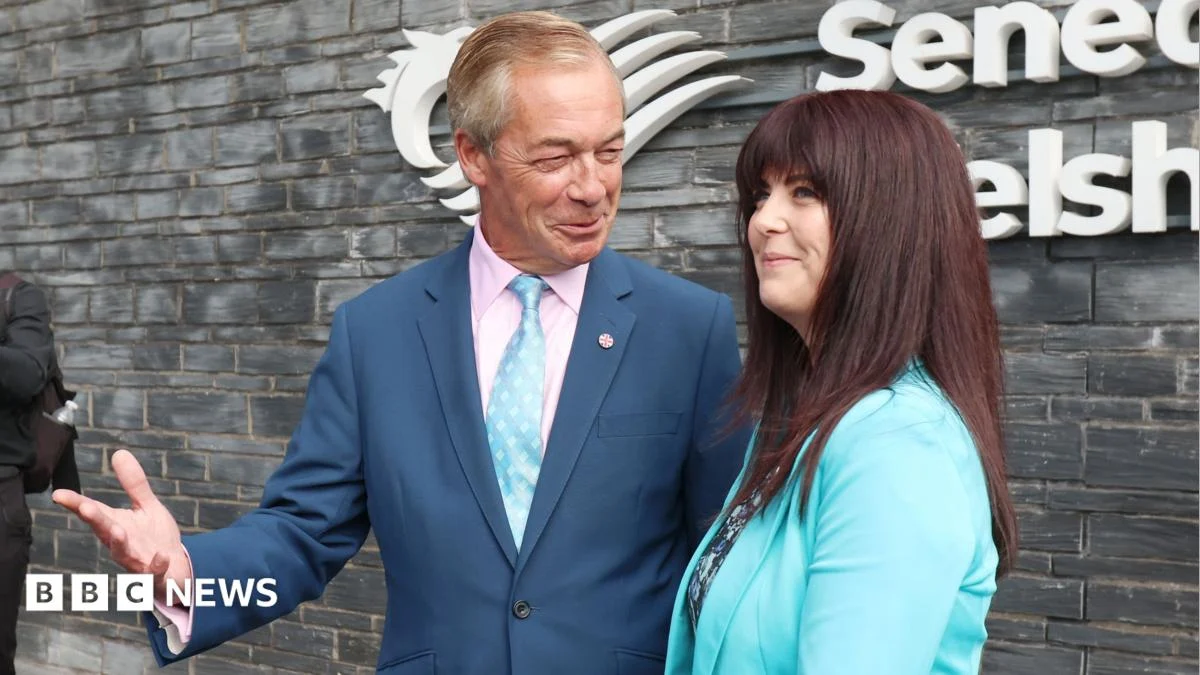
Farage, speaking to a gathered press, underscored his long-standing relationship with Jenner, stating, "I’ve known Helen for many, many years. She is a determined campaigner." His words served not only as an endorsement but also as a signal of continuity and trust from the party’s most prominent national figure. Farage expressed regret over former leader Thomas’s "personal difficulties," acknowledging the disruption they had caused. "We could have done without this bump in the road," he conceded, highlighting the party’s desire to move past the controversy and refocus on its political objectives. This acknowledgement, while brief, offered a glimpse into the internal strain the party had experienced and the necessity of a swift and decisive leadership transition to restore stability. Farage’s presence at the announcement was crucial, lending his considerable weight to Jenner’s legitimacy and providing a clear message that the national party apparatus remained fully engaged with its Welsh branch. His continued influence over Reform UK, despite stepping back from a direct leadership role, remains undeniable, especially in key regional developments.
Helen Jenner, who had diligently served as Thomas’s deputy and simultaneously held the position of Senedd member for Bangor Conwy Môn, conveyed her profound honour at being elected to the top job. Her ascension to leader represents not just a personal achievement but also a significant step for a party striving to establish deeper roots and a more robust presence in Welsh politics. Jenner’s background and experience make her a compelling choice for the role. A married mother-of-two from Anglesey, she brings a grounded, community-focused perspective to her leadership. Prior to her political career, Jenner dedicated 15 years to teaching, an experience that likely honed her communication skills, resilience, and ability to connect with diverse groups – all invaluable assets for a political leader.
Crucially, Jenner is a fluent Welsh speaker, a quality that resonates deeply within the Senedd and across Welsh communities. This linguistic proficiency not only enhances her ability to engage with the electorate but also reinforces Reform’s commitment to respecting and integrating with Welsh culture. Her political loyalty to Farage has been unwavering, having been a member of all his political ventures since the inception of UKIP. This long-standing commitment includes standing for the Brexit Party in the 2019 Senedd election, demonstrating her consistent dedication to the principles championed by Farage and the broader Reform movement. Her deep roots within the party and her consistent activism highlight her as a reliable and experienced figure, ready to take the helm. Before her official election, Jenner had been serving as interim leader, and was widely considered the favourite to replace Thomas. Sources close to BBC Wales indicated that "very senior" Reform figures had thrown their considerable weight behind her candidacy, suggesting a coordinated effort to ensure a smooth and stable succession.
The leadership vote itself was an internal affair, conducted among Reform’s 33 Senedd members on Monday morning. This method, rather than a wider ballot of the party membership, underscores the parliamentary nature of the Welsh party’s leadership selection process. Jenner confirmed that her colleague, Jason O’Connell, had stood against her in the contest. O’Connell’s candidacy had not been widely anticipated, adding an unexpected layer of competition to what many observers believed would be a clear path for Jenner. The fact that O’Connell, whose profile within the party was perhaps less prominent than Jenner’s, chose to contest the leadership, suggests there might have been differing views or factions within the Senedd group, even if Jenner’s victory ultimately demonstrated a clear mandate. The absence of a wider party membership vote could be seen by some as a pragmatic decision to expedite the leadership transition during a crisis, while others might view it as a missed opportunity to engage and empower the broader party base.
The circumstances necessitating this leadership change were grave. Dan Thomas stepped down from his leadership position on September 15th, following his arrest on suspicion of assault and controlling or coercive behaviour. While Thomas has been bailed pending further enquiries and vehemently denies any wrongdoing, the allegations created an untenable situation for him to continue in a leadership capacity. Despite stepping down as leader, Thomas remains a Reform MS, a decision that has sparked considerable debate. Chief Whip Llŷr Powell confirmed that he had not considered removing the whip from Thomas, a stance that highlights the complexities of balancing legal processes with political responsibilities. This decision has implications for the party’s public image and internal cohesion, as it navigates the optics of retaining an MS facing such serious allegations. Notably, Thomas was not present on the steps of the Senedd for Jenner’s unveiling, a clear sign of his current detachment from the party’s public-facing activities. Despite this, he had reportedly been among the Reform Senedd members who met in Cardiff Bay the previous week to discuss their next steps, with a party official from London attending to oversee proceedings. This suggests that while his leadership role is over, Thomas still retains some involvement, albeit in a different capacity, within the Senedd group.
Farage reiterated that it was "pretty much untenable for him to continue as leader" given the circumstances, yet he also expressed a degree of loyalty to Thomas, describing Jenner as "someone I trust" and adding that the party would carry on "as if nothing had happened, waiting for Dan, who is going to stay a member of this place, to come back more actively with us." This statement suggests a nuanced approach from Farage, balancing the need for a clean break in leadership with a desire to potentially reintegrate Thomas into the party’s activities once his legal issues are resolved. Such a stance could be interpreted as an attempt to maintain unity and avoid alienating an existing Senedd member, even amidst significant controversy.
Looking ahead, Jenner has outlined some initial priorities for Reform in Wales. Speaking to BBC Wales, she indicated that there were "a few things" the party needed to change, including a commitment to giving members more of a say on policy. This suggests a desire to foster greater internal democracy and engagement, potentially broadening the party’s appeal and strengthening its grassroots support. This move could also be a strategic response to perceptions of top-down decision-making, aiming to create a more inclusive policy development process.
Jenner also directly addressed concerns about party unity, robustly denying that Reform had a "unity issue." This denial came in the wake of claims by James Evans, another Senedd member, who had suggested last week that he would have garnered "majority" support to stand as leader had he not ruled himself out of the contest. Jenner acknowledged the difficult period the party had endured, stating, "I think that it was a really difficult time for us." She vividly captured the rapid pace of political developments, observing, "They say a week’s a long time in politics – to be honest, 24 hours was a long time in politics." Despite these challenges, she expressed confidence in the party’s cohesion: "But I think we are really united in terms of what we’re trying to achieve here." Her emphasis on shared goals and collective ambition is a key part of her strategy to project an image of a united and forward-looking party.
The immediate future for Reform in Wales also includes the election of a new Welsh deputy leader to replace Jenner. Farage announced that this vote would take place on Tuesday, indicating a rapid effort to fill key leadership positions and ensure the party’s operational continuity. This swift succession plan aims to minimise any lingering instability and allow the party to quickly pivot towards its political agenda. Under Jenner’s leadership, Reform in Wales will face the ongoing challenge of establishing itself as a credible and influential force in the Senedd. Her fluent Welsh, teaching background, and long-standing loyalty to Farage’s political movement provide a strong foundation. However, she must navigate the fallout from her predecessor’s departure, address internal unity, and articulate a clear vision for how Reform will serve the interests of the Welsh people, particularly concerning policy input from members and broader electoral strategies. The journey ahead for Reform in Wales, with Helen Jenner at the helm, promises to be closely watched as the party seeks to solidify its place in the complex tapestry of Welsh politics.




 George Anjay
 Nakalama John


 Roy Suryo