George Anjay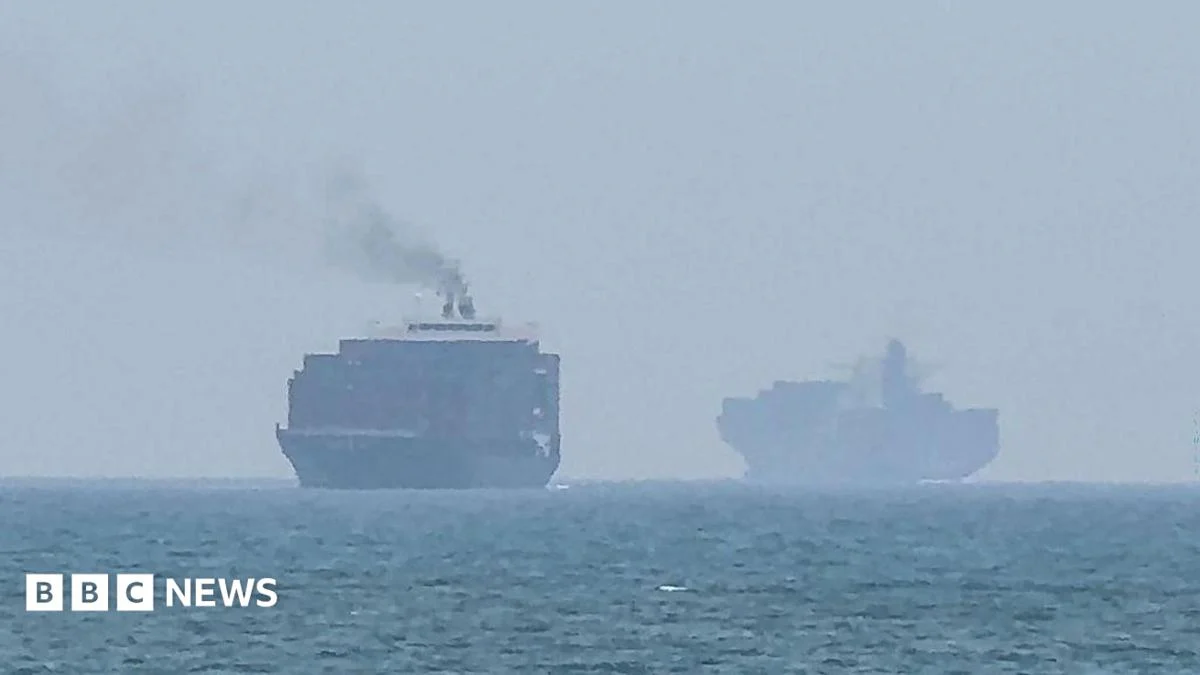
Oman has expressed optimism regarding ongoing discussions with Iran aimed at securing a vital shipping route through the Strait of Hormuz, while Tehran has cautioned that any agreement would not necessarily lead to an immediate reopening of this critical maritime passage. Both nations indicated progress on Saturday, yet a definitive timeline for the finalization of any accord remains elusive. Oman’s Ministry of Foreign Affairs issued a stern warning against any actions that could jeopardize shipping activities, underscoring the delicate nature of the negotiations.
Iranian Foreign Minister Abbas Araghchi stated that the talks were nearing their conclusion, but emphasized that the reopening of the strait was contingent upon the fulfillment of "other conditions." This statement comes at a time when Tehran has, in effect, imposed a blockade on the Strait of Hormuz, a waterway through which approximately one-fifth of the world’s daily oil and natural gas supply typically flows. This situation escalated following attacks on shipping routes by the United States and Israel, which commenced in February. Recent discussions have primarily centered on the potential for an agreement between Iran and Oman to establish a new, jointly managed shipping route through the strait, with the hope that this would facilitate the resumption of commercial traffic.
However, Araghchi elaborated that a complete restoration of traffic on this historically bustling maritime artery is dependent on a broader set of conditions being met, offering a brief overview of these demands. Chief among these conditions, he explained, is Iran’s receipt of compensation from the United States for what Tehran describes as violations of a previous agreement. This prior accord, signed in June, was intended to halt hostilities and pave the way for further diplomatic engagement to end the ongoing conflict. Regrettably, this Memorandum of Understanding (MoU) proved short-lived, and diplomatic efforts subsequently faltered, leading to a resurgence of tit-for-tat attacks mere days after its signing.
Adding to this, Mohammad Baqer Zolqadr, Iran’s security chief, informed the semi-official news agency Tasnim that the Strait of Hormuz would remain closed until the United States fundamentally alters its conduct. He outlined six specific demands that Iran expects the U.S. to meet, including an cessation of threats directed at Iran, the dismantling of its naval blockade of Iranian ports, and the release of Iran’s frozen financial assets. This development occurs against a backdrop of another blockade, imposed by Yemen’s Iran-backed Houthi rebels on Saudi Arabia’s Red Sea ports since July 20th.
Earlier in the week, U.S. President Donald Trump had hinted at the possibility of a swift resolution with Iran. However, Vice President JD Vance appeared more reserved on Saturday, informing Fox News that while progress is being made, substantial work remains. Vance characterized the situation as being "in the middle of the game here," emphasizing that "This thing is not over." He further elaborated that the U.S. is employing "a whole host of tools – diplomatic, economic [and] military tools – to ensure that we get the best outcome for the American people." Vance also asserted that the same volume of oil would continue to flow from the Gulf as it did prior to the U.S. military operation initiated on February 28th, though he provided no specific details to support this claim. "What we’re really working through now is how you can actually set up a traffic scheme so that the ships can pass through safely," he added.
A significant point of contention between Tehran and Washington has been Iran’s reported intention to levy fees on vessels transiting the strait. Reuters, citing an Iranian official, had previously reported that Tehran was seeking charges ranging from 5% to 7% of the cargo’s value from ships passing through. Vance, however, sought to downplay these reports, stating, "The Iranians have told us they have no plans to toll the Strait of Hormuz."
Oman’s warning against attacks on ships in the strait came on the heels of a statement by the United Arab Emirates (UAE) on Saturday. The UAE reported that Iran had targeted a tanker affiliated with Adnoc, the nation’s state-owned oil company, as it navigated the waterway. The UAE’s Ministry of Foreign Affairs issued a statement detailing a "hostile Iranian attack" that struck an Adnoc tanker with "a missile," confirming that there were no casualties. Later that same day, the UK Maritime Trade Operations (UKMTO) agency also reported an incident where a vessel was struck by an "unknown projectile" off the coast of Oman. The agency confirmed that the strike resulted in a fire, which was subsequently extinguished, and that no injuries were sustained. It remains unclear whether the UKMTO’s report pertains to the same vessel as the one mentioned by the UAE.
The ongoing diplomatic maneuvers surrounding the Strait of Hormuz are intrinsically linked to broader geopolitical tensions in the Middle East. The strategic importance of this narrow waterway cannot be overstated, given its role as a crucial chokepoint for global energy supplies. Any disruption to shipping traffic here can have immediate and far-reaching consequences for international markets and economies. The involvement of regional powers like Oman, which often plays a mediating role in the Gulf, highlights the complex web of relationships and interests at play.
Iran’s stance, as articulated by its foreign minister and security chief, suggests a desire to leverage its control over the strait as a bargaining chip in its dealings with the United States. The demands for compensation and the cessation of perceived hostile actions point to a broader agenda that extends beyond simply reopening a shipping lane. These demands likely reflect Iran’s grievances regarding sanctions, its nuclear program, and its regional influence. The reference to "other conditions" indicates that the reopening of the strait is not merely a technical or logistical issue but is intertwined with Iran’s overarching foreign policy objectives.
The United States, under the Trump administration and now with Vice President Vance’s statements, appears to be adopting a dual approach. While acknowledging progress in talks, the administration maintains a firm stance, emphasizing the use of multiple tools – diplomatic, economic, and military – to achieve its objectives. The emphasis on ensuring safe passage for ships suggests a commitment to maintaining freedom of navigation, a principle that is central to U.S. maritime policy. Vance’s downplaying of the reports regarding Iranian tolling intentions indicates a strategic communication effort to manage public perception and signal that such actions would not be tolerated.
The involvement of the UK Maritime Trade Operations adds another layer to the unfolding situation, highlighting the international dimension of maritime security in the region. Attacks on commercial shipping, regardless of the perpetrator, raise concerns for global trade and the safety of seafarers. The fact that both the UAE and the UKMTO reported incidents in close proximity underscores the volatile nature of the maritime environment in and around the Strait of Hormuz.
The potential for a deal between Iran and Oman, while offering a glimmer of hope for de-escalation, is tempered by the clear warnings from Tehran that this alone will not suffice to normalize traffic. The interconnectedness of regional security issues means that any lasting resolution will likely require a comprehensive approach that addresses the underlying causes of tension and builds trust among all stakeholders. The coming days and weeks will be crucial in determining whether the positive signs from Oman translate into tangible progress or if the Strait of Hormuz remains a focal point of regional instability. The economic implications of continued disruptions are substantial, and the international community will be closely watching the developments in this critical maritime theater.



 Nakalama John
 Ramos Leo
 Nana Banana