
 George Anjay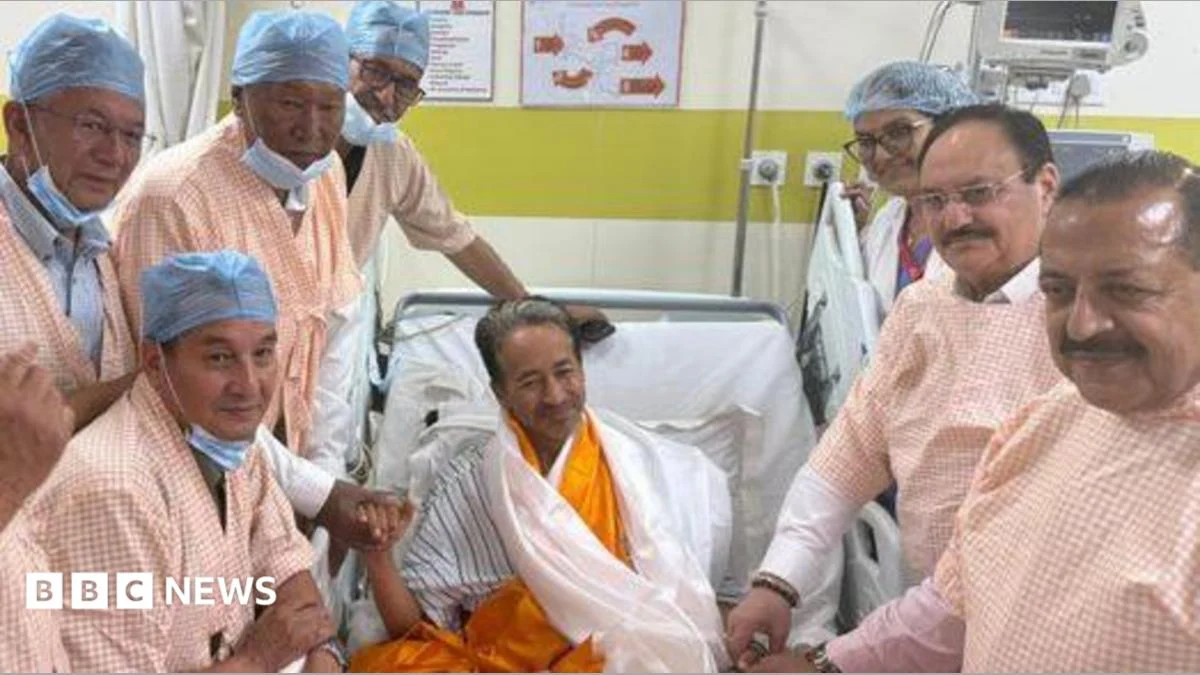
Sonam Wangchuk, a celebrated engineer, education reformist, and climate activist, concluded his 26-day-long hunger strike on Friday, following a significant assurance from the Indian government that no legal repercussions would befall protesters affiliated with the "Cockroach Janta Party" (CJP) demonstrating at Jantar Mantar, India’s historic protest site. The resolution came after intense days of campaigning, drawing national attention to the grievances of the CJP and their demands for accountability in the wake of widespread irregularities in national examinations.
The gravity of Wangchuk’s protest was underscored by the personal visits he received in hospital from both state and health ministers. These high-level engagements signaled the government’s recognition of the activist’s influence and the growing public pressure surrounding the issues at hand. Wangchuk, known for his innovative approach to education and his advocacy for sustainable development in Ladakh, has a substantial following across India, making his hunger strike a potent symbol of dissent.
Abhijeet Dipke, the founder of the CJP, expressed profound relief and gratitude upon hearing of Wangchuk’s decision to break his fast. In a post on the social media platform X, formerly Twitter, Dipke stated, "We are relieved and grateful that Sonam sir has ended his hunger strike after 26 days." This sentiment reflects the collective anxiety and hope that had surrounded Wangchuk’s prolonged protest. However, Dipke was quick to add a crucial caveat, emphasizing that the CJP’s peaceful demonstration at Jantar Mantar would persist until a specific demand was met: the resignation of Union Education Minister Dharmendra Pradhan. This indicates that while Wangchuk’s personal protest has ended, the broader movement’s core objective remains unfulfilled.
The backdrop to this development is a series of mass protests that have gripped the Indian capital. These demonstrations have intensified following a forceful police crackdown on a march to Parliament earlier in the week, which resulted in numerous injuries among both protesters and law enforcement officers. Images and reports of the crackdown have fueled public anger and solidarity with the protesting youth, further amplifying the CJP’s cause. The "brutal police crackdown" on Monday’s march to parliament, as described by NDTV, has become a focal point for critics of the government’s handling of dissent and a rallying cry for the protesters.
The "Cockroach Janta Party" has rapidly emerged as one of India’s most visible youth movements. Its current activities are being interpreted as one of the most significant public displays of dissent against the administration of Prime Minister Narendra Modi, who has been in power since 2014. The CJP’s trajectory from an online satirical initiative to a prominent protest force is a compelling narrative of modern activism.
The movement’s origins trace back to May, when it began as an online satirical group. Its initial purpose was to protest against persistent paper leaks and other systemic irregularities plaguing India’s highly competitive top-tier examinations. The group’s clever use of social media platforms allowed it to gain a massive following, resonating with millions of students and parents frustrated by the perceived failures of the examination system. This organic growth, fueled by shared grievances, has been instrumental in its rapid ascent.
The protesters, who have adopted the moniker "cockroaches" – a deliberate choice to reclaim a term often used to denigrate or dismiss marginalized groups – have been actively demonstrating for approximately a month. During this period, some members, including Sonam Wangchuk, have undertaken hunger strikes to further escalate their demands and highlight the urgency of their cause. The hunger strike, a classic form of non-violent resistance, was a powerful tool employed by the CJP to draw national and international attention.
The central demand of the CJP is the resignation of Union Education Minister Dharmendra Pradhan. This demand stems directly from the cancellation of a crucial medical entrance examination, the National Eligibility cum Entrance Test (NEET-UG), in early May. The exam was scrapped following a significant paper leak, a scandal that has shaken the foundation of trust in India’s examination system and disproportionately affected aspiring doctors. The protesters argue that the minister must accept moral responsibility for the systemic failures under his purview and step down. They believe that a failure to do so signals a lack of accountability and a disregard for the aspirations of countless students.
The NEET-UG exam, a gateway to medical education in India, is one of the most fiercely competitive exams in the country. The paper leak not only caused immense distress and uncertainty for hundreds of thousands of students who had prepared rigorously for the exam but also raised serious questions about the integrity of the examination process. The cancellation of the exam led to widespread student protests and calls for a thorough investigation and remedial action.
The CJP’s demand for Pradhan’s resignation is rooted in the principle of ministerial accountability. They argue that while the minister may not have been directly involved in the leak, he is ultimately responsible for the functioning of his ministry and the integrity of the examinations conducted under its umbrella. The widespread nature of the leaks and the subsequent cancellation of the exam, they contend, points to a significant lapse in governance and oversight.
The protest at Jantar Mantar has become a symbolic space for expressing grievances against the government. The peaceful nature of the CJP’s demonstrations, despite the provocations they have faced, underscores their commitment to democratic means of protest. Their decision to continue their vigil, even after Wangchuk’s hunger strike has ended, signifies their unwavering resolve to achieve their objective.
The "Cockroach Janta Party" has also been vocal about other irregularities in national examinations, suggesting that the NEET-UG issue is not an isolated incident but rather a symptom of a larger problem within the education system. Their online presence and engagement with student communities have allowed them to gather widespread support and amplify their message. The satirical approach, while initially aimed at drawing attention, has evolved into a serious political movement with tangible demands.
The government’s assurance regarding legal action against protesters is a significant development, potentially de-escalating tensions and creating a more conducive environment for dialogue. However, the continued demand for the Education Minister’s resignation indicates that the core issue remains unresolved in the eyes of the protesters. The government now faces the challenge of addressing the underlying concerns about examination integrity and demonstrating a commitment to accountability, beyond mere assurances.
The narrative of the "Cockroach Janta Party" is a testament to the power of youth-led activism in contemporary India. Their ability to mobilize, articulate their demands, and garner widespread support through both traditional and digital means highlights the evolving landscape of dissent and advocacy in the country. The resolution of Wangchuk’s hunger strike marks a pause, but the broader movement’s journey is far from over, with the nation watching closely to see how the government responds to their persistent calls for justice and accountability in the education sector. The coming days will likely reveal the next steps in this ongoing struggle for systemic reform and responsible governance.




 Roy Suryo

 Nakalama John
 atisusanti
 Ramos Leo
