George Anjay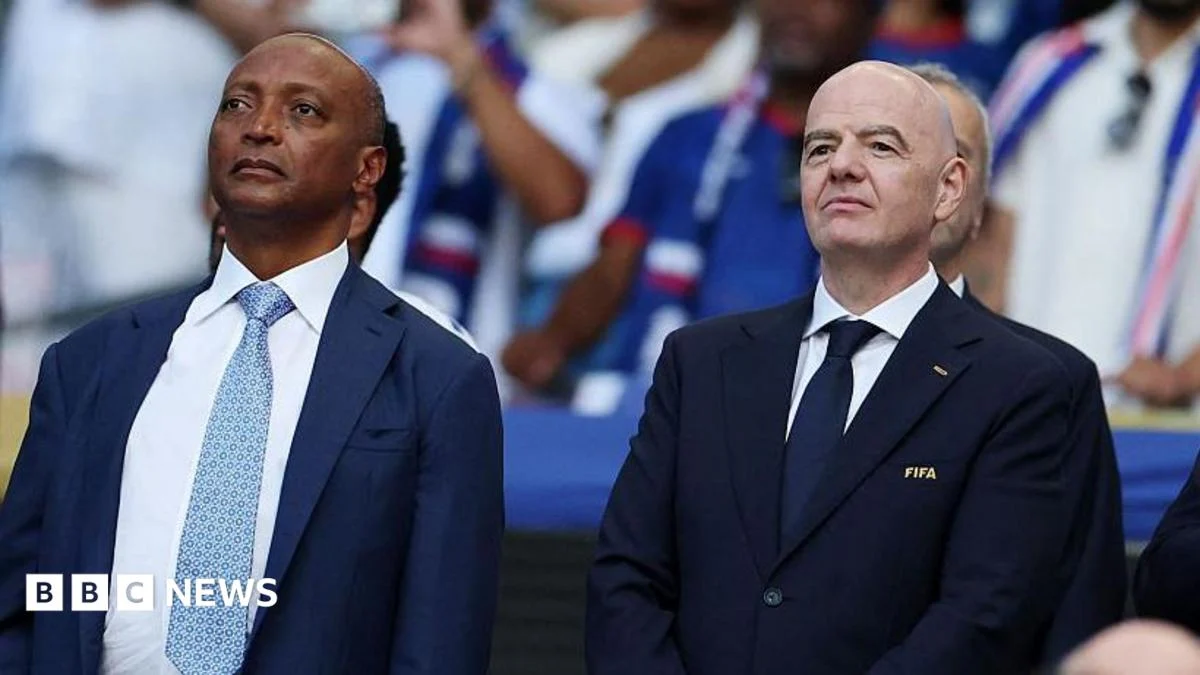
Beleaguered Fifa president Gianni Infantino currently retains a significant base of support within the global football community, a lifeline largely anchored in the developing football associations across Africa. These federations have demonstrably benefited from his tenure, particularly through the Fifa Forward programme, a substantial financial injection that has become a cornerstone for football development on a continent where commercial and governmental investment often falls short. Infantino’s position has, however, been subject to intense scrutiny, most recently stemming from his ambitious, and ultimately aborted, plan to sell stakes in Fifa’s premier global competitions to private investors. This proposal, met with considerable opposition from several regional governing bodies, threatened to undermine the delicate balance of power and financial distribution within world football.
Despite the controversy, the Confederation of African Football (Caf) executive committee unequivocally confirmed its unwavering support for Infantino late on Thursday, a testament to the backing he has received from leading African football administrators. This solidarity is further underscored by the public endorsements from five of the seven African nations represented on the Fifa Council: Egypt, Morocco, Niger, Mauritania, and Comoros. The consistent support from the continent is intrinsically linked to the success and widespread adoption of Fifa’s Forward programme, a visionary funding initiative launched in 2016. This programme has enabled numerous African federations to finance crucial football projects, from infrastructure development to grassroots talent nurturing, in regions where such investments are otherwise scarce.
Egypt, a nation hosting the prestigious headquarters of the Confederation of African Football, stands as one of Infantino’s most steadfast institutional allies on the continent. This strong relationship is significantly bolstered by the influential presence of Hany Abo Rida, a key figure on the Fifa Council and a prominent football administrator in Africa, who has cultivated a close rapport with Infantino since the latter’s election in 2016. Under Infantino’s presidency, Egypt has reaped substantial rewards from the Fifa Forward programme, which has facilitated a wide array of development initiatives. These include the construction and enhancement of sporting infrastructure, the establishment and expansion of youth development schemes, comprehensive coach education programmes, and the significant advancement of women’s football. Beyond the Forward programme, the Egyptian Football Association, mirroring other African member associations, has experienced a notable increase in development funding as part of Fifa’s expanded investment strategy. Furthermore, the introduction of new and enlarged football competitions has generated a wealth of additional commercial and sporting opportunities for the nation. However, this robust support for Infantino in Egypt is increasingly accompanied by a growing set of expectations. Football officials and astute observers alike are advocating for a more profound engagement from Fifa with the African continent, one that extends beyond mere financial assistance. There is a burgeoning emphasis on the critical pillars of good governance, enhanced transparency, the pursuit of sustainable football development models, and the imperative to grant Caf greater autonomy in shaping the continent’s unique footballing priorities and strategic direction. This evolving perspective suggests a desire for a more collaborative and self-determined future for African football, driven by local needs and aspirations.
The Congolese Football Federation (Fecofa) has publicly lauded Infantino’s decision to retract the contentious Forward Enterprise proposal, characterising it as a "wise" move in a statement issued earlier this month. The federation articulated that this episode, though born of potentially well-intentioned ambitions, should not detract from Infantino’s broader and more impactful record of promoting football globally. Fecofa specifically highlighted his decade-long commitment to the sport’s advancement worldwide, with a particular emphasis on his consistent and substantial support for African nations and those federations operating with limited resources. The federation affirmed that it has "greatly benefited" from Fifa’s comprehensive programmes, citing tangible investments in crucial areas of development and the enhancement of sporting infrastructure. This significant declaration was formally endorsed by Véron Mosengo-Omba, who was elected president of Fecofa in May 2026. His election marked the end of a period of considerable uncertainty that had followed the resignation of Constant Omari Selemani in 2021, leading to the establishment of a Fifa-appointed Normalisation Committee in April 2023. Mosengo-Omba has unequivocally assured Infantino of Fecofa’s "full support," a commitment that extends beyond 2027, recalling similar mandates that were renewed in Paris in 2019 and Kigali in 2023. The federation’s statement serves as a powerful indicator of the Democratic Republic of Congo’s strategic alignment with Fifa’s leadership, particularly at a time when significant divisions continue to persist across the global football landscape.
The Nigeria Football Federation (NFF) has largely adopted a supportive stance towards Infantino’s leadership, a position it has maintained even in the face of considerable global backlash. For a football federation perpetually grappling with chronic funding constraints and a pressing need for substantial infrastructure development, Infantino’s proposed plans would have presented a compelling and difficult proposition to dismiss. Amaju Pinnick, the former president of the NFF and a deputy chairman of Fifa’s Men’s National Teams Competitions Committee, articulated that Infantino’s strategy offered a much-needed financial injection for every member association, thereby reducing their over-reliance on often unpredictable local government support. Nigeria, despite its recent failure to qualify for the last two men’s World Cup tournaments, remains eligible to receive up to $8 million (£5.95 million) through the current Fifa Forward funding scheme. A prominent example of a Forward project currently underway in Nigeria is the ambitious redevelopment of the NFF Technical Centre located in the capital, Abuja. This significant undertaking, funded with approximately $4.88 million, encompasses the comprehensive reconstruction of essential training pitches and the construction of a state-of-the-art accommodation complex designed to serve Nigeria’s national teams.
Gayton McKenzie, the Minister of Sports, Arts and Culture of South Africa, took to the social media platform X (formerly Twitter) to express his view that Infantino had been "very good to African football." He urged caution, stating, "Africa should be cautious in joining the public lynching of Infantino. He has been very good to African football. We can debate his ideas but let’s not forget who has been a friend to us. Many of those calling for his head want the old status quo back too." Following the emergence of Infantino’s proposal, football officials from Malawi and Uganda shared their perspectives with the BBC, highlighting how Fifa’s investment had profoundly transformed the sport both on and off the pitch. They underscored the vital importance of such funding, particularly given the stark financial realities confronting many African nations. Fleetwood Haiya, the Malawi FA president, articulated the critical need for financial support, stating, "Malawi needs money. Malawi needs stadiums, our government cannot manage to give us even $1m every year for football." He further elaborated on the difficult choices faced by governments, noting, "Our government is not able to make sure that they have medical supplies in hospitals [and] at the same time to look at football." Lamin Kaba Bajo, the President of the Gambia Football Federation, conveyed a strong message of support to BBC Sport, stating, "As far as I’m concerned, most of my colleagues are concerned, we’ll encourage him [Infantino] to stay, and we’ll do everything within our means to ensure that he is re-elected come next year, 2027. That’s my personal opinion as president of the federation, and a good number of African memberships also stand on that line. He is here to stay." However, support for Infantino’s controversial project was not universally embraced across the continent. Isha Johansen, the former Sierra Leone FA president and an ex-Fifa Council member, emerged as one of the prominent African voices to oppose the plan. She voiced concerns that the proposal risked the excessive commercialisation of football, posing the pertinent question, "What price does one have to pay in order to get to this elevated development for football in Africa?" Johansen urged African football leaders to engage in careful deliberation regarding the long-term future of the sport. In a significant display of solidarity, Caf president Patrice Motsepe lauded Infantino for his "excellent work" following this year’s World Cup, publicly hailing him as "a good friend." Motsepe unequivocally stated on 22 July, "He is loyal to Africa. When people have been loyal to you, you never stab them in the back." Meanwhile, other influential nations, including Senegal – whose men’s team holds the distinction of being the second-highest ranked African team behind Morocco – have yet to issue public statements regarding their stance on Infantino’s leadership or his controversial proposals.

 Nakalama John
 Ramos Leo
 Nana Banana