
 Roy Suryo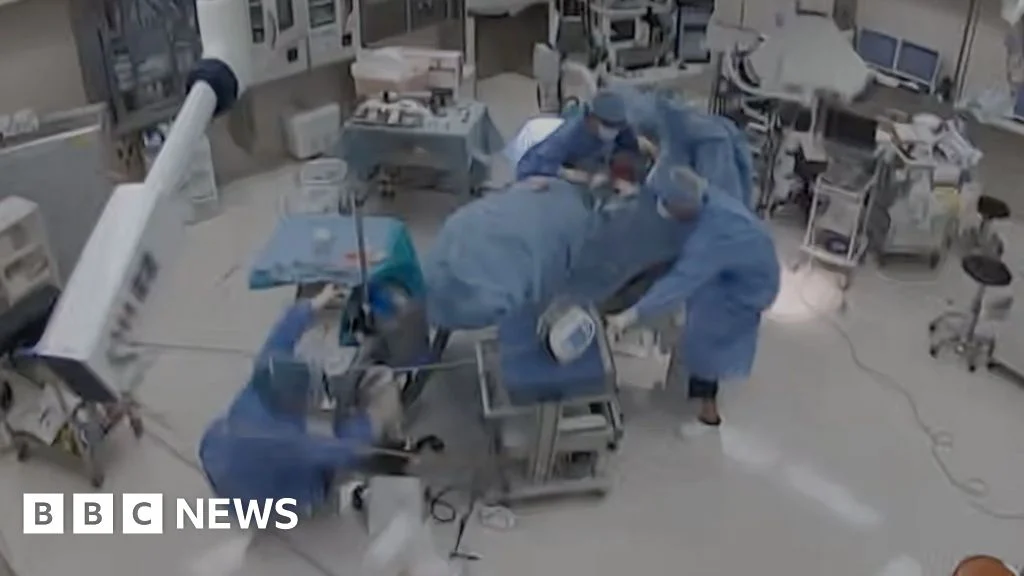
Newly-released, stark security camera footage has emerged, offering an unprecedented and chilling glimpse into the harrowing moments last month when a magnitude 6.8 earthquake violently shook Kumamoto General Hospital in Japan, throwing a critical operating room into chaos. The raw, unvarnished visuals, captured by a stationary camera within the sterile confines of a surgical theater, underscore the immense bravery and unwavering professionalism of the medical staff who faced down the terrifying fury of nature to protect their vulnerable patients. The incident, which occurred on July 28th, serves as a potent reminder of the fragility of even the most advanced infrastructure when confronted by the earth’s primal forces, and highlights the extraordinary resilience of the human spirit in the face of overwhelming adversity.
At the precise instant the earth began its violent undulations, four separate surgical procedures were in critical stages of completion within the hospital’s operating suites. The footage, painstakingly reviewed and released by hospital authorities, focuses on one particular operating room where a complex abdominal surgery was underway. The scene, initially one of focused intensity and delicate precision, abruptly transforms into a tableau of desperate improvisation and courageous defense. As the seismic waves intensified, the operating room, a space meticulously designed for order and control, became a scene of alarming disarray. Surgical lights, anchored to the ceiling, swayed precariously, casting erratic shadows that danced with the violent tremors. Medical equipment, ranging from intricate anesthetic machines to large, cumbersome monitors, began to lurch and slide across the floor, threatening to dislodge and cause further injury. The steady hum of machinery was replaced by the alarming clatter of unsecured items and the ominous groan of the building itself.
The most striking and profoundly moving aspect of the released footage is the immediate, instinctive reaction of the surgical team. Without a moment’s hesitation, the medical staff, comprised of surgeons, anesthesiologists, nurses, and surgical technicians, prioritized the safety of the patient lying on the operating table. Their training, honed through countless hours of simulation and real-world practice, kicked in, but it was their inherent humanity and profound commitment to their oath that truly shone through. As equipment began to tilt and threaten the patient’s exposed body, the medical professionals formed a living shield. They positioned themselves strategically, using their own bodies to block falling instruments, to absorb the impact of any dislodged machinery, and to provide a physical barrier against the unpredictable forces at play. Their faces, though partially obscured by surgical masks, betrayed a mixture of intense concentration, concern, and a steely resolve to see the procedure through and, more importantly, to protect the life entrusted to their care.
The footage vividly illustrates the coordinated efforts to maintain some semblance of control amidst the pandemonium. One particularly poignant sequence shows a nurse, her movements swift and purposeful despite the shaking, moving towards a nearby door. Her actions were not born of panic but of a clear, tactical objective: to assess and, if necessary, to secure an evacuation route. This act of foresight, performed under extreme duress, speaks volumes about the ingrained preparedness and the constant vigilance required in a hospital environment, especially one situated in a seismically active region like Kumamoto. The nurse’s swift assessment of the door’s integrity and her immediate steps to ensure it could be opened, even in the midst of the earthquake, were critical in maintaining the possibility of a safe exit should the situation escalate beyond the capabilities of the operating room itself.
In the aftermath of the tremors, as the violent shaking subsided and a tense silence descended, the true measure of the medical team’s success became apparent. Miraculously, and a testament to their extraordinary efforts and the robustness of their training, all four surgeries that were underway at the time of the earthquake were successfully completed. This extraordinary outcome, achieved under such unimaginably challenging circumstances, is a profound victory for medical science and a profound testament to the dedication of the healthcare professionals at Kumamoto General Hospital. Each successful procedure represents not just a technical achievement but a triumph of human will over the forces of nature. The patient in the abdominal surgery, the subject of the most intensely scrutinized footage, was reported to be stable and recovering, a direct consequence of the unwavering commitment of those who stood guard over him during the seismic event.
The immediate aftermath of the earthquake saw a temporary but necessary suspension of normal hospital operations. Following the seismic event on July 28th, Kumamoto General Hospital, like many other institutions in the affected region, undertook a thorough assessment of its structural integrity and operational capacity. This prudent measure was essential to ensure the continued safety of patients and staff and to verify that all essential services could be resumed without compromising patient care. The process of inspection, repair, and recalibration of vital medical equipment is a complex and time-consuming undertaking, especially after a significant seismic event.
After a period of diligent assessment and necessary remediation, Kumamoto General Hospital was able to announce the resumption of normal outpatient services on August 5th. This return to functionality, less than a week after the earthquake, signifies a remarkable recovery and the hospital’s swift return to its vital role in serving the health needs of the Kumamoto community. The reopening of outpatient services is not merely a logistical milestone; it represents a restoration of hope and access to care for countless individuals who rely on the hospital for diagnosis, treatment, and ongoing medical support. The swiftness with which the hospital regained its operational footing is a powerful symbol of the resilience of both the institution and the dedicated individuals who comprise it.
The released footage from the operating room serves a crucial purpose beyond simply documenting a dramatic event. It is a powerful educational tool, a profound tribute, and a stark reminder. For medical professionals worldwide, it offers invaluable insights into emergency preparedness and response protocols during seismic events. It highlights the critical importance of securing all movable equipment, the necessity of clear communication channels, and the paramount value of instinctive teamwork under extreme pressure. For the public, it offers a rare and humbling glimpse into the immense dedication and courage displayed by healthcare workers who routinely put their own safety on the line for the well-being of others. It fosters a deeper appreciation for the often-unseen sacrifices made within the walls of hospitals.
Moreover, the incident at Kumamoto General Hospital underscores the ongoing need for robust disaster preparedness strategies, particularly in earthquake-prone regions. Hospitals, as critical infrastructure, must be designed and equipped to withstand significant seismic activity, and their staff must be rigorously trained to respond effectively during such emergencies. The successful completion of four surgeries during a magnitude 6.8 earthquake is an exceptional achievement, but it also serves as a catalyst for continued improvement and innovation in disaster resilience within the healthcare sector. The bravery displayed by the medical team, captured in the chillingly clear security footage, will undoubtedly serve as an enduring inspiration, a testament to the unwavering commitment of healthcare professionals to their sacred calling, even in the face of nature’s most formidable challenges. The image of those medical professionals forming a living shield around their patient will forever be etched in the minds of those who witness it, a powerful symbol of humanity’s capacity for courage, compassion, and unwavering dedication.




 Nakalama John
 atisusanti
 Ramos Leo
