Nana Banana
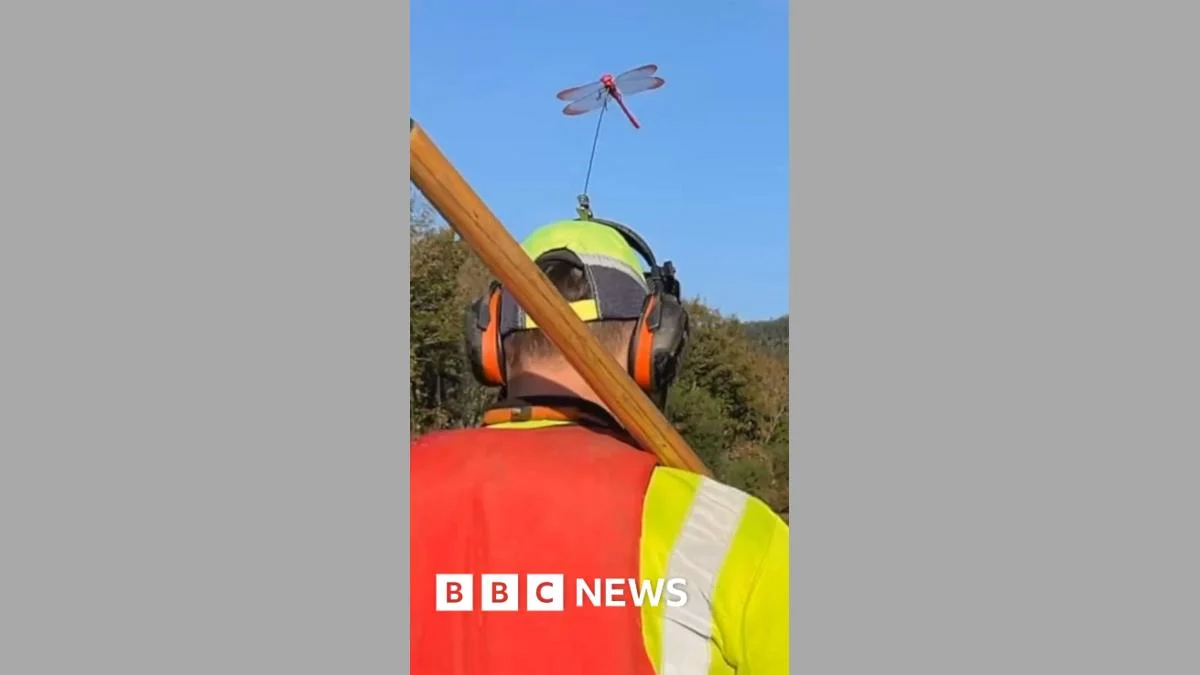
The picturesque beauty of Cornwall, with its lush river valleys, dense coastal vegetation, and abundant water features, provides an ideal breeding ground for a plethora of biting insects. While many are simply an annoyance, species like the horsefly (Tabanidae) inflict notoriously painful bites, often leading to swelling, itching, and sometimes secondary infections. For grounds operatives, whose duties often involve prolonged exposure in these insect-rich environments, such as clearing riverside vegetation, these pests are not merely a nuisance but a serious impediment to productivity and well-being. Traditional deterrents, ranging from strong chemical repellents to cumbersome protective clothing, have offered limited relief, often coming with their own set of drawbacks, including skin irritation, environmental concerns, or restricted movement.
Cromac, a vital entity in maintaining Cornwall’s natural infrastructure, employs operatives like Harrison Blake and Cian Davey who are on the front lines of environmental stewardship. Their work, which includes crucial tasks like managing riverside vegetation, is essential for flood prevention, maintaining ecological balance, and ensuring public access to natural spaces. This work often requires them to spend hours immersed in dense undergrowth, close to water sources – precisely the habitats where biting insects thrive. Before the advent of their ‘new kit’, their days were frequently punctuated by frantic swatting, constant discomfort, and the inevitable array of painful bites, making focused, sustained effort incredibly challenging. The physical toll was matched by a psychological burden, as the constant irritation chipped away at morale.
The ‘new kit’ in question is nothing more complex than realistic plastic models of dragonflies. The brilliance of this solution lies in its elegant simplicity, rooted in ecological understanding. Dragonflies are formidable predators of many biting insects, including mosquitoes, midges, and indeed, horseflies. By strategically deploying these artificial predators, Blake and Davey leverage the natural avoidance instincts of their targets. Biting insects, particularly horseflies, possess an innate drive to steer clear of areas where their natural enemies are perceived to be active. The visual cue of a dragonfly, even a static plastic one, acts as a powerful deterrent, creating a ‘safe zone’ around the operatives. These decoys, often affixed to their equipment or worn nearby, create an illusion of an active predator, compelling the pests to seek less threatening foraging grounds.
Harrison Blake, a seasoned Cromac Grounds Operative, articulates the profound impact of this simple tool with striking emphasis: "This is fast, fast becoming the most important piece of kit." His statement underscores not just the effectiveness of the dragonflies, but their transformative role in his daily work. For years, Blake and his colleagues would have relied on a range of conventional tools – strimmers, saws, protective gear – all vital for their tasks. Yet, none addressed the pervasive issue of insect harassment with such a direct and sustainable outcome. The plastic dragonflies have elevated themselves from a mere accessory to an indispensable component, ranking alongside the most fundamental equipment in terms of their contribution to operational efficiency and worker comfort. The ability to concentrate on intricate clearing work without constant distraction from buzzing, biting pests allows for greater precision, faster completion times, and a significantly reduced risk of accidents caused by sudden movements or loss of focus.
Cian Davey, Blake’s co-worker, echoes this sentiment, vividly describing the relief they now experience. "Our dragonfly here keeps us safe and stops us getting eaten alive," he affirms. This quote, while seemingly anecdotal, conveys a deep sense of gratitude and newfound security. To be "eaten alive" is a common, albeit hyperbolic, expression that perfectly captures the feeling of being overwhelmed by incessant insect attacks. Before these decoys, the sheer number and persistence of horseflies could make working near water unbearable. The constant buzzing, the sharp pain of bites through clothing, and the lingering itch afterward were not just minor annoyances but significant stressors. Now, with the plastic dragonflies acting as their silent guardians, Davey and Blake can perform their duties with a level of peace previously unimaginable, transforming a hostile environment into a manageable workspace.
Perhaps one of the most compelling aspects of this innovative approach is its chemical-free nature. In an era where environmental stewardship and sustainable practices are paramount, particularly for organizations like Cromac operating within sensitive ecosystems, avoiding chemical repellents offers immense benefits. Traditional insect repellents, while effective for personal use, can have unintended consequences when used extensively in natural environments. They can leach into waterways, potentially harming aquatic life, and may affect non-target insect species crucial to the ecosystem’s balance. The plastic dragonfly decoys, in contrast, offer a zero-impact solution. They introduce no foreign substances into the environment, produce no waste beyond their initial manufacture, and their deterrent effect is purely behavioral, relying on the insects’ natural instincts rather than chemical disruption. This aligns perfectly with Cornwall’s commitment to preserving its pristine natural beauty and biodiversity.
The success witnessed by Harrison Blake and Cian Davey with their plastic dragonflies in Cornwall holds broader implications far beyond their specific riverside duties. This simple, elegant, and environmentally friendly method of pest deterrence could be scaled up and adopted across various sectors. Farmers, gardeners, hikers, anglers, and anyone else spending significant time outdoors in insect-prone areas could benefit from similar strategies. The tourism industry, a cornerstone of Cornwall’s economy, could also explore its application in outdoor hospitality areas, campsites, or trails, enhancing visitor experience without resorting to chemical fogging or sprays. This local innovation could serve as a model for sustainable pest management, demonstrating that sometimes the most effective solutions are those that work in harmony with nature, rather than against it.
In essence, the ‘new kit’ championed by Cromac’s operatives in Cornwall represents more than just a clever trick; it symbolises an intelligent adaptation to environmental challenges. It highlights the power of observation, the value of understanding natural behaviors, and the potential for simple, non-invasive tools to bring about significant improvements in quality of life and work efficiency. As Harrison Blake and Cian Davey continue their vital work, protected by their silent, plastic sentinels, they are not only clearing vegetation but also paving the way for a more harmonious coexistence with the natural world, proving that sometimes the smallest, most unassuming innovations can deliver the biggest impact in the battle against bugs.


 Roy Suryo

 George Anjay

 Nakalama John

 atisusanti