Ramos Leo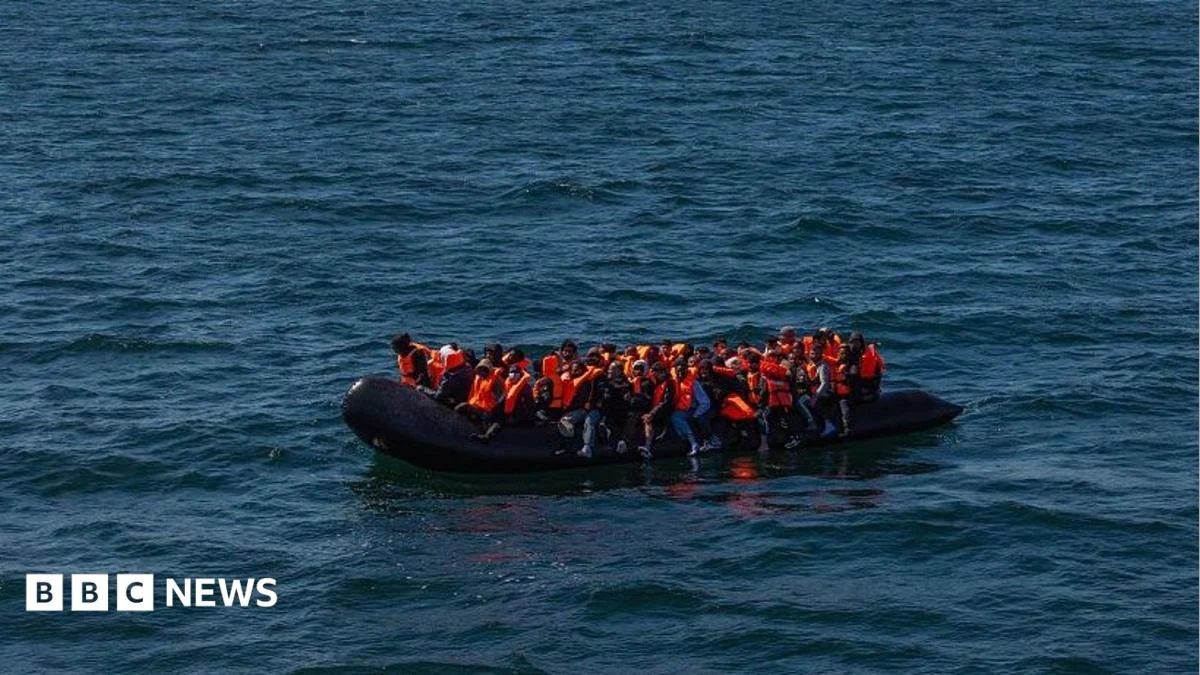
The decline in hotel occupancy for asylum seekers is a cornerstone of broader changes impacting the UK’s immigration landscape. Beyond this headline figure, the data also indicates a noticeable fall in the number of family members arriving in the UK to join relatives already legally resident. Asylum claims themselves have seen a substantial reduction, plummeting by a fifth compared to the previous year, reflecting both tighter border controls and faster processing.
In the 12 months leading up to June, a total of 38,000 illegal arrivals were detected across the UK, with the vast majority—an estimated 33,000—making the perilous journey across the English Channel in small boats from France. More recent, granular data suggests that the trend of small boat arrivals has continued its downward trajectory, registering figures lower than those recorded during the same period last year. This corresponding decrease in illegal entries is directly linked to the observed fall in overall asylum claims, as fewer individuals reaching UK shores illegally translate into fewer applications for protection.
A comprehensive review of the asylum system shows that some 86,000 people sought asylum during the reporting period, a fifth fewer than the preceding year. Interestingly, about half of these applications for assistance and protection originated from individuals who were already legally present in the UK, often on other visa routes, rather than from those who had arrived via irregular means, such as small boats. This highlights a nuanced picture of asylum applications, extending beyond the immediate challenges at the border.
The unprecedented rise in the use of hotels to house asylum seekers emerged as a critical issue from 2019 onwards. This period coincided with a dramatic surge in irregular arrivals across the English Channel, placing immense pressure on existing reception facilities. Compounding the problem was a significant slowing down of decision-making processes within the Home Office, leading to a ballooning backlog of cases. This bureaucratic inertia meant that claimants often waited for months, even years, for an initial ruling on whether they had a genuine right to stay in the UK or should be deported. The backlog and the consequent reliance on hotels became a costly and politically charged issue for successive governments.
Upon taking office in July 2024, one of the first decisive actions of the new Starmer government was to issue a direct order to officials to dramatically accelerate the processing of these claims. A clear and ambitious target was set: to completely end the use of hotels for asylum seekers within five years. This policy directive underscores a commitment to both operational efficiency and fiscal responsibility, aiming to alleviate the financial burden on taxpayers while ensuring claims are processed fairly and swiftly.
Home Secretary Shabana Mahmood articulated the government’s achievements and ongoing objectives with confidence, stating, "A little over two years into office and the asylum backlog is down, the number of asylum seekers in hotels is falling, illegal working arrests are at record levels, and deportations and returns are up markedly." She further emphasised the positive trend in irregular migration, adding, "Small boats numbers are also now falling, but we are not complacent and there is more we must do." Her remarks paint a picture of a government actively tackling various facets of immigration control, from border security to internal enforcement.
However, the opposition was quick to offer a contrasting perspective. Shadow Home Secretary Chris Philp, representing the Conservative party, critically remarked that Labour was "moving illegal immigrants out of hotels and into flats in your building," attempting to frame the policy as merely shifting the problem rather than solving it. Philp outlined a more hardline Conservative vision, asserting that a Conservative government would commit to deporting every illegal immigrant and, controversially, would advocate for leaving the European Court of Human Rights (ECHR). He argued, "The surest way to empty the accommodation is to make plain that nobody who crosses the Channel gets to stay," suggesting a policy of absolute deterrence that would effectively nullify asylum claims made by irregular arrivals. Such a move would have profound implications for the UK’s international human rights obligations and its standing within the European legal framework.
Reform UK, another opposition party, echoed sentiments of national distress in response to the new figures, declaring that Britain was at "breaking point." Zia Yusuf, the party’s home affairs spokesman, proposed radical measures: "Under Reform, illegal boats in the Channel will be stopped by our Navy, and all those here illegally will be detained and deported." This stance advocates for a militarised response to Channel crossings and a robust policy of immediate detention and removal, reflecting a desire for uncompromising border enforcement.
The Liberal Democrat Home Affairs Spokesperson, Max Wilkinson, offered a different critique, arguing that "Moving people out of hotels into other accommodation and military bases isn’t the victory the government is claiming." He suggested that true progress lay elsewhere, stating, "The only way to achieve a controlled, fair and safe system that saves money for taxpayers and stops dangerous small boat crossings is if Labour accepts the inevitable and joins the EU migration pact." This proposal points towards re-engagement with European-wide solutions to migration, a path the current government has been reluctant to consider due to post-Brexit political sensitivities. Joining such a pact would involve complex negotiations and potential compromises on sovereignty, yet it offers the prospect of shared responsibility and coordinated action on migration flows.
While hotel use is decreasing, the number of people accommodated in houses around the country, paid for by the Home Office, has actually seen an increase. This figure rose from 65,000 at the end of 2024 to 69,000 in June of this year. These arrangements are part of long-standing, decade-long contracts with private providers, representing a different form of managed accommodation for asylum seekers. This highlights that while one form of housing is being reduced, the overall need for asylum accommodation persists and is being met through other, often less visible, means.
A significant achievement highlighted in the data is the drastic reduction in the asylum backlog. The number of asylum claimants waiting for an initial ruling on their case—meaning they are yet to be informed whether they have a genuine case for protection or should be asked to leave the UK—now stands at 40,000. This is a dramatic decrease from the peak of 175,000 recorded in June 2023, showcasing the effectiveness of the government’s accelerated processing strategy. Clearing this backlog not only reduces costs but also provides much-needed clarity for individuals seeking asylum and allows the Home Office to manage its caseload more efficiently.
In terms of enforcement, robust action has been taken against those without a right to be in the UK. Some 40,000 individuals—comprising foreign offenders, visa overstayers, and failed asylum applicants—were removed from the country in the year to June 2026. This represents an 8% increase on the previous year, demonstrating enhanced efforts in deportations and returns. Officials have specified that approximately a third of these removals were failed asylum seekers, marking the highest number for 16 years and double the rate of removals observed in 2021. This indicates a more proactive approach to enforcing immigration rules once asylum claims have been rejected.
Beyond asylum and enforcement, the statistics also shed light on wider immigration trends. The Home Office granted 235,000 work visas in the year to the end of June 2026, an 18% decrease compared to the previous year and a substantial 62% lower than the peak recorded in December 2023. This high point was largely attributed to policies pursued by the former prime minister Boris Johnson, who had sought to liberalise the work visa system, particularly in the post-Brexit landscape. However, in its final months, the Rishi Sunak government introduced significant tightening of these rules, leading to the observed decline. Most notably, the number of workers who could arrive on a specialist health and care worker visa plummeted by 90% following progressive restrictions on that particular route, raising concerns about potential impacts on critical sectors.
The data further reveals that 383,000 foreign students came to the UK in the year to June 2026, an 11% drop on the previous year and 41% down on the peak in June 2023. This decline can be linked to a combination of factors, including stricter rules on dependants for international students and a shifting global landscape for higher education.
Finally, following the introduction of restrictions on how migrants could apply to bring family members to join them, only 58,000 such visas were granted in the year to June 2026. This figure represents a 19% reduction compared to the preceding 12 months. Statisticians have confirmed that this fall was "largely driven" by new rules that have made it exceptionally difficult for refugee families to reunite in the UK. This policy, which has faced significant challenges in the High Court from legal and human rights organisations, remains in place, with the government maintaining its belief that it has an impact on deterring illegal arrivals across the English Channel. Critics, however, argue vehemently that such measures deny genuine refugees the fundamental chance to rebuild their lives and integrate into society, separating families indefinitely.
Immigration statistics are regularly published by the Home Office on a quarterly basis, with each report typically covering a rolling 12-month period, providing a continuous overview of evolving trends and policy impacts. The latest figures present a complex and dynamic picture of the UK’s immigration system, showcasing both significant progress in certain areas and ongoing challenges and controversies in others.



 Nakalama John
 George Anjay
 atisusanti
 Roy Suryo