
 Ramos Leo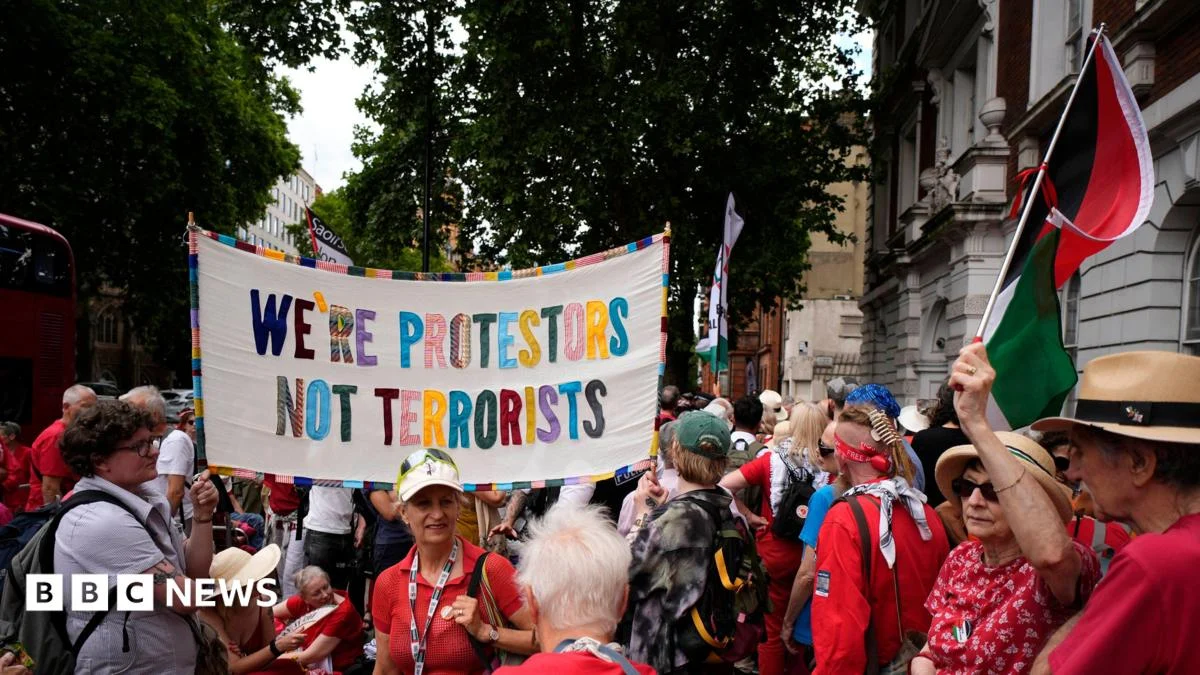
The contentious proscription of the protest group Palestine Action, enacted under the sweeping powers of terrorism legislation, is now slated for a comprehensive review by the UK’s highest judicial body, the Supreme Court. This significant development, confirmed on a recent Thursday, marks a considerable setback for the Home Office, as the court granted permission to appeal to Huda Ammori, a co-founder of the activist collective. The ban, which came into force in July 2025 (likely a typo in the original article, assuming it’s an event that has already occurred, let’s proceed with the understanding that the ban has been in effect for some time prior to this appeal), has ignited a fierce legal and political debate surrounding the limits of protest and the application of anti-terrorism laws in modern Britain.
While the full, intricate details outlining the specific grounds for this pivotal appeal have yet to be publicly released, the BBC understands that the core of Ammori’s challenge revolves around the fundamental argument that the ban constitutes a profound breach of human rights. This places the forthcoming Supreme Court hearing at the nexus of individual liberties and state security prerogatives, promising to delve deep into the constitutional implications of such proscriptions. Officials within the Supreme Court have indicated that the appeal will be expedited, a procedural fast-tracking that means the case is anticipated to be heard immediately following the summer judicial recess. The eventual verdict from this landmark case holds the potential to send ripples throughout the UK’s legal landscape, fundamentally reshaping the interpretation and application of terrorism legislation and its impact on protest movements.
This latest legal twist arrives merely weeks after the culmination of the first major trial involving members of Palestine Action. This particular case centered on actions that reportedly inflicted more than £1 million in damages upon a defence firm situated near Bristol, a company with significant ties to an Israeli parent entity. The trial saw four individuals, identified as key members of the break-in team, receive custodial sentences. Furthermore, one of these individuals faced an additional conviction and sentencing for causing grievous bodily harm to a police officer, who was reportedly struck with a sledgehammer during the course of the protest. Such incidents underscore the intensity and confrontational nature of Palestine Action’s tactics, which have consistently aimed to disrupt the operations of companies they accuse of complicity in the Israeli arms trade.
In a parallel and equally concerning development, more than 2,000 individuals are currently confronting the prospect of potential trials. Their alleged offense? Expressing support for a proscribed terrorism group during mass demonstrations held in defiance of the ban. This unprecedented scale of potential prosecutions highlights the profound chilling effect the proscription has had on freedom of assembly and expression, raising serious questions about the permissible boundaries of solidarity and dissent in the UK. The battle over the legitimacy and legality of banning Palestine Action has, by now, protracted for well over a year, evolving into a complex legal saga with far-reaching societal ramifications.
The initial decision to ban the group was made by former Home Secretary Yvette Cooper. Her action was predicated upon advice received from senior police figures and security officials, following an escalating and persistent spate of break-ins and disruptive actions specifically targeting Elbit Systems. Elbit, an Israeli-owned defence firm, operates several facilities within the UK and is a principal target for Palestine Action due to its role in providing military technology and equipment to the Israeli armed forces. The activists contend that by disrupting Elbit’s operations, they are directly challenging the supply chain for what they view as an oppressive military occupation. The Home Secretary’s decision to proscribe Palestine Action effectively labelled the group’s activities, despite their non-lethal nature, as falling under the remit of terrorism legislation, a move that immediately drew intense criticism from civil liberties advocates.
The legal journey of the ban has been anything but straightforward. Initially, the High Court delivered a significant blow to the government, ruling that the ban was, in fact, unlawful. This initial judicial assessment likely questioned whether Palestine Action’s activities, while undoubtedly criminal, met the stringent criteria for proscription under terrorism laws, or whether the Home Secretary had overstepped her statutory powers. However, this High Court verdict was subsequently overturned by a panel of five judges at the Court of Appeal. In a unanimous decision, the appellate court concluded that the Home Secretary had acted lawfully and entirely within her discretionary powers when proscribing Palestine Action. This crucial ruling effectively validated the government’s application of terrorism legislation to the group’s actions, setting the stage for the current Supreme Court review. It is this specific decision by the Court of Appeal that will now undergo intense scrutiny by the nine justices of the Supreme Court.
Adding to the escalating tension surrounding the ban, a dramatic scene unfolded on a recent Thursday outside Westminster Magistrates’ Court. A total of 117 protesters were arrested, with the Metropolitan Police confirming that the vast majority of these arrests were for expressing support for the now-proscribed group. Scores of individuals had converged on the court premises, under the mistaken impression that they were scheduled to appear in court to face charges for allegedly demonstrating support for Palestine Action at earlier public gatherings. It later emerged that these cases had been listed in error, a procedural misstep that only served to amplify the confusion and frustration among the defendants. Many of those present stated they felt compelled to attend, despite explicit instructions from both the court and the Metropolitan Police advising them not to do so, underscoring the deep sense of grievance and determination among the activist community.
Huda Ammori, the co-founder of Palestine Action and the appellant in this Supreme Court case, voiced her unequivocal welcome for the court’s decision to hear her appeal. In her statement, she directly linked the recent wave of arrests to a broader, more insidious pattern of what she described as a "crackdown on Palestinian solidarity." Ammori’s words resonated with many who believe the ban is a politically motivated attempt to silence dissent. "We will continue to fight this proscription all the way to the Supreme Court and, if necessary, to the European Court of Human Rights," Ammori declared, her voice resolute. She further asserted that their objective is "to overturn what has become one of the most extreme attacks on free speech and the right to protest in modern British history." Her commitment highlights the high stakes involved, not just for Palestine Action, but for the future of protest rights in the UK.
Conversely, the Home Office has consistently maintained its position, emphatically stating that the ban on Palestine Action is entirely unrelated to legitimate protest in support of Palestinian causes. Instead, officials argue, the proscription was a necessary measure necessitated by the group’s consistent engagement in "significant criminal damage to legitimate businesses." This framing emphasizes the government’s focus on property rights and public order, distinct from any ideological motivations. Both the High Court and the Court of Appeal, despite their differing ultimate conclusions, have concurred that Palestine Action’s activities do indeed include criminal acts. However, where they diverged sharply was on the crucial question of whether these incidents, irrespective of their criminality, justified invoking the extraordinary powers enshrined within terrorism laws.
These specific laws, which received parliamentary approval from Members of Parliament, provide the government with the authority to proscribe a group for either serious violence or serious criminal damage, provided such actions are carried out for an ideological cause. The implications of such a proscription are far-reaching: it triggers significantly wider powers for law enforcement agencies, enabling them to investigate and charge suspects not only for direct criminal acts but also for organizing activities, fundraising for the group, or even publicly expressing support for it. This expansion of police powers and the criminalization of associational activities are precisely what concern civil liberties groups and human rights advocates, who see it as a dangerous erosion of fundamental freedoms.
The Home Office had been contacted for comment regarding this latest development. Following its significant legal victory at the Court of Appeal, the department had previously stated its unwavering commitment to "robustly defend any further appeal to the Supreme Court." The BBC understands that this position has not wavered, even in the wake of recent changes in the prime minister’s office. This steadfast stance indicates a prolonged and determined legal battle ahead, with both sides entrenched in their respective arguments.
The Supreme Court’s impending review of the Palestine Action ban represents a pivotal moment for British jurisprudence and civil liberties. The outcome will not only determine the legal fate of a controversial protest group but will also set a crucial precedent for how the state balances national security concerns with the fundamental rights to protest and freedom of expression. It will scrutinize the very definition of "terrorism" within the context of direct action, and the extent to which a Home Secretary can wield such powerful legislative tools against groups whose methods are disruptive but non-violent. The legal arguments will undoubtedly delve into the proportionality of the ban, the precise threshold for applying terrorism legislation, and the potential chilling effect on legitimate political dissent. As the legal proceedings unfold after the summer break, the nation will watch closely to see how the highest court navigates these complex and deeply contentious issues, shaping the future of protest in the UK.

 George Anjay
 Nakalama John
 atisusanti
 Roy Suryo
 Nana Banana