Nakalama John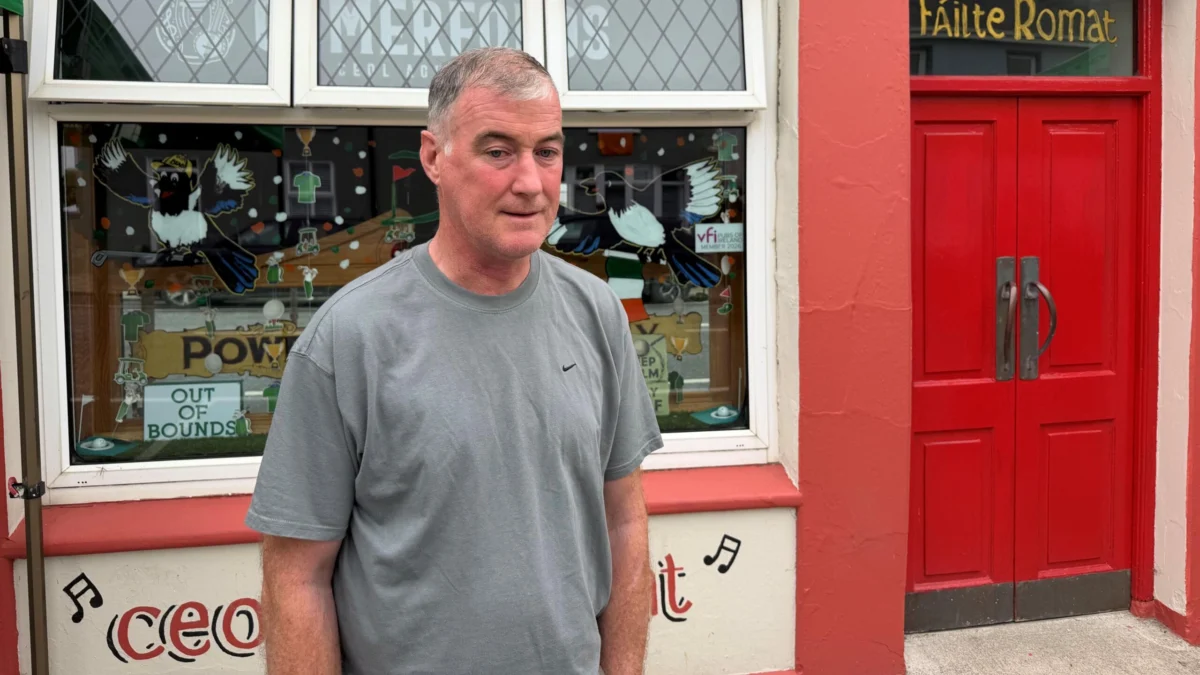
Prior to this announcement, Irish whiskey distilled in the Republic of Ireland faced a standard 15% tariff when entering the US market, a levy applied to various goods originating from the European Union. In contrast, whiskey produced in Northern Ireland or other parts of the United Kingdom had been exempt from such tariffs, following an earlier decision by the Trump administration in May to remove tariffs on all UK-made whiskey. This disparity had created an uneven playing field for distillers across the island of Ireland, a complexity highlighted by industry experts and local producers alike.

The US President’s decision followed a series of discussions, including with Taoiseach (Irish Prime Minister) Micheál Martin and, as Trump playfully noted, even with Irish Open winner Shane Lowry himself. "Everybody’s been bugging me," Trump told the crowd at the trophy presentation. "They are saying would you do me a favor? It’s so unfair what’s going on. Could you possibly take the tariffs off of Irish whiskey and I said, on behalf of the United States of America, I am going to take the tariffs off Irish whiskey." This statement was met with applause, signaling relief and optimism within the Irish spirits industry, which views the US as a crucial and growing export market. The move is anticipated to boost Irish whiskey exports, enhance its competitiveness, and potentially lead to increased investment and job creation in the sector.
The two-day visit saw President Trump engage in both diplomatic meetings and personal interests. On Saturday, he was in Dublin, where he held discussions with Taoiseach Micheál Martin. While the original article mistakenly referred to "Irish President Catherine Connolly," it is understood he would have met with the actual Irish President, Michael D. Higgins, during such a high-profile visit. These meetings likely covered a range of bilateral issues, including trade, economic cooperation, and global security. However, much of the public attention, particularly on the second day, focused on Trump’s presence at his Doonbeg golf resort for the Irish Open. The resort, a significant investment by the Trump Organization, served as both a base for his visit and the backdrop for his tariff announcement.

Beyond trade, Trump also used his time in Ireland to reiterate his controversial views on a united Ireland. On Saturday, he had told reporters he "would love to see a united Ireland," a sentiment he doubled down on during his golf course visit on Sunday. Speaking to reporters after watching Lowry tee off, he described the potential unification of Northern Ireland and the Republic of Ireland as "one of the naturals of all time." He clarified his earlier remarks as "a fairly routine comment," adding, "I’ve always loved the people of Ireland. It just seems to me you have Northern Ireland and Ireland. It seems that one of the naturals of all time is to put them together. That’s only my opinion, and by the way many people agree." Such comments from a sitting US President carry significant weight, touching upon a deeply sensitive and historically charged issue in Irish politics. The Good Friday Agreement, the cornerstone of peace in Northern Ireland, stipulates that a border poll on unity can only be called if a majority in Northern Ireland are likely to vote in favor. When pressed on the then-UK Prime Minister’s remarks that there would be no such poll until that condition was met, Trump characteristically remarked, "Everybody says that and then things happen." He sidestepped a similar question regarding Scottish independence, stating, "I won’t talk about Scotland yet I will save that."
Taoiseach Micheál Martin, responding to Trump’s comments on Irish unity, said they did not come as a "surprise" to him. "He would make the point this is his view. He believes unity is the logical way for the island to be configured and organised," Martin stated, adding, "I think some of the reaction is an overreaction. It shouldn’t be a surprise. He takes a different sort of perspective on things." This response sought to downplay the diplomatic implications of the US President’s outspoken views on an internal Irish matter.

The "Whiskey tariff analysis" provided by BBC News NI economics and business editor John Campbell offered crucial context to the tariff removal. Campbell explained that the lifting of tariffs on Irish whiskey would effectively level the playing field, ending the competitive advantage previously enjoyed by some Northern Ireland distillers. This advantage arose because producers north of the border benefited from the earlier removal of tariffs on all UK-made whiskey. However, the complexities of "all-island supply chains" meant that not all Northern Irish brands could fully capitalize on this. Many newer distilleries, while waiting for their own product to mature, bottle whiskey produced by other companies. A significant portion of this service is provided by the Great Northern Distillery in Dundalk, County Louth, which produces whiskey under license for various brands across the entire island. Consequently, Northern Irish distilleries bottling liquid from Dundalk were often classified as EU rather than UK producers, making their products subject to the very tariffs Trump now promised to remove. The full removal of tariffs therefore simplifies the export landscape for Irish whiskey producers, irrespective of their specific location on the island or their reliance on cross-border supply chains.
Despite the positive economic news for the whiskey industry and local support for his golf course, President Trump’s visit was not without significant protest. On Saturday, over 10,000 people marched through Dublin to voice their opposition to the US president’s policies and rhetoric. The protests continued on Sunday in Doonbeg, with approximately 100 demonstrators arriving by bus. A small group of protesters were reportedly moved from the vicinity of the president’s hotel by An Garda Síochána (Irish police). The previous evening, three women were arrested for trespassing on the golf links at Doonbeg and subsequently appeared at a special sitting of Ennis District Court. Rev Steven Foster, a Methodist minister from Galway who attended the Doonbeg protest, articulated the sentiments of many opponents. "I’m here because Trump is the exact opposite of everything I stand for as a follower of Jesus," he told BBC News NI, adding that "the type of welcome he has been given sends out a terrible message."

Conversely, President Trump found staunch support among some local residents and business owners in Doonbeg, who emphasized the economic benefits his golf course brought to the area. Martin Kelly, a local businessman, expressed gratitude, stating that the village was "very fortunate" to have the Trump International Golf Course. "It’s a massive employer here to be honest with you," Kelly told BBC News NI, highlighting the lack of other large-scale employers in the region. He praised the Trump organization as "very decent people to work for, they’re very fair" and noted the local pride in hosting the Irish Open. Seoirse Comerford, owner of the Comerford bar in Doonbeg, echoed these sentiments, describing the tournament as "unbelievable" and crediting the golf course with keeping Doonbeg "alive." He drew a powerful analogy, stating, "Most rural villages in west Clare are all dying a death, young people going away to college, they don’t come back. Like there’s over 300 people employed up there at the golf course, it’s a big boost to the local economy. You’ve got big companies in Dublin, like Intel, the golf course is our Intel down here." These local voices underscored the complex relationship between global politics and the immediate economic realities of a rural community.
As Air Force One departed Shannon Airport for Washington, the two-day visit left a lasting impression, characterized by a significant trade concession, controversial political commentary, and a stark contrast between widespread protest and fervent local support. The removal of Irish whiskey tariffs promises a tangible economic boost for a key Irish industry, while President Trump’s pronouncements on Irish unity added another layer to the ongoing political discourse surrounding the island’s future.

 George Anjay
 Ramos Leo
 Nana Banana