
 Ramos Leo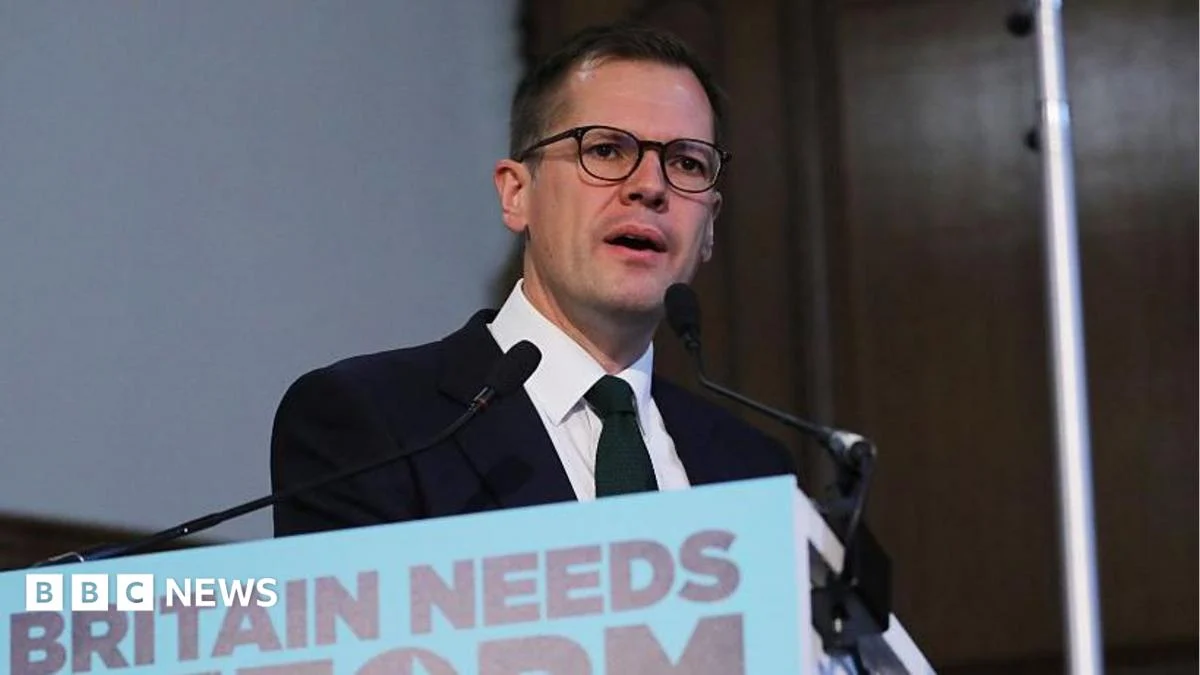
At the core of Reform UK’s strategy is a significant shift in investment, moving away from direct cash payments for certain conditions towards comprehensive support services. Jenrick outlined plans to substantially invest in talking therapies, physiotherapy, and employment support. This strategic reallocation aims to facilitate a faster return to work for individuals currently claiming health-related Universal Credit (UC) payments and Personal Independent Payments (PIP). The underlying philosophy is that early intervention and therapeutic support can address root causes of absence and enable claimants to re-engage with the workforce, rather than relying indefinitely on state benefits.
A key component of this overhaul involves a drastic change for individuals with what Reform UK categorises as "lower-level conditions." Under the proposed system, these individuals would no longer receive direct cash payments. Instead, their needs for support such as transport assistance or specialist equipment would be met through dedicated accounts managed by local councils and elected mayors. This localised, non-cash provision is intended to ensure that specific needs are addressed practically and efficiently, preventing potential misuse of funds while still providing essential aid. The party argues this approach would be more targeted and effective, tailoring support to individual circumstances at a local level.
Employers are also central to Reform UK’s vision, with the proposed creation of a new "return to work cover." This innovative scheme is designed to provide employers with a "strong economic incentive" to facilitate the swift reintegration of employees who have been off work due to sickness. While specific details on the cover’s mechanics remain to be fully elaborated, the intention is to alleviate financial burdens on businesses that actively support their employees’ recovery and return. This measure aims to foster a collaborative environment where employers are incentivised to invest in their workforce’s health and wellbeing, thereby reducing the duration of sickness absence and the associated costs to the welfare system.
For those who have been claiming benefits for an extended period, specifically two years without returning to work, Reform UK proposes a "single, rigorous disability needs assessment." This assessment would be conducted in person, a crucial detail intended to "screen out fraudulent claims" and ensure that only genuinely eligible individuals receive ongoing support. The party contends that in-person evaluations are more effective than current remote or less intensive methods in accurately determining an individual’s capacity for work and genuine need for benefits. Such a stringent approach would likely be met with scrutiny regarding its fairness and potential impact on vulnerable individuals.
In parallel, the plan acknowledges the need for robust support for the most vulnerable. A new, regularly reviewed payment system would be established specifically for those deemed "gravely ill and severely challenged." This tiered approach suggests a differentiation in how benefits are administered, with the most critical cases receiving consistent and adequate support, while others face stricter re-evaluation and a greater emphasis on returning to work.
Jenrick’s estimates paint a stark picture of the proposed impact on current claimants. Following these comprehensive assessments, he projects that 2.16 million individuals will retain their cash entitlement in full. However, a significant 2.89 million people are expected to see their benefits modified or entirely withdrawn. This substantial figure underscores the profound scale of the proposed changes and the potential for widespread disruption to current welfare recipients.
Personal Independent Payment (PIP), a key target of the reform, is currently paid to 3.7 million people in England and Wales living with long-term physical or mental health conditions. Crucially, PIP is not linked to an individual’s savings or income, nor does it affect other benefits or the benefit cap. It can also be claimed by individuals who are working, reflecting its purpose to cover extra costs associated with a disability or health condition. PIP is comprised of a daily living component and a mobility component, with claimants potentially eligible for one or both, depending on their needs. The proposed overhaul would fundamentally alter the eligibility criteria and delivery for a substantial portion of these claimants.
Acknowledging the challenging nature of these reforms, Jenrick did not shy away from the potential difficulties. "We will not pretend this is painless," he wrote, directly addressing the anticipated hardships. He further articulated the party’s philosophical stance, stating, "Dumping our young people onto welfare isn’t compassion; it’s neglect." This rhetoric highlights Reform UK’s belief that the current system fosters long-term dependency rather than promoting independence and self-sufficiency.
The party has consistently argued that substantial cuts to the welfare bill are necessary to offset other financial commitments, notably the cost of maintaining the triple lock state pension. This forms a central pillar of their economic platform, positioning welfare reform as a crucial mechanism for fiscal responsibility.
Predictably, the proposals have drawn sharp criticism from opposition parties. A Labour spokeswoman dismissed Reform UK’s £50 billion savings claim as "fantasy economics," arguing it is "built on stripping support from disabled people and shifting costs onto employers." She contrasted Reform’s figures with Labour’s own welfare reforms, which she stated "deliver credible, independently-costed savings, not arbitrary numbers with no credible plan behind them," implying a lack of detailed financial modelling in Reform UK’s projections.
The debate over welfare reform is not new. In March 2025, the government itself attempted to tighten the daily living assessments for both current and future claimants of UC and PIP. However, these efforts were ultimately scaled back significantly due to intense pressure from Labour MPs and other advocacy groups. Jenrick, reflecting on this episode, described it as an attempt at "modest savings" that was "gutted by backbenchers," implying a lack of political will within the Conservative Party to enact meaningful reform.
Further highlighting the systemic issues within the current welfare framework, an interim report published last month by Disability Minister Sir Stephen Timms, who has been leading a review into PIP, explicitly stated that the benefit was "not fit for purpose" and required a "fundamental change." This independent assessment lends weight to the argument that the existing system is unsustainable and ineffective, providing a broader context for Reform UK’s radical proposals.
Recent changes have already been implemented to Universal Credit, seeing the health element of UC paid to new claimants halved for those with less severe conditions. This demonstrates a gradual shift towards tighter eligibility criteria even within the current government, albeit on a much smaller scale than Reform UK’s blueprint.
Jenrick also took direct aim at the Conservative Party’s own welfare reform proposals, describing them as "paper thin." He asserted that Reform UK’s plan would save "more than double" the £23 billion proposed by Kemi Badenoch’s party. The Tories have put forward their own package of measures aimed at achieving £23 billion in savings from the welfare bill. These include restricting benefits to UK citizens and ending access to sickness benefits for less serious mental health conditions, signalling a similar direction of travel but with a less aggressive financial target.
In May, the Conservatives also announced plans to reform the household benefit cap, which would mean that people receiving PIP would no longer be automatically exempt. This specific change was projected to deliver at least £1 billion of savings annually. Conservative leader Kemi Badenoch justified these measures by stating they would "stop those who abuse the system getting almost unlimited welfare payments," mirroring some of the concerns raised by Reform UK regarding fraudulent claims and long-term dependency.
The Reform UK plan, therefore, represents the most comprehensive and financially ambitious overhaul of the welfare system currently on the political agenda. Its proposals for investment in proactive support, localised non-cash provision, employer incentives, and rigorous assessment processes for long-term claimants mark a significant departure from current policy. With projected savings of £50 billion and a direct challenge to the approaches of both Labour and the Conservatives, Reform UK is positioning itself as the party willing to make the "painless" but necessary decisions to fundamentally reshape the nation’s welfare landscape, despite the profound societal implications such changes would entail.



 George Anjay
 Nakalama John
 atisusanti
 Roy Suryo
 Nana Banana