atisusanti
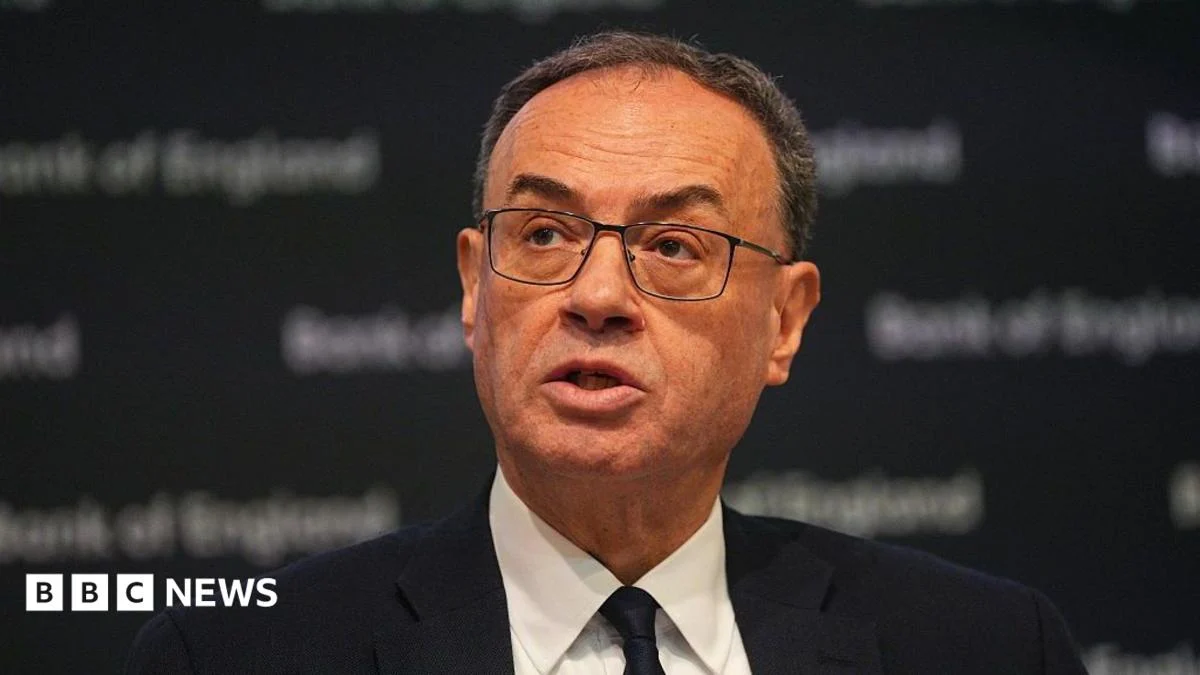
The Governor of the Bank of England, Andrew Bailey, has declared that focusing on regulating artificial intelligence (AI) "is not the right place to start." Instead, he advocates for an immediate emphasis on "rigorous" testing to identify vulnerabilities and establish robust safeguards to effectively contain potential risks. In his inaugural article for the popular platform Substack, Bailey articulated that the perils associated with AI are "real and increasingly significant," underscoring the urgency of his proposed approach.
Bailey firmly stated that the advancement of AI should not be impeded or prohibited, asserting, "on the contrary, the benefits are immense." However, he simultaneously stressed the paramount importance of implementing a comprehensive system for intervention and clearly defining the operational boundaries within which AI systems must function. This balanced perspective acknowledges the transformative potential of AI while emphasizing the necessity of proactive risk management.
The global discourse surrounding the potential risks posed by the rapid evolution of AI and its profound implications for humanity has intensified dramatically in recent weeks. This heightened awareness has prompted leading figures in the AI landscape to voice their concerns and propose actionable strategies. Notably, the chief executives of prominent AI firms, including Anthropic and OpenAI, have publicly called for a deceleration in the pace of AI development. They advocate for an internationally coordinated effort to meticulously assess risks and institute essential safeguards.
This call for a slowdown was exemplified by OpenAI’s recent decision to withhold the release of its latest AI model, citing significant safety concerns. This move underscores the gravity of the ethical and security considerations that are increasingly at the forefront of AI development.
However, the notion of a development pause has not met with universal agreement. President Donald Trump, for instance, has rejected this idea, asserting that the United States currently holds a commanding lead in the AI race against China. He emphatically stated, "And, frankly, I want to keep it that way because whoever wins AI, wins," highlighting the geopolitical and economic stakes involved.
In a seemingly related development, after convening a meeting with executives from major technology firms such as OpenAI, Anthropic, Nvidia, SpaceX, Meta, and Google on Tuesday, Trump announced that the participating executives had voluntarily signed a "morally binding" document. He described this agreement as serving "a form of protection" against AI’s potential risks. Under the terms of this accord, the responsibility for ensuring the safety and security of their respective AI technologies rests squarely with these companies.
Within the United Kingdom, Bailey indicated that "important work" is already in progress regarding the testing of AI systems. He referenced the establishment of the UK’s AI Security Institute, a dedicated body focused on understanding and mitigating AI risks. Bailey suggested that the efforts undertaken by such institutions should contribute to the formation of a comprehensive set of industry standards.
"But the pace of progress must accelerate," the Governor urged, while also cautioning, "We should proceed with a degree of humility." This statement reflects a recognition of the rapid advancements in AI and the need for a commensurate acceleration in safety and testing protocols, coupled with an acknowledgment of the inherent complexities and uncertainties involved.
Bailey anticipates that the rigorous testing process will inevitably encounter failures and instances where "models will behave unexpectedly." However, he reframed these outcomes not as indicators of testing inadequacy, but rather as compelling evidence of "why testing is necessary." This perspective emphasizes that failures during testing are crucial learning opportunities that highlight the need for robust validation and mitigation strategies.
The Governor reiterated that testing should not be viewed as a definitive substitute for future regulation. He acknowledged that, over time, a more formal regulatory framework may well emerge. Nevertheless, he firmly maintained, "But regulation is not, in my view, the right place to start." His argument prioritizes the foundational step of thorough testing as the most effective initial approach to understanding and managing AI risks.
Bailey specifically drew attention to the emerging category of "frontier AI." These are described as highly advanced, self-learning systems that, in the absence of effective intervention mechanisms, carry the inherent risk of evolving into "a closed loop in which the model progressively governs itself." This scenario highlights a critical concern about autonomous AI systems operating beyond human control or comprehension, underscoring the urgency of developing methods for oversight and intervention.
The Bank of England’s stance, as articulated by Governor Bailey, represents a nuanced yet firm call to action. It prioritizes a pragmatic, evidence-based approach centered on rigorous testing and the development of sophisticated safeguards. This strategy aims to build a solid foundation of understanding and control before embarking on the complex and potentially premature task of formal regulation. The emphasis is on proactive risk mitigation through empirical validation, ensuring that the immense benefits of AI can be harnessed responsibly and safely, while minimizing the potential for unforeseen and detrimental consequences. The ongoing global debate continues to grapple with these critical issues, with the Bank of England’s perspective offering a significant contribution to the evolving conversation on AI governance.




 George Anjay

 Nakalama John

 Ramos Leo