
 Nakalama John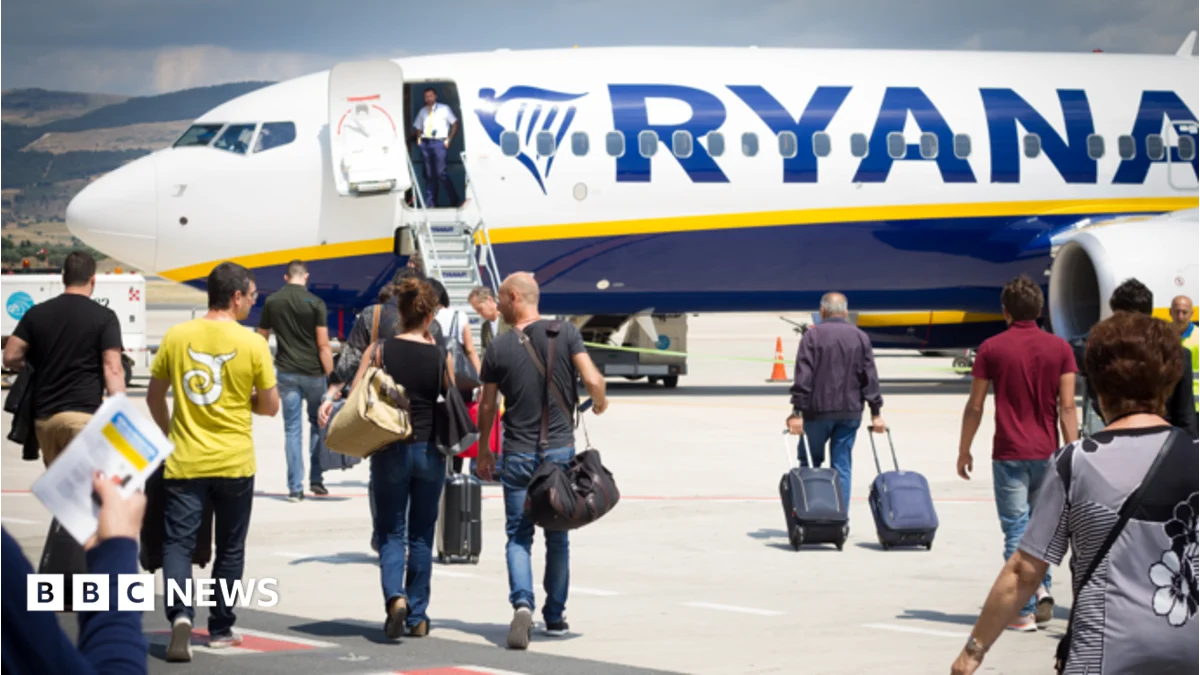
The financial results underscore the profound vulnerability of the airline industry to external shocks, particularly those emanating from volatile geopolitical landscapes and commodity markets. Ryanair’s sales remained largely flat over the quarter, a testament to the challenging operating environment where increased passenger volume did not translate into proportional revenue growth due to aggressive price reductions. The airline’s management has also indicated that summer fares, typically a crucial period for profitability, are expected to be slightly lower than last year, attributing this to a widespread "consumer hesitancy" surrounding air travel. This cautious outlook reflects a broader industry concern over the sustainability of demand in an era marked by persistent global uncertainties.
The primary catalyst for Ryanair’s profit erosion is the dramatic surge in jet fuel prices. This spike directly correlates with the intensified military actions in the Middle East, specifically the US and Israeli strikes against Iran that commenced in February. Jet fuel, a refined petroleum product, is intrinsically linked to crude oil prices, which reacted sharply to the regional instability. While Ryanair, like many major airlines, employs a strategy of "hedging" – striking deals for future fuel costs at a predetermined price to mitigate volatility – a substantial portion of its fuel requirements fell outside these arrangements. For this unhedged segment, the cost of fuel more than doubled, severely impacting the airline’s operational expenditures and bottom line.
Crude oil prices, a global benchmark, briefly touched $90 (£67) a barrel for the first time in a month following a weekend of intense exchanges of fire between the US and Iran, before experiencing a marginal pullback. This price point, while not unprecedented in historical terms, represents a significant upward movement from earlier stability and directly translates into higher input costs for airlines. The broader implications of this conflict extend beyond mere pricing, encompassing critical logistical choke points. Most notably, traffic through the Strait of Hormuz – a narrow waterway essential for global oil and gas supplies, through which approximately one-fifth of the world’s total petroleum liquids pass – has reportedly ground to a halt. This disruption has immediate and far-reaching consequences for the global energy market, tightening supply and exerting further upward pressure on prices. The strategic importance of the Strait cannot be overstated; any sustained closure or severe disruption there has the potential to trigger a global energy crisis.
Earlier hopes for market stability were briefly rekindled by an interim peace deal struck last month, which offered some temporary respite to both oil and energy prices. However, these gains proved fleeting as negotiations quickly broke down, leading to a resumption of hostilities and a subsequent re-spike in energy costs. This pattern of short-lived truces followed by renewed conflict exacerbates market volatility, making long-term planning incredibly challenging for energy-intensive industries like aviation. Ryanair’s management has explicitly warned that its financial results for the remainder of the year will be "highly sensitive" to a range of external factors, chief among them the potential for further conflict escalation in the Middle East and the ongoing war in Ukraine, as well as the unpredictable trajectory of unhedged jet fuel prices. The airline’s ability to navigate these turbulent waters will depend heavily on its agility in adjusting capacity and pricing strategies.
Industry experts are closely monitoring the situation. Shane Oliver, head of investment strategy at AMP, a prominent fund manager, voiced serious concerns regarding the potential ramifications of continued escalation. "The longer the strait remains closed and the war escalates, the greater the risk that oil prices will have to rise to around $150 a barrel to bring demand down to match the hit to supply," Oliver stated. He clarified that while this scenario is not AMP’s "base case" or most likely outcome, he underscored it as a "high risk" that cannot be ignored. A sustained period of crude oil at $150 a barrel would represent an existential threat to many airlines, likely necessitating significant fare increases that could cripple demand, reduce travel to a luxury, and potentially trigger a broader economic recession. The ripple effect would be felt across the global supply chain and consumer spending.
In response to the prevailing uncertainties, Ryanair has observed a shift in booking patterns. While fares for the critical summer period between July and September are projected to be "modestly" lower than the previous year, a noticeable trend has emerged: many passengers are booking their flights much closer to their departure dates than is typically observed. This "wait-and-see" approach from consumers reflects their cautious stance, possibly hoping for last-minute deals or simply delaying commitments until the geopolitical situation offers greater clarity. Despite the overall softness in fares, Neil Sorahan, Ryanair’s finance chief, offered a glimmer of optimism, noting that flights on the airline’s popular Mediterranean routes remained full. "People [are] as keen to get away as ever, albeit booking just a little bit later," he commented, suggesting that while the timing of bookings has changed, the underlying desire for leisure travel persists, particularly for traditional holiday destinations.
However, the late booking trend presents its own set of challenges for airlines, complicating revenue management and operational planning. The ability to forecast demand and optimize pricing months in advance is crucial for maximizing profitability in the highly competitive low-cost sector. A shift towards last-minute bookings can lead to less predictable revenue streams and potentially force airlines into more reactive pricing strategies. The delicate balance between filling seats and maintaining acceptable yields becomes even more precarious. The 6% increase in passenger numbers, while positive on the surface, directly contrasts with the 6% decline in average fares, illustrating the extent to which Ryanair had to compromise on pricing power to keep its planes full. This yield erosion is a direct consequence of the "consumer hesitancy" and the need to counteract the psychological impact of ongoing global conflicts on travel decisions.
The airline’s robust operational model, characterized by high load factors and efficient turnaround times, usually provides a buffer against market fluctuations. Yet, even Ryanair’s inherent cost advantages are being tested by the confluence of surging fuel costs and depressed demand for higher fares. The situation highlights the cyclical nature of the aviation industry and its susceptibility to external shocks, particularly those that simultaneously impact both operating costs and consumer willingness to spend. As the geopolitical landscape remains volatile, Ryanair and its peers will continue to grapple with the intricate challenge of balancing aggressive capacity deployment with prudent financial management, all while navigating an environment where the price of flying a plane can double overnight and passengers remain hesitant to commit to future travel plans. The coming quarters will be a true test of resilience for the entire sector, with profitability likely to hinge on global stability and the unpredictable trajectory of energy markets.



 Roy Suryo

 atisusanti
 Ramos Leo
