
 atisusanti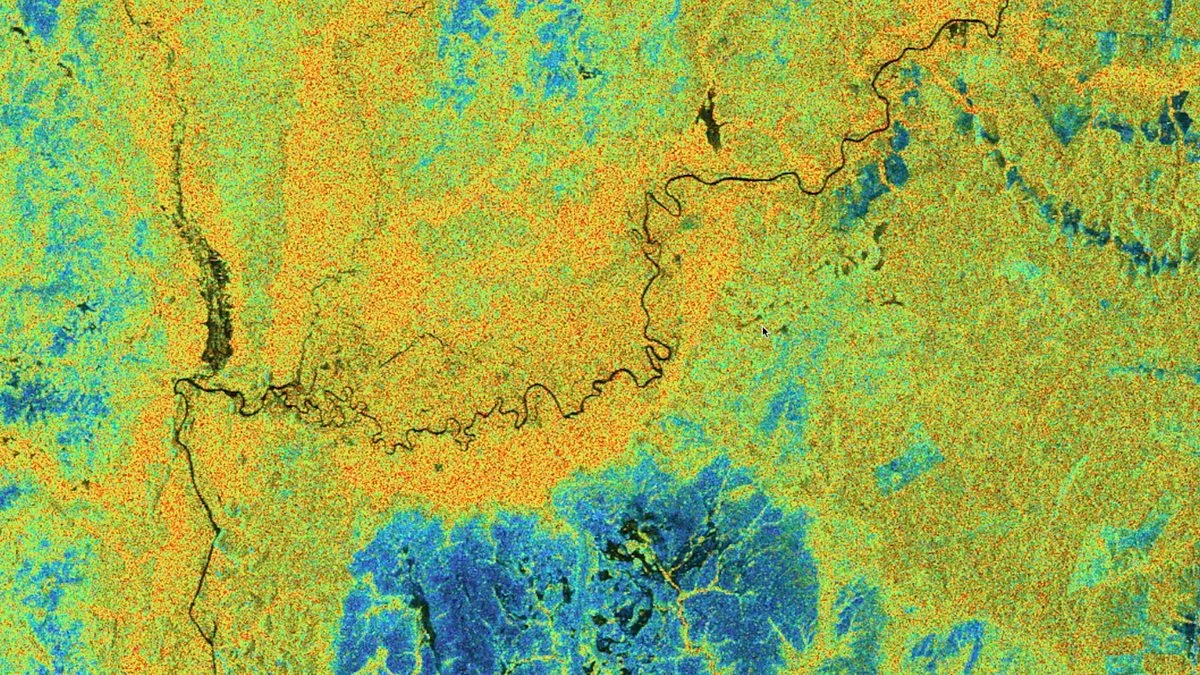
In a world increasingly grappling with the existential threat of climate change, the majestic rainforests, often referred to as the lungs of our planet, stand as vital bastions of biodiversity and crucial regulators of global weather patterns. Yet, these invaluable ecosystems are under unprecedented assault from deforestation, driven by agricultural expansion, logging, mining, and urban development. The consequences are far-reaching, contributing significantly to greenhouse gas emissions, exacerbating biodiversity loss, and displacing indigenous communities. However, a burgeoning wave of technological innovation is offering a glimmer of hope, providing powerful new tools to monitor, understand, and ultimately, protect these irreplaceable natural wonders.
Yasmin Morgan-Griffiths, a keen observer of technological advancements, delves into the cutting-edge applications being deployed to achieve an unprecedented level of detail in measuring the world’s forests. This is no longer a matter of broad estimations; advanced technologies are enabling scientists and conservationists to map forest canopies with remarkable precision, track individual tree health, and detect subtle changes that might otherwise go unnoticed. Satellite imagery, once a relatively blunt instrument, has evolved dramatically. High-resolution optical and radar satellites can now penetrate cloud cover, offering year-round monitoring of forest cover, identifying areas of illegal logging in near real-time, and assessing the biomass contained within vast tracts of land. These sophisticated sensors can distinguish between different tree species, identify signs of disease or stress, and even detect the subtle spectral signatures of illegal activities.
Complementing the orbital perspective are an array of aerial and terrestrial technologies. Drones, equipped with an assortment of sensors – from multispectral cameras capturing detailed vegetation health indices to LiDAR (Light Detection and Ranging) scanners creating intricate 3D models of forest structure – are becoming indispensable tools. These nimble aircraft can navigate dense canopies, access remote and dangerous terrains, and provide data at a granular level, allowing for precise mapping of forest plots, identification of individual trees for monitoring, and even the detection of saplings vital for reforestation efforts. LiDAR, in particular, is revolutionizing our understanding of forest structure. By emitting laser pulses and measuring the time it takes for them to return, LiDAR can create detailed point clouds that reveal the height, density, and spatial arrangement of trees, providing invaluable insights into carbon storage potential and habitat suitability.
Ground-based sensors are also playing a critical role in this technological arsenal. IoT (Internet of Things) devices, such as acoustic sensors, are being deployed to listen to the pulse of the forest. These sensors can identify the unique soundscapes of healthy ecosystems, detecting the presence of specific animal species, and crucially, alerting authorities to the tell-tale sounds of chainsaws or vehicles operating in protected areas. Motion-activated cameras, strategically placed throughout forests, provide visual evidence of human activity, allowing for the identification of poachers, illegal loggers, and other threats. Furthermore, advancements in DNA analysis and eDNA (environmental DNA) techniques are enabling researchers to detect the presence of species from minute traces of genetic material left behind in soil, water, or air samples, offering a non-invasive way to assess biodiversity without direct observation.
The sheer volume of data generated by these technologies is staggering. To effectively process and interpret this information, artificial intelligence (AI) and machine learning (ML) algorithms are proving to be game-changers. AI can rapidly analyze vast datasets from satellites, drones, and ground sensors, identifying patterns, anomalies, and trends that would be impossible for humans to detect manually. For instance, ML models can be trained to distinguish between natural forest disturbances and human-induced deforestation, predict areas at high risk of future logging based on historical data and proximity to roads, and even assess the health of individual trees by analyzing changes in their spectral reflectance over time. This predictive power is crucial for proactive conservation efforts, allowing resources to be deployed to areas where they are most needed before significant damage occurs.
Beyond monitoring and detection, technology is also empowering direct intervention and restoration. Robotics, a field experiencing rapid advancements, is beginning to make its mark. Suranjana Tewari takes us inside a robotics factory in Beijing, a hub of innovation where the machines of the future are being forged. While the specific applications of these robots in rainforest protection are still emerging, the potential is immense. Imagine swarms of autonomous drones capable of planting thousands of saplings in deforested areas, or robots designed to assist in the manual labor of reforestation, such as clearing invasive species or preparing soil. Advanced robotics could also be employed for tasks that are too dangerous or labor-intensive for humans, such as patrolling vast areas for early signs of fire or disease, or even assisting in the construction of eco-friendly infrastructure within or around protected zones.
The role of communication technologies cannot be overstated. The ability to transmit vast amounts of data from remote forest locations to analysis centers in real-time is essential. Satellite internet, long-range radio communication, and advanced mobile networks are bridging the digital divide, connecting conservationists on the ground with the global scientific community and policymakers. This interconnectedness allows for rapid response to threats, the sharing of best practices, and the mobilization of international support. Furthermore, mobile applications are empowering local communities, equipping them with tools to report illegal activities, access educational resources on sustainable practices, and participate more actively in conservation efforts.
However, the widespread adoption of these technologies is not without its challenges. The initial investment in sophisticated hardware and software can be substantial, posing a barrier for many conservation organizations, particularly those operating in resource-constrained regions. The availability of skilled personnel to operate and maintain these advanced systems is also a critical factor. Furthermore, the ethical implications of widespread surveillance, even for conservation purposes, need careful consideration, ensuring that data is used responsibly and with respect for privacy. Ensuring equitable access to these technologies and the benefits they provide is paramount to avoid exacerbating existing inequalities.
Despite these hurdles, the trajectory is clear: technology is rapidly becoming an indispensable ally in the fight to save our rainforests. From the orbital gaze of satellites to the intricate dance of drones and the potential of intelligent robots, innovation is providing unprecedented capabilities to understand, monitor, and protect these vital ecosystems. The data gathered allows for more informed decision-making, targeted interventions, and ultimately, a more effective strategy against the relentless pressures of deforestation. As we continue to push the boundaries of what is technologically possible, the hope is that these advancements will not only help us measure our forests in greater detail but also empower us to safeguard them for generations to come, ensuring that the vital breath of these natural wonders continues to sustain life on Earth. The information and support for some of the issues covered in our programmes can be found at bbc.co.uk/actionline.



 George Anjay
 Nakalama John
 Ramos Leo
 Roy Suryo
 Nana Banana