George Anjay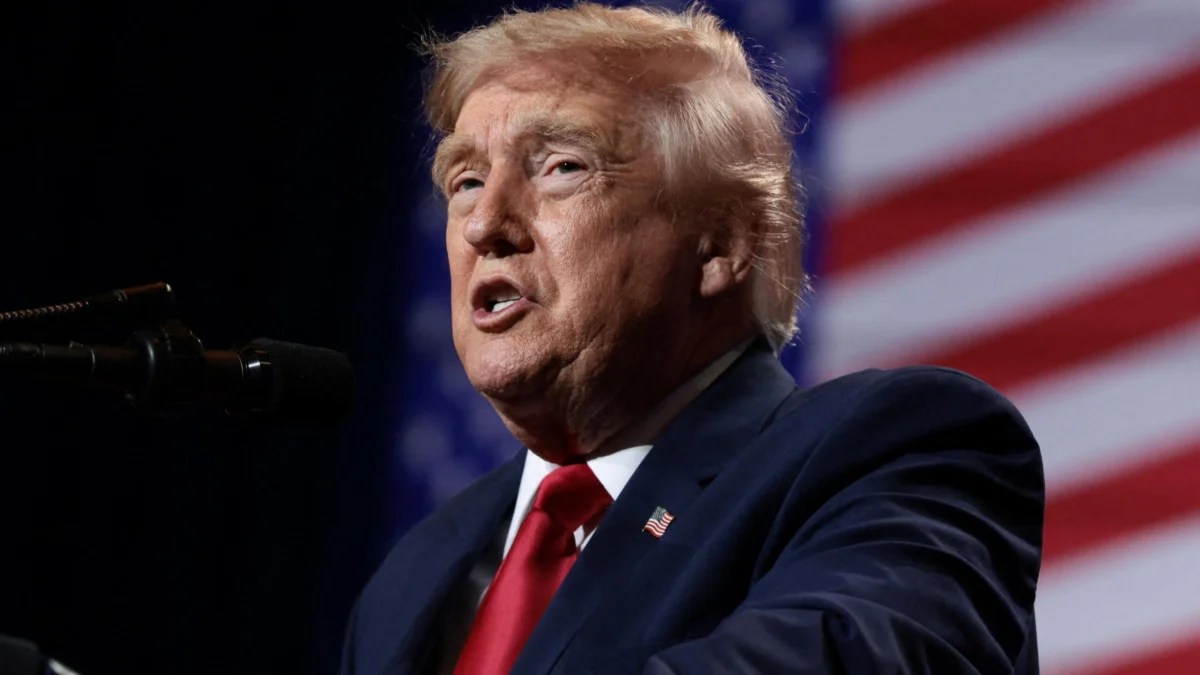
When another world leader meets US President Donald Trump, the only certainty about what might happen is the uncertainty about what might happen. This was precisely the case ahead of President Trump’s two-day visit to Ireland. Nobody could have predicted that by the end of the first day, the main global headline would be his desire to see a unified Ireland. As the shockwaves of his remarks rippled through this island and Great Britain, it was unclear whether this represented a new US administration policy or an off-the-cuff remark from a president who likes to take questions from reporters and enjoys giving answers.
Former Republican Congressman Mick Mulvaney, who served as Trump’s special envoy to Northern Ireland during his first term, cautioned against reading too much into the president’s remarks. He stated, "This does not represent a shift in US foreign policy. We’re still very much committed to the Good Friday Agreement." Democratic Congressman Brendan Boyle concurred, adding, "There is bipartisan support for that deal, and that is not going to change." Although both agreed that Donald Trump was probably right to say that "eventually" unification would happen, that did not mean the US was about to start pushing for it.
Giving an answer to a question asked at a free-flowing press conference is one thing, but Donald Trump repeated his sentiments a short time later when he was delivering a speech to an invited audience at the US Ambassador’s residence. In fact, it was almost the first thing he mentioned, hinting that perhaps he realized he had stirred up controversy at his earlier appearance. The rest of that speech was curious. It was billed as a 20-minute address to Irish and Irish American business leaders but was about twice that length and strayed largely into domestic US matters. President Trump has a speaking style that he himself describes as "the weave." He can bounce from topic to topic during any speaking engagement, veering off the script and then returning to the matter at hand. Today, he lauded his own achievements, as he sees them, such as clamping down on illegal immigration, striking deals, and boosting defense production. He repeated his criticisms once again of what he views as the UK’s lack of support for his military operation in Iran.
But who was his target audience? The gathered business leaders in Dublin, or a US audience tuning in before it was even dawn in much of that country? This November’s crunch midterm elections are fast approaching, and the Republican party is under intense pressure because of the president’s policies. They may lose control of one or both houses of Congress. Approximately one-tenth of the US population claims Irish heritage, but they are not a homogeneous voting bloc. Was he trying to target Irish-American independent or swing voters in the US, of which there are many who have flip-flopped between the Republican and Democratic parties in recent years? Some of them do support a unified Ireland, and so, in this time of chasing every vote, perhaps that played a part.
Bill Clinton secured a lot of Irish-American support when he was running for president by promising to get engaged in the peace process. They voted for him, and he followed through on his promise, with much of that work leading to the foundations of the Good Friday Agreement. However, Irish America is a different place now. Indeed, America is a different place now, as politics have become more polarized. The November election campaigns show no indication that this will change anytime soon. But political leaders in Ireland will be hoping the only debate tomorrow is about the play on the golf course.
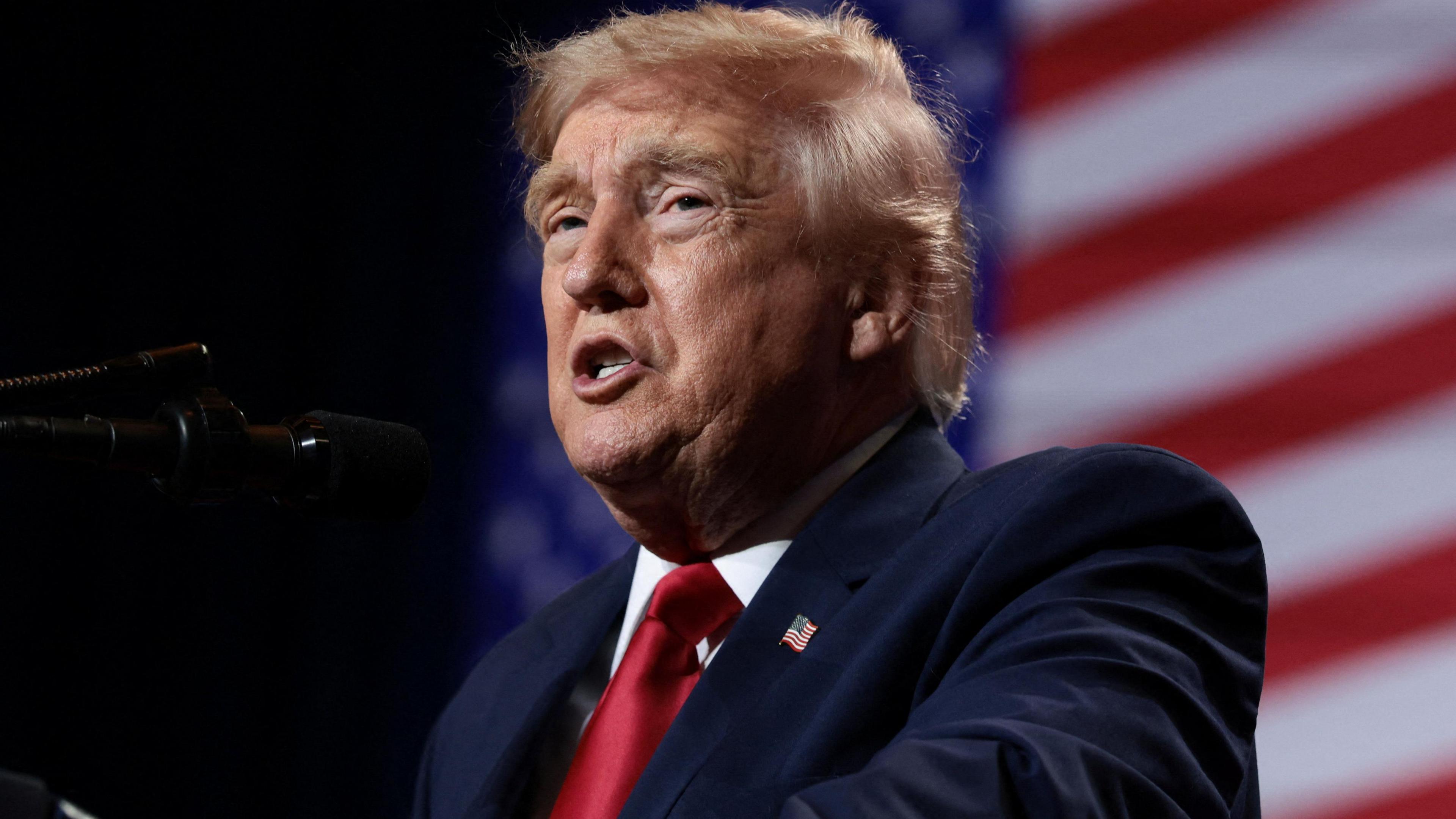
President Trump’s remarks on a united Ireland, delivered during his visit to the island, have sparked considerable debate and analysis regarding their potential motivations and implications. While the immediate reaction focused on the unexpected nature of the comments, a deeper examination suggests they may have been strategically aimed at a specific audience across the Atlantic, particularly in the context of the upcoming US midterm elections.
The Taoiseach (Irish Prime Minister) Micheál Martin met with President Trump, with Irish and American flags prominently displayed. While the official agenda likely centered on bilateral relations and trade, Trump’s propensity for impromptu pronouncements often reshapes the narrative of such engagements. His assertion regarding a unified Ireland, emerging from a press conference, quickly became the dominant global headline, overshadowing other diplomatic discussions. This spontaneity, a hallmark of Trump’s communication style, leaves allies and adversaries alike grappling with the implications of his pronouncements.
Despite the surprise, seasoned political observers and former administration officials have attempted to contextualize Trump’s remarks. Mick Mulvaney, who previously served as the US Special Envoy to Northern Ireland, emphasized that these comments do not signal a departure from established US foreign policy. He reiterated the US commitment to the Good Friday Agreement, a cornerstone of peace and stability on the island of Ireland. This sentiment was echoed by Democratic Congressman Brendan Boyle, who affirmed the bipartisan consensus in Congress supporting the agreement. Both figures acknowledged the potential for eventual unification but stressed that this does not translate into an active US policy push for such an outcome.

The repetition of Trump’s sentiment during a subsequent speech at the US Ambassador’s residence suggests a deliberate reinforcement of his message, perhaps indicating a recognition of the impact his initial statement had. The content of this speech, which reportedly deviated significantly from its billed focus on business to encompass domestic US issues, further fuels speculation about its intended audience. Trump’s "weave" speaking style, characterized by its free-flowing nature and tendency to jump between topics, often serves to connect with his base by highlighting his perceived successes and criticizing perceived adversaries.
The timing of these remarks, coinciding with the lead-up to the US midterm elections, is particularly noteworthy. The Republican party faces significant electoral challenges, and Trump’s pronouncements on issues with resonance among certain demographics could be interpreted as a tactic to energize voters. The Irish-American community, a significant demographic in the US, represents a diverse electorate whose historical ties to Ireland and engagement with issues like unification can be politically influential. While not a monolithic voting bloc, their collective voice can sway outcomes in key states and districts.
Historically, political figures have sought to leverage Irish-American support. Bill Clinton’s successful engagement with the Irish-American community during his presidential campaigns, notably by actively participating in the Northern Ireland peace process, serves as a precedent. Trump’s comments, therefore, might be seen as an attempt to tap into a similar vein of sentiment, appealing to those within the Irish diaspora who hold a vested interest in the island’s future. The current political climate in America, marked by increasing polarization, makes such targeted messaging potentially more impactful.

The notion that Trump’s remarks were a calculated appeal to a specific segment of the American electorate, particularly Irish-Americans, is a plausible interpretation. The fact that he reiterated his desire for a united Ireland, even as his speech veered into domestic policy and criticisms of allies, suggests a conscious effort to underscore a message he believed would resonate with voters back home. The mention of the UK’s perceived lack of support for his military operations in Iran, juxtaposed with his comments on Ireland, could also be part of a broader strategy to project an image of American strength and assertiveness on the global stage, a theme often central to his political rhetoric.
In essence, while President Trump’s visit to Ireland was ostensibly about strengthening bilateral ties, his pronouncements on a united Ireland have added a layer of intrigue, pointing towards a potential strategic calculus aimed at influencing American voters. The political landscape in both Ireland and the United States is complex, and Trump’s unique brand of diplomacy often intertwines domestic political considerations with international engagement. As the midterm elections loom, political analysts will continue to dissect such pronouncements for signs of strategic intent, understanding that for a president like Trump, the global stage can often serve as a powerful platform for domestic political messaging. The hope among political leaders in Ireland, however, remains that future discussions will focus on more conventional diplomatic matters, leaving the sensitive issue of Irish unification to be resolved through the island’s own political processes, rather than through transatlantic political maneuvering. The legacy of the Good Friday Agreement, a testament to decades of painstaking diplomacy and compromise, underscores the delicate nature of discussions surrounding the island’s future, and any external pronouncements, however well-intentioned or strategically aimed, are likely to be met with careful scrutiny.


 Nakalama John
 Ramos Leo
 Nana Banana