George Anjay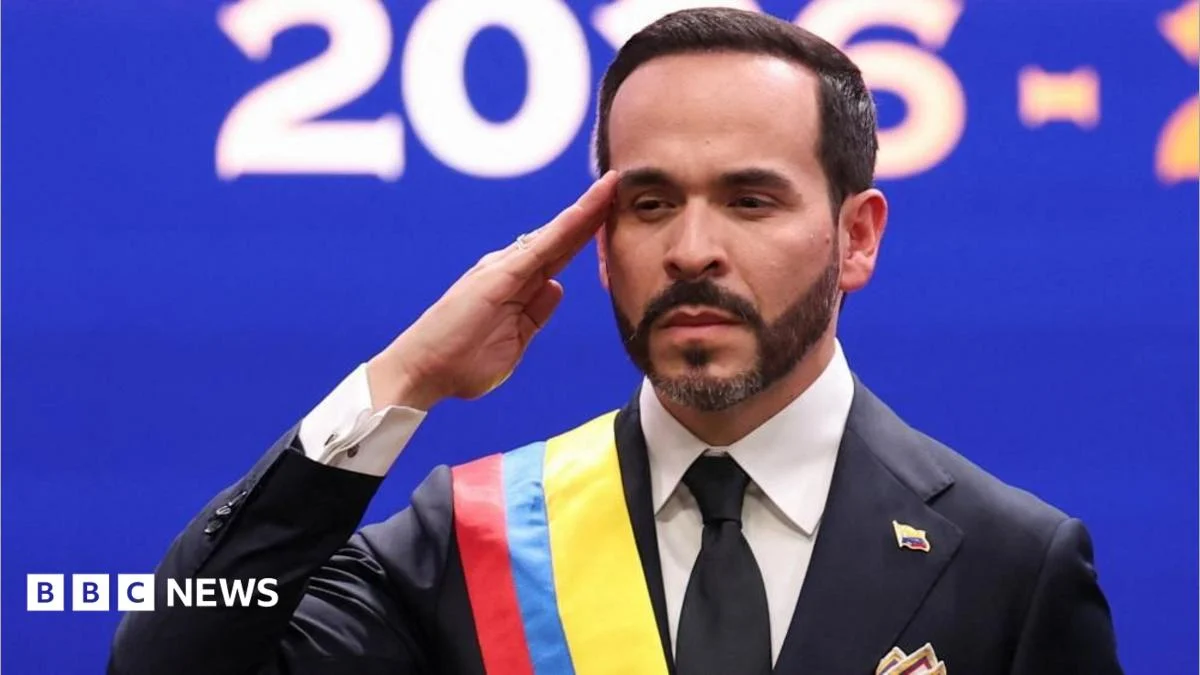
The United States has committed a substantial $1 billion in assistance to Colombia, signaling a significant shift in bilateral relations following the inauguration of the nation’s new right-wing president. This substantial financial package, announced by the U.S. State Department, is framed as a "security package" designed to bolster President Abelardo de la Espriella’s administration in achieving "shared goals," which prominently include an intensified campaign against organized crime, combating drug trafficking, and addressing illegal immigration. The announcement underscores a new era in U.S.-Colombia relations, marking a stark departure from the policies and often strained interactions of the previous left-wing administration.
President de la Espriella, a vocal ally of former U.S. President Donald Trump, used his maiden speech to declare an "all-out war" on what he unequivocally terms "narco-terrorism." His ascent to the presidency represents a dramatic ideological pivot for Colombia, replacing the former leader Gustavo Petro, whose administration frequently found itself at odds with Trump’s policies and rhetoric. Trump had publicly endorsed de la Espriella during the election, expressing confidence in a "much better relationship" with his new counterpart after de la Espriella’s victory in June.
The inauguration ceremony itself was attended by a high-level U.S. delegation, led by then-acting Attorney General Todd Blanche, who has since been officially confirmed to the post. The presence of such a senior U.S. official underscored Washington’s commitment to the new administration and its agenda. Also in attendance was FIFA president Gianni Infantino, though the context of his presence in relation to the political event was not detailed.
In a symbolic move designed to project an image of unwavering resolve against illicit armed groups, President de la Espriella chose to take his oath of office not in the nation’s capital, Bogotá, but in the historically volatile city of Cali, located in the western part of the country. This location choice was intended to send a clear message about his administration’s determination to confront the armed insurgents that have long plagued the region.
During his impassioned address, delivered at a nearby military base, de la Espriella pledged to dismantle armed insurgent groups with decisive force, to undertake a comprehensive rebuilding of Colombia, and to defend democracy "by reason or by force." He invoked his self-appointed nickname, "the age of the Tiger," to emphasize the forceful and resolute stance his government would adopt against criminal elements. "There will not be a single place in our territory where criminals can feel safe," he declared, underscoring his zero-tolerance policy.
De la Espriella’s political trajectory is notable. Prior to entering politics, he enjoyed a successful career as a lawyer, famously representing clients involved in drug trafficking, paramilitarism, and various forms of fraud. Critics, however, have voiced concerns that his confrontational approach and aggressive rhetoric could exacerbate existing societal divisions in an already deeply polarized nation.
His presidency signals a definitive break from the policies of his left-wing predecessor. Instead of pursuing peace talks with armed groups, de la Espriella has committed to a severe crackdown on their activities, coupled with plans for the construction of large-scale "mega-prisons" to house apprehended criminals. This hardline stance stands in stark contrast to Petro’s approach, which often prioritized dialogue and reconciliation.
Furthermore, de la Espriella has expressed his intention to forge strong military alliances with both the United States and Israel. This alignment marks a significant departure from Petro’s foreign policy, as Petro was a vocal critic of Israeli Prime Minister Benjamin Netanyahu. The embrace of these alliances is seen as a key component of de la Espriella’s security strategy.
In one of his initial presidential actions, President de la Espriella announced that Colombia would officially join the "Shield of the Americas" security partnership, an initiative originally founded by Donald Trump. The U.S. government has warmly welcomed this decision, reiterating its readiness to support the de la Espriella administration’s efforts to dismantle the "vicious narco-terrorist and criminal organizations" that pose a threat to regional security.
The U.S. State Department also highlighted the shared objective of stemming illegal immigration through enhanced "closer coordination on border security." This emphasis on border control reflects a key priority for the Biden administration as well, creating a point of convergence in the bilateral agenda.
Beyond security, Washington views President de la Espriella’s "pro-growth agenda" as an opportune moment to "increase trade and deepen economic ties between our countries." This economic dimension of the partnership is expected to be a significant focus, with the potential for increased U.S. investment and trade in Colombia. The $1 billion aid package is therefore multifaceted, encompassing not only security and law enforcement but also initiatives aimed at fostering economic development and stability. The U.S. government has expressed optimism that this renewed collaboration will lead to tangible improvements in Colombia’s security situation and its overall economic prosperity, solidifying a strategic partnership built on shared values and mutual interests. The inauguration of President de la Espriella, backed by strong U.S. support, marks a pivotal moment for Colombia, ushering in an era defined by a more assertive stance on security and a recalibration of its international alliances.



 Nakalama John
 Ramos Leo
 Nana Banana