
 George Anjay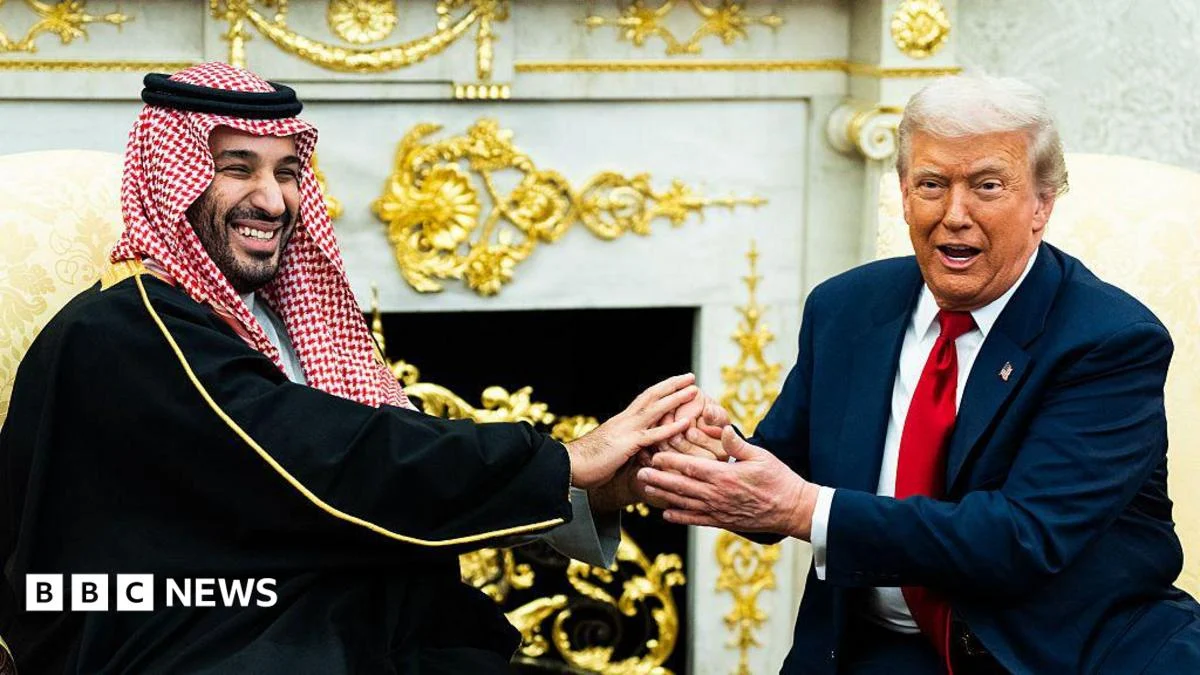
The official statement released on Wednesday articulated the administration’s perspective, asserting that the deal will "advance US and regional security by upholding high standards of nuclear safety, security, and nonproliferation and strengthening the United States’ competitive edge in civil nuclear technology." Secretary of Energy Chris Wright, a prominent figure in the Trump administration, underscored this commitment, stating, "Rest assured, these agreements uphold the highest standards of nuclear safety and nonproliferation, while relying on the world’s best nuclear technology and scientists, designed right here in the United States." This rhetoric emphasizes a dual focus on both economic opportunity and stringent international oversight, a narrative the administration aims to project to a skeptical global audience and a divided domestic one.
However, the agreement has immediately drawn sharp criticism and raised significant concerns, particularly from nuclear experts and former officials in Israel, the United States’ most steadfast ally in the Middle East. These prominent voices have expressed deep-seated apprehension that the deal could ultimately pave the way for Saudi Arabia to develop its own nuclear weapon capabilities. Their worries stem from the inherent dual-use nature of enrichment technology and the historical track record of nations pursuing nuclear energy programs with the latent potential for weaponization. The current geopolitical climate, marked by regional rivalries and a persistent threat from state and non-state actors, amplifies these concerns, transforming a seemingly routine energy deal into a matter of national and international security.
The Trump administration has consistently championed a narrative of American resurgence in the global arena, and this nuclear deal is being framed as a prime example of that renewed influence. In a statement that encapsulates the administration’s broader foreign policy and economic agenda, a White House official declared, "Thanks to President Trump, the American nuclear renaissance is underway and will deliver long-term benefits to the American and Saudi people." This framing attempts to link the agreement to a wider economic revival and a strengthening of bilateral ties, portraying it as a win-win scenario. The "American nuclear renaissance" refers to a broader push to revitalize the domestic nuclear industry, which has faced challenges from cheaper natural gas and regulatory hurdles. This deal, if it materializes as envisioned, would represent a significant international validation and economic boost for this sector.
The path forward for the agreement is far from smooth. The pact will now be transmitted to the United States Congress for a mandatory review period. This legislative scrutiny is expected to be intense, with lawmakers from both sides of the political aisle signaling their intention to voice opposition. While President Trump’s Republican Party currently holds a majority in both the House of Representatives and the Senate, the bipartisan nature of concerns surrounding nuclear proliferation means that the administration will likely face significant headwinds. Key figures within the Democratic Party have historically advocated for stricter non-proliferation measures, and the potential for Saudi Arabia to acquire advanced nuclear technology will undoubtedly be a focal point of their objections. Furthermore, some Republicans, particularly those with a strong national security focus, may also express reservations about the long-term implications of empowering a regional power with such sensitive capabilities, even under the guise of civilian nuclear energy.
The core of the debate revolves around the intricacies of nuclear non-proliferation treaties and the practical mechanisms for ensuring that civilian nuclear programs do not divert to military applications. Saudi Arabia, a signatory to the Nuclear Non-Proliferation Treaty (NPT), has publicly committed to using nuclear technology for peaceful purposes. However, critics argue that the NPT’s safeguards, while robust, are not foolproof, especially when dealing with nations that possess significant financial resources and a strong desire for regional influence. The specific terms of the agreement, particularly regarding the extent of US oversight, the types of enrichment technology involved, and the protocols for verifying the peaceful nature of Saudi Arabia’s nuclear activities, will be crucial in determining the level of congressional and international acceptance.
The implications for the broader Middle East are profound. Saudi Arabia’s pursuit of nuclear technology, even for civilian purposes, comes against a backdrop of heightened tensions with Iran, which also possesses a significant nuclear program that the international community has closely scrutinized. The perception of a nuclear arms race, however nascent, in a volatile region is a significant cause for concern among international security analysts. The deal could also embolden other regional players to seek similar nuclear cooperation agreements, potentially leading to a proliferation of nuclear capabilities across the Middle East. This, in turn, could complicate existing security architectures and increase the risk of accidental escalation or deliberate misuse of nuclear materials.
The economic dimension of the deal cannot be overstated. For US nuclear engineering firms and construction companies, this represents a massive potential contract. The development of a fully functional nuclear power program, from the construction of reactors to the establishment of fuel cycle facilities, is a multi-decade, multi-billion dollar undertaking. Such projects require a highly skilled workforce, advanced technological expertise, and extensive regulatory compliance, all areas where US companies have historically excelled. The administration’s emphasis on strengthening the "United States’ competitive edge" clearly highlights the desire to secure these lucrative contracts against international competitors, particularly from countries like China and Russia, which are also actively seeking to expand their nuclear energy exports.
However, the potential for proliferation risk is a recurring and potent counter-argument. Critics point to the historical precedent of nuclear programs evolving from civilian to military applications. The enrichment of uranium, a key component of this deal, can produce both low-enriched uranium (LEU) suitable for power plant fuel and highly enriched uranium (HEU) that can be used in nuclear weapons. While the agreement will undoubtedly include provisions for stringent monitoring and oversight by the International Atomic Energy Agency (IAEA), questions remain about the effectiveness of these safeguards in preventing a determined effort to acquire nuclear weapons capability. The possibility of "breakout" – a rapid diversion of nuclear materials and technology for weaponization – is a persistent fear.
The United States faces a delicate balancing act. On one hand, the opportunity to advance American economic interests and bolster its influence in a strategically vital region is significant. On the other hand, the responsibility to uphold global non-proliferation norms and prevent the further spread of nuclear weapons is a paramount concern. The coming months will see intense debate in Congress, among foreign policy experts, and within the international community as the implications of this landmark nuclear deal are thoroughly dissected. The administration’s success in navigating these complex challenges will ultimately determine whether this agreement proves to be a genuine boon for regional security and American prosperity, or a dangerous gamble with the future of global nuclear stability. The final outcome will be a testament to the administration’s diplomatic acumen and its ability to assuage the legitimate concerns of its allies and the international community.



 Roy Suryo

 Nakalama John
 atisusanti
 Ramos Leo
