George Anjay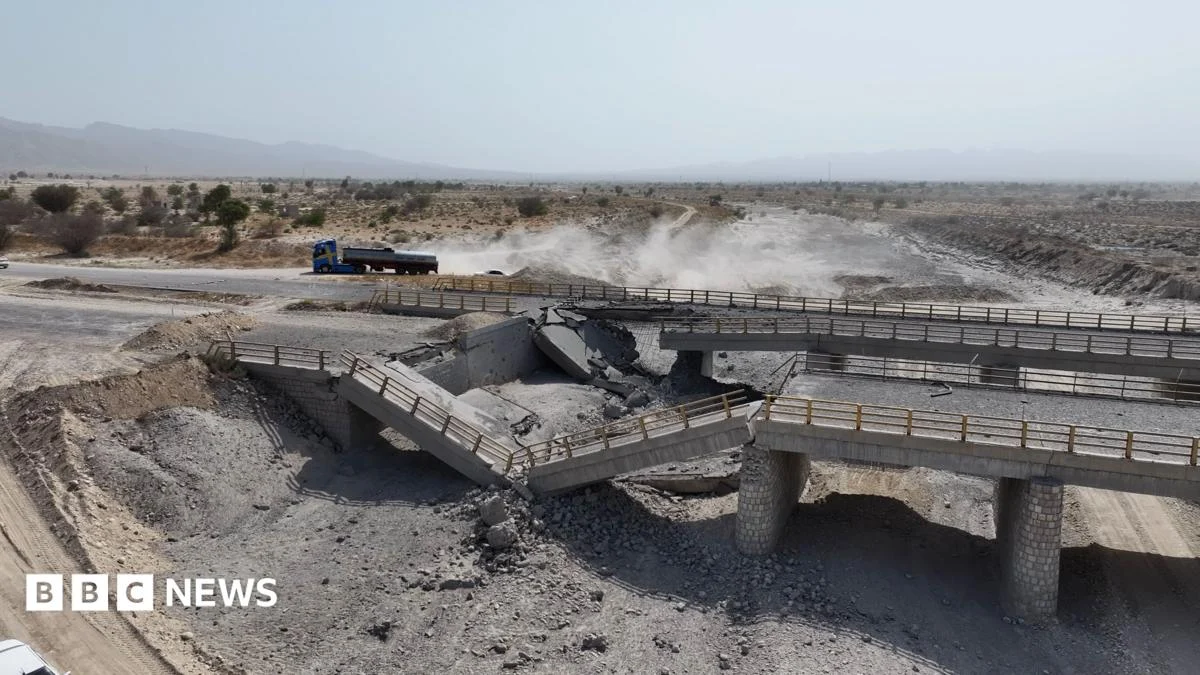
The United States military has conducted its seventh consecutive night of strikes against targets within Iran, escalating a dangerous tit-for-tat exchange that began after President Donald Trump declared a temporary ceasefire agreement between the two nations "over." The sustained military action, confirmed by U.S. Central Command (Centcom), underscores the deepening crisis and the significant disruption to global energy markets.
In a statement released via the social media platform X, Centcom detailed the objectives of the recent strikes, indicating that its forces "hit surveillance sites, military logistics infrastructure, underground weapons storage, and maritime capabilities." This broad categorization suggests a concerted effort to degrade Iran’s military capacity and its ability to project power, particularly in the strategically vital Strait of Hormuz.
The ongoing hostilities have been accompanied by conflicting narratives from both sides. Iran’s Revolutionary Guards (IRGC) initially claimed that two oil tankers had exploded in the Strait of Hormuz, attributing the incident to a mined section of the shipping channel. However, Centcom swiftly dismissed this assertion, labeling it as "false" and part of a pattern of IRGC misinformation. This denial highlights the information warfare that often accompanies kinetic actions, aiming to shape public perception and potentially sow confusion.
Adding another layer to the volatile situation, Jordan’s armed forces reported intercepting a significant number of Iranian missiles fired into its airspace overnight. While there were no reported casualties or damage from these intercepted projectiles, the incident demonstrates the expanding reach of the conflict and the potential for spillover into neighboring countries. The Jordanian military’s swift response underscores the heightened alert status in the region.
Centcom specified that its latest round of strikes concluded at 21:30 ET (02:30 BST), following several hours of sustained operations. The statement further elaborated on the diverse array of assets employed by U.S. forces, noting the use of "fighter aircraft, aerial drones, and warships in addition to other assets." This comprehensive deployment of military power signals the seriousness with which the U.S. is treating the situation and its determination to achieve its objectives.
The Iranian state-run Fars news agency had initially reported the explosions of two oil tankers while they were traversing a "mined route south of the Strait of Hormuz." This claim, however, was met with a firm rebuttal from Centcom on X, which stated, "Like most IRGC claims, this is false." This exchange exemplifies the challenge of verifying information in a conflict zone and the starkly different interpretations of events presented by the involved parties.
The Strait of Hormuz, a critical chokepoint for global energy supplies, has become a focal point of the escalating tensions. Shipping traffic through the strait, which normally facilitates approximately one-fifth of the world’s oil and liquefied natural gas (LNG) supplies, has been severely curtailed. This disruption poses a significant threat to global energy security and is likely to have far-reaching economic consequences.
Reports from Iranian state media indicated that explosions were audible in the central city of Yazd, as well as on Qeshm Island and at the port of Bandar Abbas, both of which are situated adjacent to the strait. These reports suggest that the strikes are impacting areas beyond immediate naval or coastal targets, potentially affecting civilian infrastructure and creating widespread anxiety.
In a significant development on Friday, Iran’s armed forces had claimed to have launched attacks against multiple U.S. military facilities across the Gulf region, including targets in Kuwait, Bahrain, Jordan, and, for the first time, Syria. The U.S. has officially denied these claims, adding another layer of complexity to the evolving narrative of the conflict.
Earlier reports from Kuwaiti officials suggested that Iranian drone strikes had resulted in injuries to a number of their soldiers. Additionally, critical infrastructure, including a power plant and water desalination stations, were reportedly damaged in these alleged attacks. These reports, if substantiated, would indicate a broader Iranian offensive capability and a willingness to strike civilian and critical infrastructure.
Further compounding the situation, sources speaking to the BBC’s U.S. partner, CBS News, indicated that several American service members sustained injuries during Iranian attacks on two Jordanian bases over the past week. This information, if confirmed, would represent a direct engagement with U.S. personnel, significantly raising the stakes of the conflict.
Washington has vehemently denied Tehran’s earlier assertions that its forces targeted civilian infrastructure within Iran, specifically refuting claims of strikes on bridges, a train station, and an airport. However, provincial authorities in the affected Hormozgan province have stated that seven people were killed in the U.S. attacks. This discrepancy in casualty figures and the nature of the targets highlights the contentious nature of the information being disseminated by both sides.
The BBC’s verification units, including BBC Verify and BBC Persian, have independently confirmed footage showing damage to the Gariveh Bridge. Nighttime videos had depicted a ball of flames engulfing the structure, and subsequent daylight images revealed a collapsed section of road with debris scattered around the damaged bridge. This evidence lends credence to the reports of strikes on civilian infrastructure, despite U.S. denials.
In response to the allegations of civilian infrastructure damage, a White House spokesperson reiterated to the BBC that the U.S. had "carried out strikes exclusively on military targets, including military logistics infrastructure." This consistent assertion from the U.S. government suggests a strategic decision to maintain a narrative of precision targeting, even in the face of conflicting evidence.
The current wave of nightly U.S. attacks marks one full week since peace talks between the U.S. and Iran reportedly collapsed. The breakdown in negotiations is attributed, in part, to escalating tensions surrounding the future of the Strait of Hormuz and the lingering disagreements over brokering a permanent ceasefire. The prolonged military engagement, coupled with the disruption to global energy flows, paints a grim picture for regional stability and international security. The inability to de-escalate the conflict and find a diplomatic resolution carries significant implications for the global economy and the geopolitical landscape. The continuous cycle of strikes and counter-strikes risks further entrenching animosity and making a peaceful resolution increasingly elusive, with potential consequences that could extend far beyond the immediate theater of operations. The strategic importance of the Strait of Hormuz amplifies the danger, as any sustained disruption could have cascading effects on global supply chains and energy prices, impacting economies worldwide. The international community is watching with growing concern as this dangerous escalation unfolds, with calls for restraint and diplomatic engagement becoming more urgent.



 Nakalama John
 atisusanti
 Ramos Leo