Nana Banana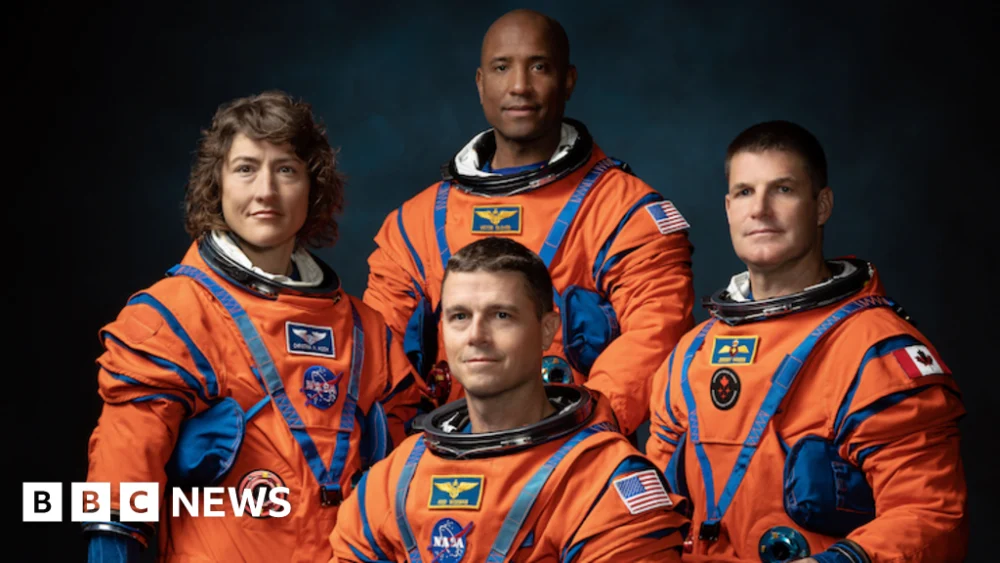
Nasa is charting an ambitious course back to the Moon, aiming for a pivotal launch with the Artemis II mission before the end of April 2026. This monumental endeavor will mark the first time in over 50 years that humans have ventured beyond low Earth orbit and orbited the Moon. Spanning approximately 10 days, this historic flight is designed to push the boundaries of human exploration, potentially taking its four-person crew further into space than any human has traveled before. Its primary objective is to rigorously test Nasa’s next-generation deep-space exploration systems, laying critical groundwork for the eventual return of humans to the lunar surface, a feat not achieved since the iconic Apollo missions of the 1960s and 70s.
When will Artemis II launch?
The official target for the Artemis II launch is currently set for before the end of April 2026. This revised timeline reflects the meticulous and often complex nature of human spaceflight, where safety and system integrity are paramount. Earlier aspirations for a sooner launch were tempered by a series of technical challenges encountered during pre-flight testing. A planned February launch, for instance, was ruled out following a critical "wet dress rehearsal." This crucial test, which simulates launch day procedures including fueling the massive Space Launch System (SLS) rocket, was cut short when a hydrogen rocket fuel leak was detected at a connection point between the launch tower and the rocket. Subsequently, a March launch window was also closed after a separate helium leak was discovered.
Beyond resolving these intricate technical issues, mission planners must meticulously align the launch with specific celestial mechanics. The Moon’s orbital position, coupled with Earth’s rotation, dictates precise "launch windows" – limited periods when the rocket can be successfully pointed in the optimal direction for its translunar injection. This creates a recurring pattern where launch opportunities typically arise for roughly one week at the beginning of each month, followed by approximately three weeks with no viable launch windows. Each delay necessitates careful rescheduling to find the next available window that ensures the mission can be executed safely and efficiently.
Who are the Artemis II crew?
The four pioneering astronauts selected for the Artemis II mission represent a blend of seasoned spaceflight experience and groundbreaking achievements. The crew comprises Nasa commander Reid Wiseman, pilot Victor Glover, and mission specialist Christina Koch, alongside a second mission specialist, Jeremy Hansen, from the Canadian Space Agency (CSA).
Reid Wiseman, serving as the mission commander, brings a distinguished 27-year career as a U.S. Navy veteran to the forefront of this lunar endeavor. A highly accomplished pilot and engineer, Wiseman was selected as an astronaut by Nasa in 2009. His prior spaceflight experience includes serving as a Flight Engineer aboard the International Space Station (ISS) for Expedition 41 in 2014, where he spent 165 days in orbit and conducted two spacewalks, demonstrating his expertise in complex orbital operations. A native of Baltimore, Maryland, his leadership will be crucial for the success of Artemis II.
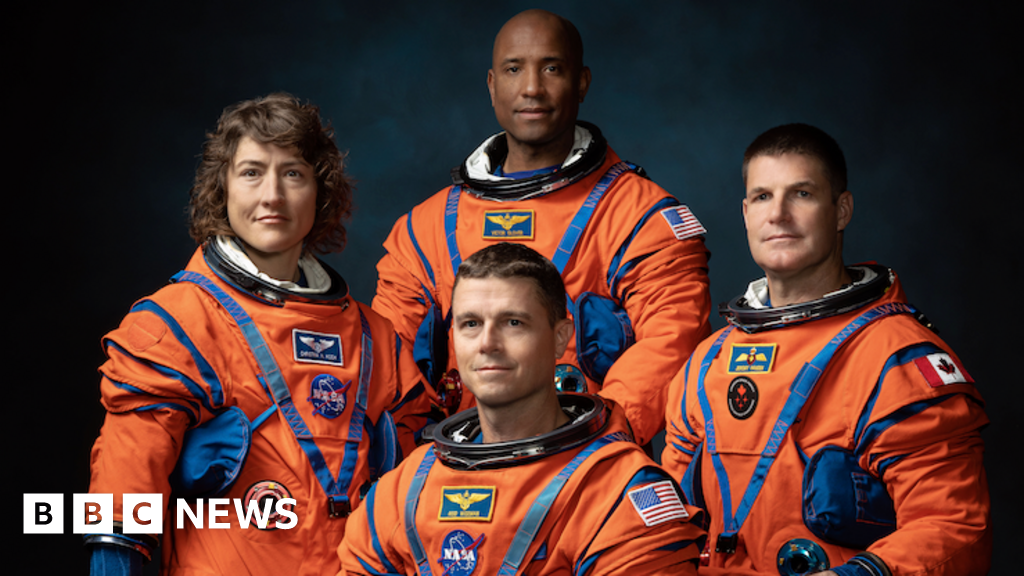
Victor Glover, the mission’s pilot, is another highly decorated Nasa astronaut, selected in 2013. He has already made history as the pilot of SpaceX Crew-1, the first operational flight of a Crew Dragon spacecraft to the ISS, and the first long-duration mission for a commercial crew vehicle. Glover holds an impressive three master’s degrees, reflecting his deep academic and technical acumen. Born in California, he is married with four children, embodying the diverse backgrounds of modern astronauts. His expertise in piloting and systems will be vital for navigating the Orion capsule.
Christina Koch, a mission specialist, is renowned for her record-breaking achievements in space. Hailing from Michigan, she became an astronaut in 2013 and subsequently spent 328 consecutive days on the International Space Station in 2019, setting a new record for the longest single spaceflight by a woman. During her time on the ISS, Koch also made history by participating in the first-ever all-female spacewalk, further cementing her legacy as a trailblazer. Her extensive experience in long-duration spaceflight and spacewalk operations will provide invaluable insights into human endurance and capabilities in the deep-space environment.
Jeremy Hansen, the second mission specialist, represents the Canadian Space Agency, making him the first Canadian ever selected for a mission to the Moon. Hansen joined the CSA in 2009 after a distinguished career as a fighter pilot in the Royal Canadian Air Force. His leadership qualities were recognized early, as he became the first Canadian to lead astronaut training at Nasa’s Johnson Space Center. His inclusion on the Artemis II crew underscores the growing international collaboration in lunar exploration and highlights Canada’s significant contributions to space endeavors.
What will the Artemis crew do during the Moon mission?
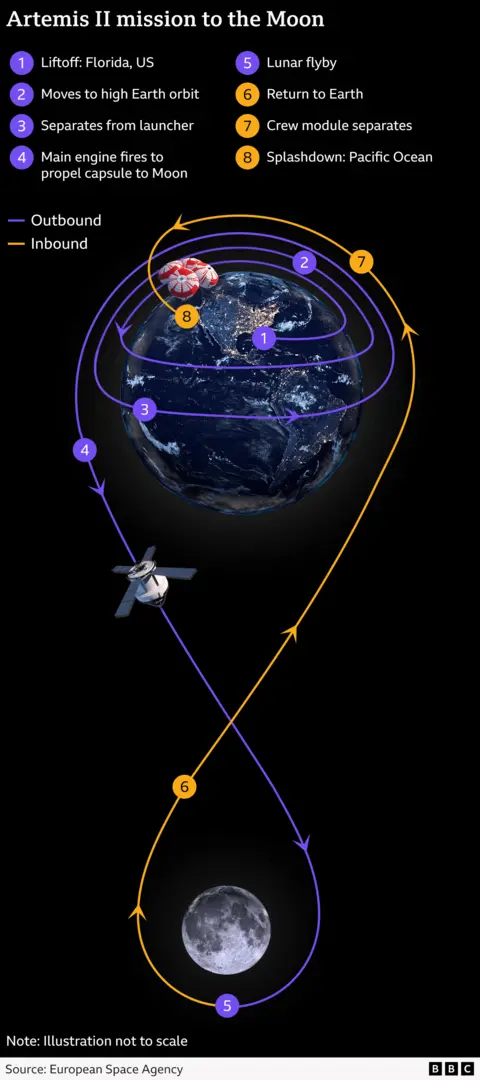
The Artemis II mission is a meticulously planned shakedown cruise for Nasa’s most powerful rocket, the gigantic Space Launch System (SLS), and the state-of-the-art Orion space capsule. Once the crew is safely in Earth orbit, a critical phase of testing will begin. The astronauts will meticulously evaluate how the Orion capsule performs, focusing particularly on its manual flight capabilities. This involves actively flying the capsule in Earth orbit, practicing steering maneuvers and precise spacecraft alignment techniques that will be essential for future lunar landings and rendezvous operations.
Following these initial orbital tests, the Orion spacecraft will perform a translunar injection burn, propelling the crew towards the Moon. The mission profile will take the astronauts to a point thousands of kilometers beyond the Moon, a distance farther into space than any human has traveled before. In this deep-space environment, the crew will conduct thorough checks of Orion’s life-support, propulsion, power, and navigation systems, ensuring every component can withstand the rigors of lunar transit and return.
Crucially, the crew members themselves will act as living test subjects. They will continuously send back vital physiological data and imagery from deep space, allowing scientists and engineers to monitor the effects of the space environment on the human body. While operating in the confines of a small cabin in weightlessness, they will experience higher radiation levels than those encountered on the International Space Station, which orbits in low Earth orbit. However, these levels are carefully monitored and remain within safe parameters for the duration of the mission. The journey will culminate in a dramatic return to Earth, where the astronauts will experience a high-speed, bumpy re-entry through the atmosphere, followed by a precision splashdown off the west coast of the United States in the Pacific Ocean.
Will Artemis II land on the Moon?
No, the Artemis II mission is not designed for a lunar landing. Its primary purpose is to serve as a critical crewed test flight, validating the integrated performance of the SLS rocket, the Orion spacecraft, and ground systems, as well as demonstrating the capabilities of the crew in deep space. It is a crucial stepping stone, laying the ground for future lunar landings.
The actual human landing on the lunar surface is currently planned for the Artemis IV mission, targeted for 2028. Prior to that, Nasa intends to conduct another crewed test mission, Artemis III, in 2027. Artemis III will focus on rehearsing Orion’s rendezvous and docking procedures with one or more lunar landers and will also provide an opportunity to test the new generation of spacesuits designed for lunar surface operations, provided they are ready in time.
For the lunar landings, Nasa has strategically partnered with commercial entities, selecting two rival lander designs: SpaceX’s Starship and a craft designed by Jeff Bezos’s company, Blue Origin. The decision on which vehicle will be utilized for specific missions will be made closer to the launch dates. When Artemis IV finally launches, the astronauts will be heading to the Moon’s south pole, a region of immense scientific interest due to the potential presence of water ice in permanently shadowed craters.
Following this initial landing, the Artemis V mission, planned for later in 2028, aims to further build the capability for a sustained human presence on the Moon. Subsequent Artemis missions will involve the assembly of Gateway, a small but vital space station orbiting the Moon, which will serve as a staging point for lunar surface missions and a science outpost. These missions will also deploy more Moon landings, add extra modules to Gateway, and send new robotic rovers to explore the lunar surface. The long-term vision of the Artemis program is one of international collaboration, with astronauts from a widening group of nations living and working on and around the Moon for extended periods, fostering a new era of lunar exploration and scientific discovery.
When was the last Moon mission?
The last time humans walked on the Moon was during the Apollo 17 mission, which landed in December 1972 and returned to Earth later that month. This marked the final crewed mission of the historic Apollo program. In total, 24 astronauts have journeyed to the Moon, and 12 of them have had the extraordinary experience of walking on its surface, all during the Apollo era. Of those 24 who traveled to the Moon, only five are still alive today, bearing witness to a golden age of space exploration.
America’s initial push to the Moon in the 1960s was driven primarily by geopolitical motivations, specifically to outcompete the Soviet Union and assert its technological and ideological dominance during the Cold War. Once this monumental goal was achieved with Neil Armstrong’s first steps, political enthusiasm and public interest began to wane, leading to a significant reduction in funding for future lunar expeditions. The Artemis program, however, signals a renewed global interest in lunar exploration. It was conceived out of a desire not just to return humans to the Moon, but to establish a long-term, sustainable presence built upon cutting-edge technology, robust commercial partnerships, and broad international collaboration.
Do other countries plan to send astronauts to the Moon?
Indeed, the ambition to send humans to the Moon is not exclusive to Nasa; several other countries and space agencies have set their sights on lunar exploration in the 2030s.
European astronauts are slated to join later Artemis missions, underscoring the collaborative spirit of this new era of lunar exploration. Japan has also secured seats on future Artemis flights, demonstrating a growing international commitment to a shared vision of lunar presence.
China is actively developing its own independent human spaceflight capabilities, with a stated goal of achieving its first crewed landing near the Moon’s south pole by 2030. This ambitious program includes the development of heavy-lift rockets and new spacecraft designed for lunar missions.
Russia, a historical leader in space exploration, continues to articulate plans for flying cosmonauts to the lunar surface and establishing a small base sometime between 2030 and 2035. However, the feasibility of Russia’s timeline faces significant challenges due to international sanctions, persistent funding pressures, and various technical setbacks that have impacted its space program.
India, following the remarkable success of its Chandrayaan 3 mission, which achieved a historic soft landing near the lunar south pole in August 2023, has also expressed strong ambitions to one day see its own astronauts walking on the Moon. India’s space agency has outlined a goal of sending astronauts to the Moon by approximately 2040, as part of a broader strategic initiative to expand its human spaceflight program beyond low Earth orbit and establish itself as a major player in deep-space exploration.
Additional reporting by Kevin Church and Emily Selvadurai.




 Roy Suryo
 George Anjay
 Ramos Leo
 atisusanti