Nakalama John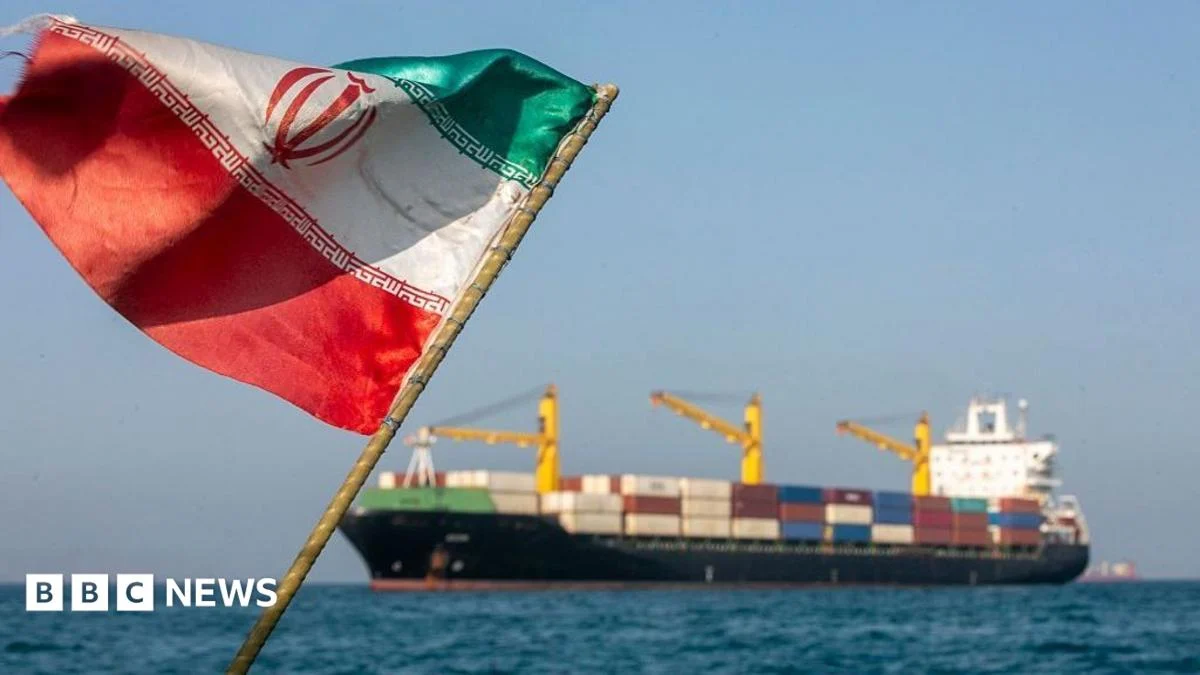
China stands as the preeminent buyer of Iranian goods, accounting for a significant 26.9% of its total exports in 2025, according to projections from the International Trade Centre (ITC), a joint subsidiary of the United Nations and the World Trade Organisation. This data, while providing a crucial snapshot of Iran’s trade relationships, comes with several important caveats, particularly as it predates the significant escalation of tensions and proxy conflicts involving the US, Israel, and Iran that have shaped the current geopolitical landscape. The ITC’s figures, therefore, represent a baseline that has likely been profoundly altered by recent events and the ongoing strategic maneuvering in the region.
One primary concern among economists is the widespread belief that even before the recent heightening of conflict, a substantial portion of Iranian oil sales, especially those destined for China, were deliberately underreported. This strategic opacity was driven by a desire to circumvent existing international sanctions and mask the true extent of trade, making precise economic calculations challenging. The very nature of Iran’s sanctions-hit economy encourages such clandestine activities, creating a shadow market that is notoriously difficult to quantify. Furthermore, the ITC constructs its tallies of Iran’s exports predominantly by relying on the import numbers declared by its trading partners. This methodology is necessitated by the persistent difficulty in obtaining accurate, up-to-date, and verifiable export data directly from Iran, a nation often wary of transparency regarding its economic activities, particularly in sensitive sectors like oil. Adding another layer of complexity, import data from some of Iran’s crucial trading partners, such as neighboring Iraq, remains incomplete or sporadically reported, further obscuring the full picture of Iran’s economic outreach.
Despite these inherent data limitations and the acknowledged challenges in obtaining a perfectly clear view, the strategic importance of Iranian trade to China is unmistakably evident in Beijing’s robust response to the US announcement of what has been dubbed "economic D-Day." This phrase, evocative of a decisive and overwhelming military offensive, signals an intent by the United States to launch a comprehensive and severe economic campaign designed to cripple Iran’s financial lifelines. China, however, reacted swiftly and assertively, declaring its firm opposition to what it termed "illegal unilateral sanctions." Beijing unequivocally stated that such economic pressure tactics would not contribute to resolving the underlying problems and, crucially, affirmed its commitment to safeguarding its own national interests. This stance is not merely diplomatic posturing; it reflects China’s deep economic ties with Iran, its broader challenge to US global hegemony, and its strategic imperative to secure energy supplies and maintain influence in the Middle East, irrespective of Washington’s dictates. For China, maintaining access to Iranian resources, even under sanctions, is a component of its long-term energy security strategy and its ambition to foster a multipolar world order less dominated by Western economic leverage.
Beyond China, Iran’s immediate neighbors also play a critical role in its trade network, often walking a tightrope between maintaining economic ties with Tehran and preserving diplomatic relations with Washington. Pakistan, like Turkey, shares a lengthy border with Iran and ranks among its largest export partners, according to ITC data. Simultaneously, Pakistan is deeply invested in maintaining a strong and cooperative relationship with the United States, a key donor, military partner, and major export market for Pakistani goods. This dual allegiance places Pakistan in a precarious position. Unlike Turkey, whose economic diversification and strategic autonomy allow for more flexibility, Pakistan’s top export partner is unequivocally the United States. This fundamental economic reality means Pakistan has considerably more to lose from any potential economic punishment or punitive measures imposed by Washington should it be perceived as violating sanctions against Iran. The potential for secondary sanctions or a downgrading of its trade status with the US represents a significant threat to Pakistan’s already fragile economy.
Complicating matters further, Pakistan serves as a key, albeit often quiet, mediator in various peace talks and diplomatic efforts between the United States and Iran. This sensitive role underscores its strategic importance in regional stability. A breakdown in its relationship with either country, exacerbated by economic pressures or perceived allegiances, could severely undermine these delicate peace initiatives, making the already challenging task of finding a sustainable solution to the regional conflict even more arduous.
An additional, and highly problematic, factor is that not all of Pakistan’s trade with Iran falls within the direct purview or control of the Pakistani government. Evidence obtained by the BBC, for instance, has revealed extensive networks of oil smuggling across the vast and often unpoliced 900-kilometer border between Iran and Pakistan. This illicit trade is often carried out en masse by individuals on motorbikes, some as young as 15, highlighting the desperate economic conditions that fuel such dangerous activities. While this cross-border smuggling was a known phenomenon even before the recent escalation of tensions, available data strongly suggests that the practice has significantly intensified since the onset of the US-Israel-Iran conflict. The surging demand for cheaper, albeit illicit, Iranian fuel in Pakistan, coupled with Iran’s need for revenue, creates a powerful incentive for this shadow economy to thrive. Despite considerable pressure from the US and international oil firms on Pakistan’s government to crack down on these illegal operations, authorities have consistently struggled to effectively police the remote, rugged, and largely inaccessible parts of the border region. The BBC previously sought comment from the Iranian government regarding allegations of its involvement or tacit approval of this fuel smuggling, but no response was provided, further shrouding the issue in ambiguity.
US Treasury Secretary Scott Bessent, in articulating the intent behind the new wave of sanctions, declared that they would "tighten the noose and block every potential source of revenue" for Iran. This aggressive rhetoric suggests a belief that a comprehensive economic blockade can effectively isolate and incapacitate the Iranian regime. However, many experts in international economics and geopolitics hold a markedly different view, expressing significant skepticism regarding the potential efficacy of these new measures. Advisory firm Oxford Economics, for example, projected that the direct impact on Iran’s revenues from these renewed sanctions would likely be "somewhat of a damp squib," implying a negligible or underwhelming effect.
Ali Vaez, deputy director at the influential International Crisis Group, articulated a widely held sentiment among experts, stating, "Anything that moves in Iran has already been sanctioned by multiple layers of sanctions, in fact." He added that the critical question now is not about the imposition of new sanctions, but rather about their enforcement. "Does the United States have what it takes to impose fines and levies on countries that continue to trade with Iran?" Vaez questioned, highlighting the formidable challenge of policing a global economy against determined actors. He pointed to the US’s own recent history, noting how it initiated an economic war with China, Iran’s biggest trading partner, just last year but ultimately "backed out of it," suggesting a limit to Washington’s willingness or capacity to sustain such high-stakes economic confrontations against major powers.
Aya Ibrahim, a former senior advisor at the state department, further elaborated on the inherent limitations and unintended consequences of an overreliance on sanctions. She argued that the US’s frequent deployment of such measures "incentivizes countries to find ways around that system," fostering innovative methods of circumvention and the development of alternative financial channels. Ibrahim also raised profound humanitarian concerns, warning that sanctions, while ostensibly targeting regimes, often have their most severe impact on ordinary citizens. She cautioned that these measures could inadvertently "deny people necessities to stay alive," leading to widespread suffering and potentially fueling popular resentment that could further destabilize the region rather than achieving desired policy outcomes.
Adding to the narrative of skepticism, global markets have exhibited a remarkably muted response to the announcement of this "economic D-Day." Far from triggering panic or significant shifts, the reaction has been largely subdued. Global oil prices, for instance, saw a modest dip following the announcement, but crucially, they remain substantially higher than their pre-conflict levels, indicating that the market largely anticipated such moves or views them as unlikely to fundamentally alter supply dynamics. Stock traders, often hyper-sensitive to geopolitical developments, were even less perturbed by the news. The major indexes of the biggest companies listed in the US, Europe, and Asia barely shifted, suggesting that investors either discount the severity of the new sanctions, believe they will be ineffective, or have already priced in the ongoing geopolitical instability. This lack of market volatility underscores the significant challenge the United States faces. Before it can genuinely convince economists, investors, and, most importantly, the sovereign nations currently trading with Iran that its threat of sanctions is to be taken seriously and will have a material impact, Washington has a considerable way to go. The effectiveness of this latest economic offensive will ultimately be measured not just by its declaration, but by its demonstrable ability to alter Iran’s economic behavior and the willingness of its trading partners to comply.
Additional reporting by Miguel Roca-Terry



 Roy Suryo
 George Anjay
 Ramos Leo