Nakalama John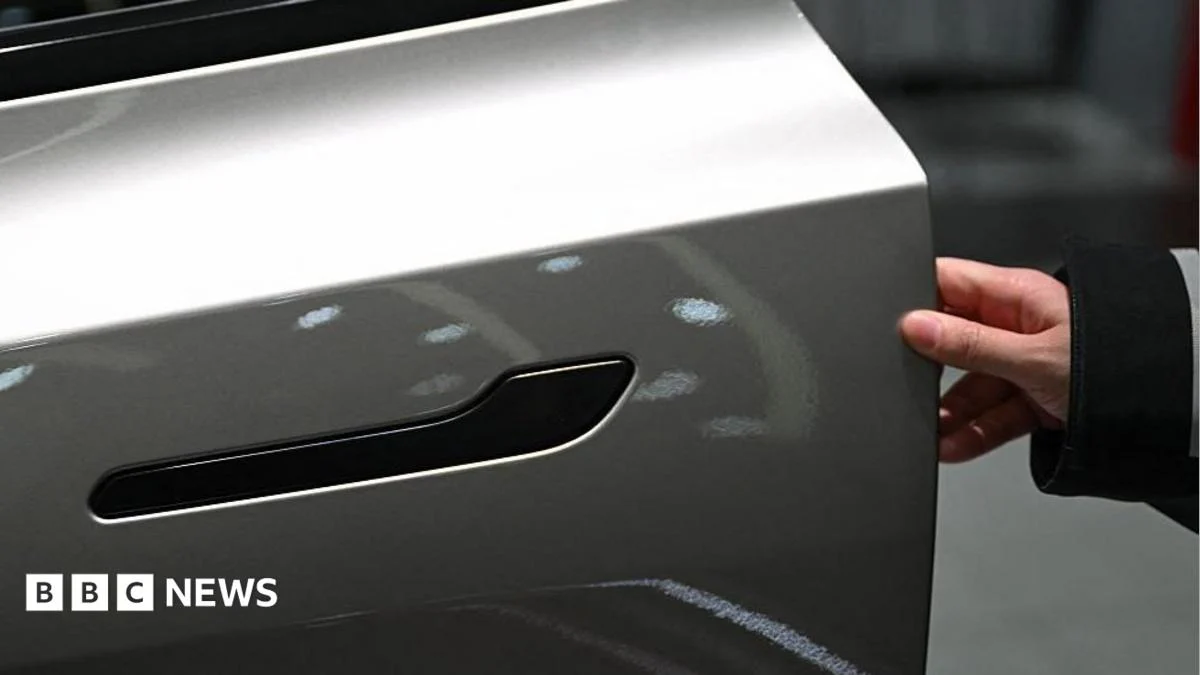
The controversy revolves around the design of these hidden door handles, which are engineered to retract seamlessly into the car’s body panel, extending only when an authorized owner approaches. While undeniably contributing to a sleek, aerodynamic profile, their inconspicuous nature has raised serious questions about accessibility during critical moments. The primary concern is that in an emergency, such as a severe collision or a power failure, these handles can be difficult to locate and operate quickly, potentially trapping occupants inside or hindering rescue efforts from outside.
Tesla, the pioneer of this design, is at the forefront of the recall, which encompasses its Model 3, Model Y, Model S, and Model X vehicles manufactured for the Chinese market. The company explicitly stated that the handles are "difficult to identify and operate because their colour is similar to the interior trim," a subtle but critical detail that can prove fatal when seconds count. This camouflage effect means that in a high-stress situation, both occupants and first responders might struggle to discern the handle’s location, let alone activate it. The risk is particularly pronounced if a "severe collision causing the vehicle’s low-voltage system to fail" occurs, rendering any electronically controlled mechanisms inoperable.
Beyond Tesla, other prominent Chinese automakers such as XPeng, Xiaomi, and Geely are also implicated in this sweeping recall. These companies, eager to emulate Tesla’s success and sleek aesthetic, readily adopted similar handle designs, creating an industry-wide vulnerability. The "snowball effect," as described by Tu Le, founder of consultancy Sino Auto Insights, saw Chinese brands rapidly integrating the "sleek" look of Tesla’s Model S sedan, which first appeared with retractable handles in 2014. This rapid adoption, driven by design trends and competitive pressures, seemingly overlooked the potential safety implications that are now coming to light.
The urgency of these safety concerns was tragically underscored by two fatal crashes in China involving Xiaomi EVs. In both incidents, power failures were suspected to have occurred, preventing the doors from being opened. While investigations are ongoing, these events served as a stark reminder of the potentially catastrophic consequences when advanced electronic features fail to account for basic mechanical overrides. The inability to exit a vehicle promptly, whether due to fire, submersion, or medical emergency, elevates a dangerous situation to a potentially fatal one.
In response to the recall, Tesla has outlined a two-pronged approach for affected vehicles. Firstly, the company plans to affix warning labels to the recalled cars, presumably to highlight the location and operation of the door handles. Secondly, and perhaps more significantly, Tesla will issue a software update designed to automatically lower a vehicle’s windows after a collision. The logic behind this software intervention is to create an immediate escape route or provide rescuers with an access point, even if the primary door handles are inoperable.
However, industry experts like Tu Le remain skeptical of these proposed solutions, dismissing them as a "band-aid" rather than a lasting remedy. A warning label, while providing information, does not address the fundamental design flaw of an obscure or inoperable handle. A software update, while potentially life-saving in some scenarios, still relies on the vehicle’s electronic systems functioning to a certain degree post-collision. It does not offer a robust mechanical backup, which is often considered the gold standard for emergency egress in traditional automotive design. A more comprehensive solution would likely involve a physical redesign, incorporating a visible, mechanical release mechanism that is independent of the vehicle’s electrical system. Such a significant overhaul, however, would entail considerable cost and engineering challenges for manufacturers.
China’s regulatory bodies have not been passive observers in this debate. In a landmark decision announced in February, Chinese authorities declared an outright ban on hidden door handles. New regulations, set to take effect on January 1, 2027, will mandate that all cars sold in China must feature a mechanical release on both the inside and outside of their doors. This decisive move by the world’s largest automotive market signals a clear prioritization of safety over design aesthetics and will undoubtedly influence future EV design globally. The extended lead time for implementation allows automakers several years to redesign their vehicles to comply with the new standards, ensuring a smoother transition for the industry.
The issue of Tesla’s door handles is not confined to China. US safety regulators have also launched probes into reports of these handles suddenly ceasing to function, reportedly leaving children trapped inside vehicles. These incidents highlight that the vulnerability of electronically controlled door mechanisms is a global concern, not merely a market-specific issue. In July, the US National Highway Traffic Highway Safety Administration (NHTSA) further indicated its serious consideration of creating a new formal safety standard specifically addressing door mechanisms for all carmakers. Such a standard would establish consistent safety requirements across the industry, potentially forcing a global reassessment of current designs.
The global automotive industry, particularly the rapidly evolving EV sector, is grappling with the balance between innovation, design freedom, and fundamental safety principles. The allure of sleek, minimalist designs that enhance aerodynamics and aesthetic appeal is strong. However, this recall serves as a powerful reminder that basic safety features, honed over decades of automotive engineering, cannot be compromised in the pursuit of futuristic ideals. The expectation of a quick and reliable exit from a vehicle in an emergency is universal, irrespective of whether the car is powered by gasoline or electricity, or whether its handles are visible or hidden.
As manufacturers like Tesla, XPeng, Xiaomi, and Geely navigate this recall, the decisions they make will have far-reaching implications. While the immediate focus is on addressing the safety concerns in China, the broader conversation around global safety standards for EV door mechanisms is gaining momentum. The contrast between Tesla’s proposed software fix and China’s outright ban on hidden handles underscores divergent approaches, but both ultimately aim to enhance passenger safety. The outcome of these recalls and regulatory shifts will shape not only the design of future EVs but also redefine the parameters of innovation within the automotive industry, ensuring that form never fully overshadows function, especially when lives are at stake. It remains unclear whether the affected firms plan to initiate similar recalls for vehicles sold in other regions, but the heightened scrutiny from regulatory bodies worldwide suggests that such considerations are inevitable.




 Roy Suryo

 George Anjay
 Ramos Leo