
 Ramos Leo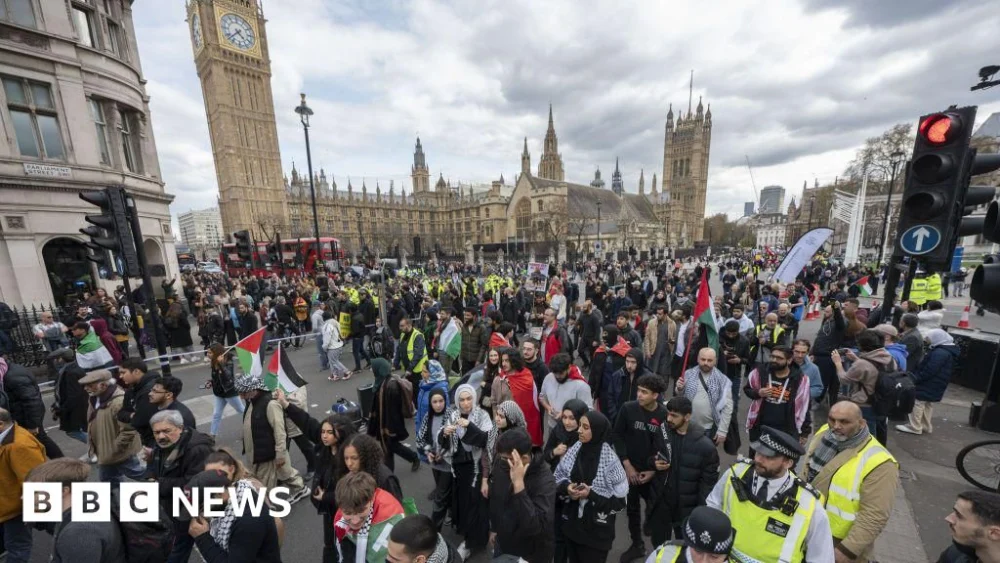
The Metropolitan Police had formally requested the ban, expressing significant apprehension regarding the potential for widespread disruption and violence. Assistant Commissioner Ade Adelekan, the Met’s public order lead, detailed the police’s concerns, highlighting the expected large numbers of both protesters and counter-protesters. Crucially, Adelekan noted the march organizers, the Islamic Human Rights Commission (IHRC), are "supportive of the Iranian regime," a factor that adds a unique layer of complexity and contention to the event.
Al Quds Day, named after the Arabic term for Jerusalem, is an annual event observed predominantly in Muslim countries and communities worldwide, typically on the last Friday of the holy month of Ramadan. It was initiated in 1979 by Ayatollah Ruhollah Khomeini, the founder of the Islamic Republic of Iran, following the Iranian Revolution. The day is officially intended to express support for Palestinians and oppose Israeli control over Jerusalem. However, it has long been a source of significant controversy, often drawing criticism for its overtly anti-Zionist rhetoric, which opponents argue frequently veers into antisemitism and glorification of designated terrorist organisations. While the largest demonstrations occur in Iran, marches are also held in cities across the globe, including London, drawing diverse participants.
The Islamic Human Rights Commission, which has organised the London march for decades, vehemently insists that the event is a peaceful, pro-Palestinian demonstration aimed at raising awareness for human rights and justice in the region. Faisal Bodi, representing the IHRC, voiced his disappointment at the ban, stating it would be a "sad day for freedom of expression" if confirmed. He maintained the march has taken place peacefully for 40 years. Following the announcement, the IHRC confirmed it would instead hold a static protest, which, under UK law, cannot be banned but can be subjected to strict conditions by the police.
The Home Secretary’s statement underscored the government’s commitment to public safety. Shabana Mahmood affirmed her satisfaction that the ban was "necessary to prevent serious public disorder, due to the scale of the protest and multiple counter-protests, in the context of the ongoing conflict in the Middle East." She also made clear her expectation that "the full force of the law applied to anyone spreading hatred and division instead of exercising their right to peaceful protest" should a stationary demonstration proceed. This signals a robust approach to managing public demonstrations in a highly charged environment.
Assistant Commissioner Adelekan elaborated on the Met’s decision-making process, which he stated was not taken lightly. The ban applies to "the Al Quds march and any associated counter-protest marches" and will be in effect for one month from Wednesday at 16:00. He pointed out the "uniquely contentious" nature of the Al Quds march, stemming from its Iranian origins and the IHRC’s reported support for the Iranian regime. This connection is particularly significant given the current geopolitical landscape, where the Iranian regime has been accused of destabilising actions and supporting proxy groups in the Middle East, including attacks on British allies and military bases overseas.
The Met highlighted its extensive experience in policing protests, having "safely policed hundreds of protests from across the political spectrum including 32 major pro-Palestinian protests and many more both pro and anti the Iranian regime." However, Adelekan stressed that "in our assessment this march raises unique risks and challenges." These include the "likely high numbers of protesters and counter-protesters coming together and the extreme tensions between different factions," further exacerbated by "the volatile situation in the Middle East." The police also cited a history of "arrests for supporting terrorist organisations and antisemitic hate crimes" at previous Al Quds marches, contributing to their current risk assessment. The decision, Adelekan asserted, was "purely based on a risk assessment of this specific protest and counter-protests," rather than a judgment on political views or decency, aiming solely to "reduce violence and disorder."
Under the Public Order Act 1986, a march can only be banned if the police reasonably believe that imposing conditions on it would be insufficient to prevent serious public disorder. Such a decision requires the express consent of the Home Secretary, making it a measure reserved for only the most extreme circumstances. The rarity of such a ban – the last instance being an English Defence League march in Tower Hamlets in 2012 – underlines the exceptional nature of the current situation. This legal framework reflects a delicate balance between the fundamental right to protest and the state’s responsibility to maintain public order and safety.
Former Met Chief Superintendent Dal Babu, a member of the London Policing Board, described the ban as a "very, very serious decision" but one that would have been "based on police intelligence." Speaking on BBC Radio 4’s Today programme, he acknowledged that while restrictions on marches are common, an "outright ban is extremely unusual," urging the public to "trust the police, trust their judgement." Similarly, Chief Secretary to the Prime Minister Darren Jones, speaking on BBC Breakfast, reiterated the government’s cautious approach to such interventions, affirming the importance of "freedom of speech" and the right to "legal and peaceful" protest in the UK.
The calls for the Al Quds Day march to be banned intensified significantly following the Hamas-led attack on Israel on 7 October 2023, and the subsequent Israeli military response in Gaza. The conflict has profoundly heightened community tensions in the UK, leading to an unprecedented surge in both antisemitic and anti-Muslim hate crimes, as well as numerous large-scale protests that have tested police resources and public tolerance. The context of the "ongoing conflict in the Middle East" has transformed the Al Quds Day march from a routinely contentious event into one deemed by authorities to pose an unacceptable risk to public order.
In his interview before the ban was confirmed, Faisal Bodi of the IHRC defended the organisation’s stance. When pressed on whether he would hold a picture of the Iranian Ayatollah, Bodi responded, "Happily," adding, "I’d rather hold a picture of the Ayatollah than Keir Starmer or Donald Trump. Well he was a man of principle, a man of integrity, a man who stood for justice." This statement, while framed as a personal endorsement of a historical figure, inevitably fuels concerns about the IHRC’s alignment with a regime widely criticised for its human rights record and its suppression of dissent, including the killing of thousands during anti-government protests in January. Bodi, however, denied direct sympathy for the Iranian regime, instead claiming sympathy for "people who are on the right side of justice."
Lord Walney, the government’s former independent adviser on political violence and disruption, publicly supported the Met’s request, calling it the "right decision." This sentiment reflects a growing concern among some policymakers and security experts about the potential for certain protests to be exploited for extremist purposes or to incite hatred.
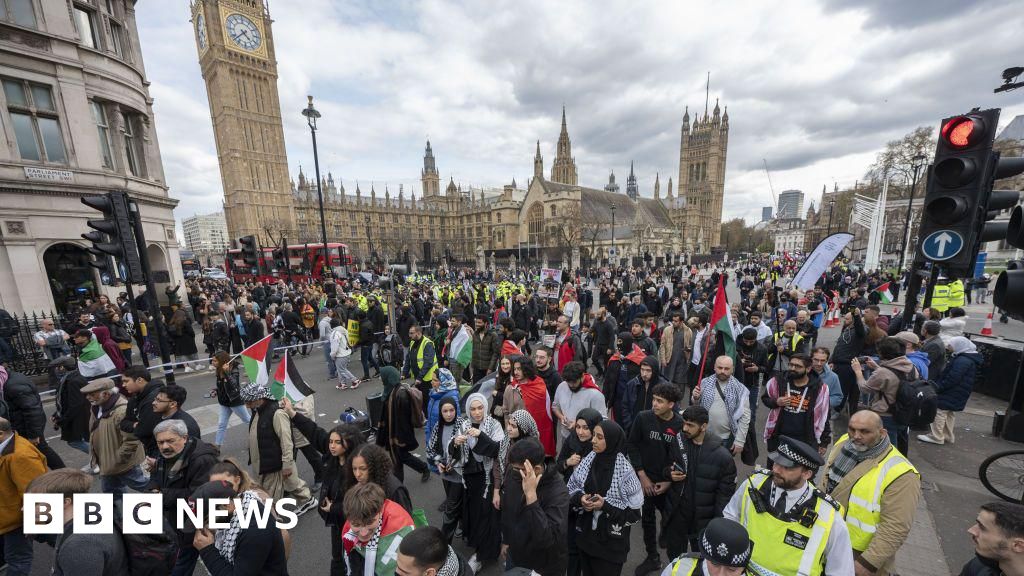
Last year’s Al Quds Day march saw hundreds of demonstrators process through central London, met by dozens of counter-protesters organised by groups such as Stop The Hate. Police officers had to form cordons to separate the factions, resulting in one arrest under the Public Order Act. In 2024, the Met reported 10 arrests during the march, indicating the persistent challenges in maintaining order. The decision to ban the march this year represents a significant escalation in the authorities’ response to these challenges, prioritising public safety and the prevention of disorder over the unrestricted right to march in a volatile climate.



 Roy Suryo

 Nakalama John
 atisusanti
