
 Nana Banana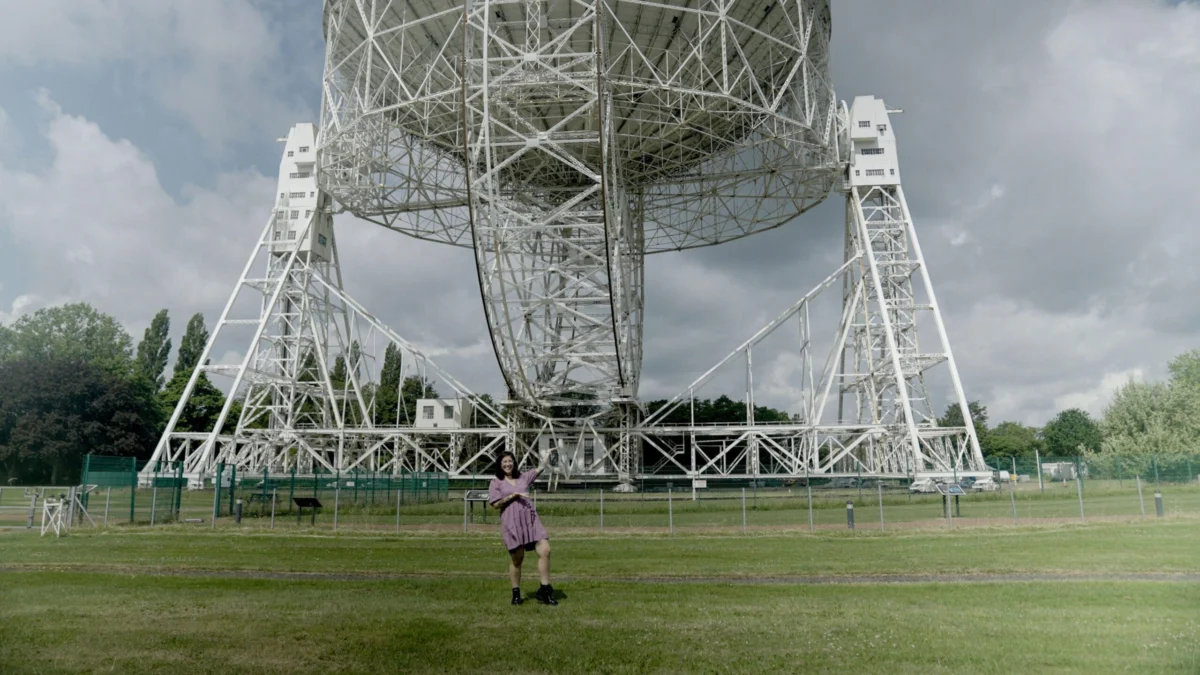
Dransfield articulated her profound concern that this "short-sighted" cut could lead to the UK "lose our place in these big international scientific collaborations." Her critique extends beyond the immediate financial impact, highlighting the broader consequences for scientific talent development. Jodrell Bank, she stressed, serves as an invaluable crucible for training young scientists who subsequently ascend to roles as scientific leaders, or transition into industries that are deemed priorities for the government. The loss of such a foundational training ground, therefore, represents a direct threat to the nation’s future scientific and technological capabilities.
The observatory, nestled in Cheshire, is home to the majestic Lovell Telescope, which, at 76 metres in diameter, remains the world’s third-largest steerable radio telescope. Its colossal dish is not merely a relic of a bygone era; it is a critically active component of the e-Merlin network, a sophisticated array comprising six other radio telescopes strategically distributed across England. This interconnected system functions as a single, immensely powerful instrument, capable of observing distant cosmic phenomena with unparalleled resolution. Together, these telescopes peer deep into space, enabling researchers to unravel the mysteries of how planets and stars are born, how galaxies evolve over billions of years, and to study a myriad of other complex astrophysical phenomena, from pulsars to quasars. The data yielded by e-Merlin is at the forefront of global radio astronomy, contributing fundamental insights into the universe.

The historical significance of Jodrell Bank is as profound as its contemporary scientific output. The site was meticulously chosen in the 1940s by radio astronomy pioneer Sir Bernard Lovell, who envisioned it as a premier research base for the University of Manchester. Under his visionary leadership, Jodrell Bank quickly established itself at the vanguard of a burgeoning field. It achieved global renown for its pivotal role in tracking early space missions, including the Soviet Union’s Sputnik 1 in 1957 and subsequent lunar probes, often providing the only reliable tracking data during the nascent Space Race. Recognising its "outstanding universal value" as a testament to humanity’s scientific and cultural achievements, Jodrell Bank was deservedly designated a UNESCO World Heritage Site in 2019. This prestigious status underscores its irreplaceable contribution to the global scientific heritage and its ongoing relevance to understanding the cosmos.
Dransfield, who began presenting on The Sky at Night in 2023 and recently dedicated an entire show to Jodrell Bank’s rich history and cutting-edge research, conveyed her personal connection to the observatory. "What’s really disappointing is that it takes decades to set up this kind of infrastructure," she lamented. She argued that without access to such cutting-edge technology and research facilities, many of the UK’s brightest scientific minds would inevitably seek opportunities abroad, leading to a detrimental "brain drain" that would further erode the nation’s scientific standing. While acknowledging the universal truth that "no-one’s arguing with the fact that budgets are finite," Dransfield maintained that the decision was deeply "short-sighted," particularly given the UK’s long-standing and leading role in radio astronomy on the international stage. Her visits to the site have consistently left her in awe: "Every time I get to visit there, it’s such an awesome place. And you can feel not only like the history of the place, but also just what’s going on still. It’s buzzing with activity. There are scientists there doing amazing work."
The broader implications of this funding cut extend beyond the immediate operational challenges at Jodrell Bank. It raises serious questions about the UK’s commitment to fundamental scientific research and its aspirations to be a "science superpower." The loss of expertise and infrastructure could diminish the UK’s ability to participate effectively in future international collaborations, thereby isolating its scientific community and hindering access to global datasets and intellectual capital. Moreover, the inspiration that iconic sites like Jodrell Bank provide to budding scientists and engineers cannot be overstated. Its visitor centre attracts tens of thousands annually, sparking curiosity and encouraging engagement with STEM subjects. A reduction in its research capacity inevitably reduces its public outreach potential, impacting the pipeline of future talent.

Henri Murison, chief executive of the Northern Powerhouse Partnership, echoed these concerns, emphasising the regional impact. He stated, "Eminent physicists have made the case for why this is particularly worrying, because it will lose physics talent across the country." Murison challenged UKRI, the overarching body for research funding, to justify the decision in the context of wider investment in innovation for the North West. He pointed out that £2.8 million is a "relatively small amount of money" when weighed against the long-term benefits of maintaining a world-leading scientific institution and the broader economic development of the region. Research institutions like Jodrell Bank are not just academic centres; they are economic anchors, generating high-skilled jobs, attracting investment, and fostering a local ecosystem of innovation and technological development.
In response to the funding crisis, a concerted campaign has been launched with the urgent goal of securing alternative funding streams for Jodrell Bank by 2028. The University of Manchester, which owns and operates the observatory, has publicly affirmed its unwavering commitment to ensuring that cutting-edge scientific research continues at the site. This campaign will likely explore diverse avenues, including private philanthropy, corporate sponsorship, international research grants, and potentially even direct public appeals. The deadline of 2028 underscores the critical nature of the situation, suggesting that without new financial support, the observatory’s research capabilities could face severe, possibly irreversible, curtailment.
The funding cut at Jodrell Bank serves as a stark reminder of the delicate balance between fiscal austerity and long-term strategic investment in science. While budget constraints are a perennial challenge for governments worldwide, decisions impacting foundational research institutions carry profound, far-reaching consequences. Jodrell Bank represents not just a collection of telescopes but a living legacy of scientific endeavour, a beacon of international collaboration, and a vital engine for nurturing future generations of scientists. To diminish its capacity now would be, as Dransfield suggests, a truly disappointing gamble, one that could cost the UK far more than the £2.8 million saved in the long run, risking its hard-won place at the forefront of astronomical discovery.




 Nakalama John
 atisusanti
 Ramos Leo
 Roy Suryo
 George Anjay