
 Nana Banana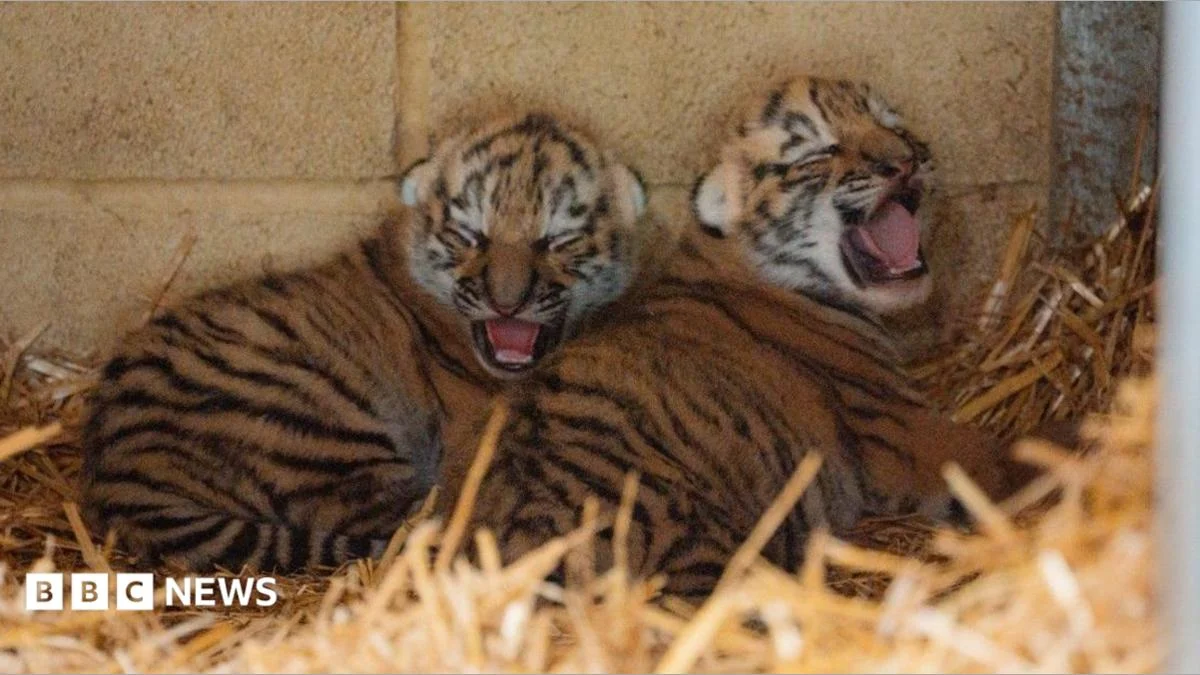
The vibrant news from Longleat Safari Park heralds a significant triumph for wildlife conservation, as four critically endangered Amur tiger cubs were born in May 2024, dramatically bolstering the park’s tiger population and establishing it as home to the largest family group in the UK, now totalling seven magnificent individuals. This remarkable event underscores Longleat’s pivotal role in the European Endangered Species Programme (EEP), a crucial initiative dedicated to safeguarding the future of threatened species like the Amur tiger.
These four new arrivals, all healthy female cubs, represent the latest successful litter for parents Yana and Red. Their birth marks a joyous milestone, following their parents’ first litter in 2019, which itself was the first tiger birth at Longleat in two decades. That initial pair, a male named Rusty and a female named Yuki, paved the way for this new generation. The recent quadruplets have captivated the public’s imagination, with their names – Ginger Biscuit, Dora-Boo, Heidi, and Seeka – chosen with enthusiastic input from the public, fostering a sense of community involvement in their journey. The collaborative naming process not only created a connection between the public and these precious cubs but also highlighted the broader conservation message that underpins their existence.
The successful breeding of these tigers is not merely a delight for visitors but a meticulously managed effort aimed at maintaining a robust and genetically diverse captive population. The European Endangered Species Programme plays a vital role in this, strategically relocating offspring to other accredited wildlife collections across Europe. This careful planning ensures that genetic lines are kept healthy, preventing inbreeding and maximizing the species’ long-term viability. Indeed, three of Yana and Red’s earlier offspring have already embarked on new chapters at other EEP partner institutions, contributing to the broader genetic pool and potentially forming new breeding pairs in the future. This strategic dispersal is fundamental to the programme’s goal of creating a self-sustaining captive population that could, in the distant future, provide individuals for reintroduction into the wild if conditions permit.
Amur tigers, also known as Siberian tigers, are among the planet’s most iconic and imperiled big cats. Native to the remote, snowy forests of the Russian Far East, and smaller pockets in northeastern China and potentially North Korea, these magnificent predators are uniquely adapted to their harsh, cold environment. Their thick, pale orange fur, adorned with fewer and lighter stripes than other tiger subspecies, provides excellent camouflage against the snow-laden landscapes. Beneath this dense coat lies a layer of insulating fat, and their large paws act like snowshoes, distributing their weight to navigate deep snow. As the largest of all tiger subspecies, a male Amur tiger can weigh up to 660 pounds and measure over 10 feet from nose to tail, making them formidable hunters at the apex of their ecosystem.
However, despite their impressive stature and adaptations, Amur tigers face a relentless onslaught of threats in the wild, pushing them to the brink of extinction. Poaching remains one of the most immediate and devastating dangers. Driven by demand for their valuable fur, bones, and other body parts in illegal wildlife trade markets, primarily for traditional Asian medicine, poachers relentlessly target these animals. Anti-poaching patrols, often operating in vast and challenging terrains, work tirelessly to combat this illicit trade, but the economic incentives for poachers can be powerful, making enforcement a constant battle. The sophisticated networks involved in wildlife trafficking also pose a significant challenge to conservationists and law enforcement agencies alike.
Beyond direct killing, habitat loss and degradation present an equally dire threat. The ancient forests that Amur tigers call home are rapidly disappearing due to a combination of human activities. Extensive logging, both legal and illegal, fragments their habitat, reducing the available territory for hunting and breeding. This deforestation also diminishes their prey base, as deer, wild boar, and other ungulates rely on these forests for sustenance. Forest fires, often exacerbated by human activity or climate change, further decimate critical habitat, turning vast swathes of verdant forest into barren land. Infrastructure development, such as roads, railways, and mining operations, also encroaches upon their territories, leading to further fragmentation and increased human-wildlife conflict. As their natural hunting grounds shrink, tigers are sometimes forced into closer proximity with human settlements, leading to retaliatory killings when livestock is preyed upon.
A critical vulnerability highlighted by the Longleat team is the Amur tiger’s genetic susceptibility. All wild Amur tigers alive today are descendants from a small population that survived a severe bottleneck event in the mid-20th century, when their numbers plummeted to as few as 20-30 individuals. This extreme reduction in population size resulted in a significant loss of genetic diversity. Consequently, these tigers exhibit considerable genetic similarities, making them particularly vulnerable to new pressures. A lack of genetic variation can impair their ability to adapt to environmental changes, such as shifts in climate or the emergence of new diseases. It can also lead to reduced fertility and increased susceptibility to health issues, posing a long-term challenge to the species’ survival. The EEP, by meticulously managing genetic diversity in captive populations, directly addresses this critical issue, striving to build a genetic safety net for the species.
The global climate crisis further complicates conservation efforts. Changing weather patterns, including more frequent and intense forest fires, directly impact their habitat. Alterations in snow cover and temperature regimes can affect the distribution and abundance of their prey, creating additional stressors for a population already under immense pressure. Understanding and mitigating these complex, interconnected threats requires a multifaceted approach involving international cooperation, rigorous scientific research, and sustained financial commitment.
Conservation efforts for Amur tigers extend far beyond captive breeding programmes. On the ground, dedicated teams work to establish and expand protected areas, enforce anti-poaching laws, and educate local communities about the importance of tiger conservation. Camera trap surveys and GPS tracking provide invaluable data on tiger movements, population densities, and health, informing crucial management decisions. International collaboration between Russia, China, and various conservation organizations is vital for cross-border protection and coordinated strategies to combat poaching and habitat destruction. Reforestation projects and sustainable land management initiatives are also underway to restore and connect fragmented habitats, creating vital corridors for tigers to roam and breed.
The birth of Ginger Biscuit, Dora-Boo, Heidi, and Seeka at Longleat is more than just a heartwarming story; it is a powerful symbol of hope and a testament to the dedicated work of conservationists worldwide. Longleat’s commitment to the Amur tiger through the EEP provides a vital lifeline for a species teetering on the edge. By contributing to a healthy, genetically diverse captive population, institutions like Longleat offer a crucial insurance policy against extinction and a potential source for future reintroduction efforts. These cubs serve as ambassadors for their wild relatives, raising public awareness about the plight of Amur tigers and the urgent need for global action to protect their majestic presence in the wild. Their arrival underscores the critical role that zoological parks play in global conservation, bridging the gap between human understanding and the wild wonders we strive to preserve for generations to come.




 Nakalama John
 atisusanti
 Ramos Leo
 Roy Suryo
 George Anjay