Nakalama John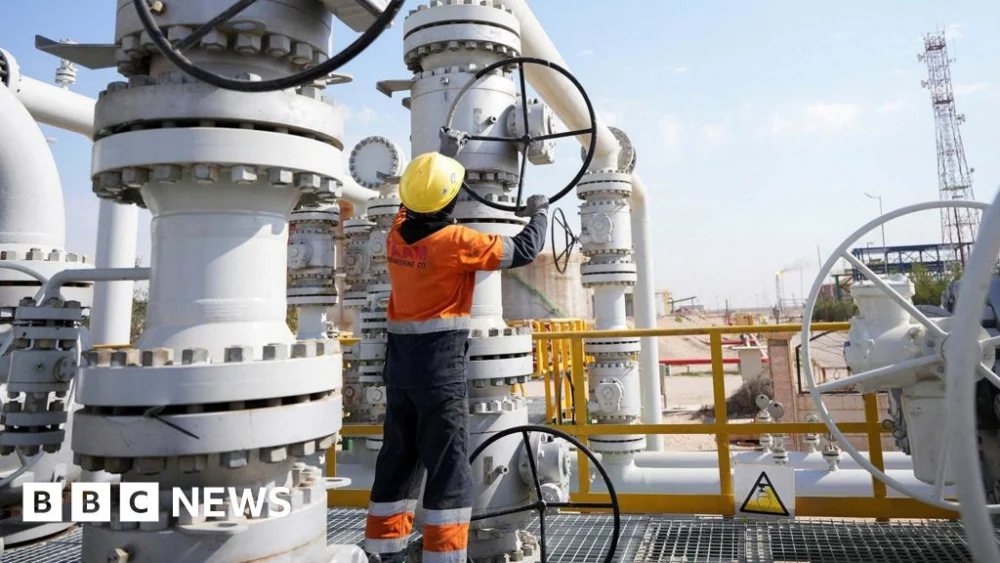
The price of oil, typically a niche subject reserved for financial analysts and industry insiders, has dramatically forced its way into mainstream discourse over the past two weeks. What began as a simmering geopolitical tension has rapidly escalated into a full-blown energy crisis, transforming what was once a steady, predictable market into a maelstrom of unprecedented volatility. The daily fluctuations, marked by colossal and unusual rises and falls, have become the unsettling new norm, leaving global economies and consumers alike grappling with uncertainty.
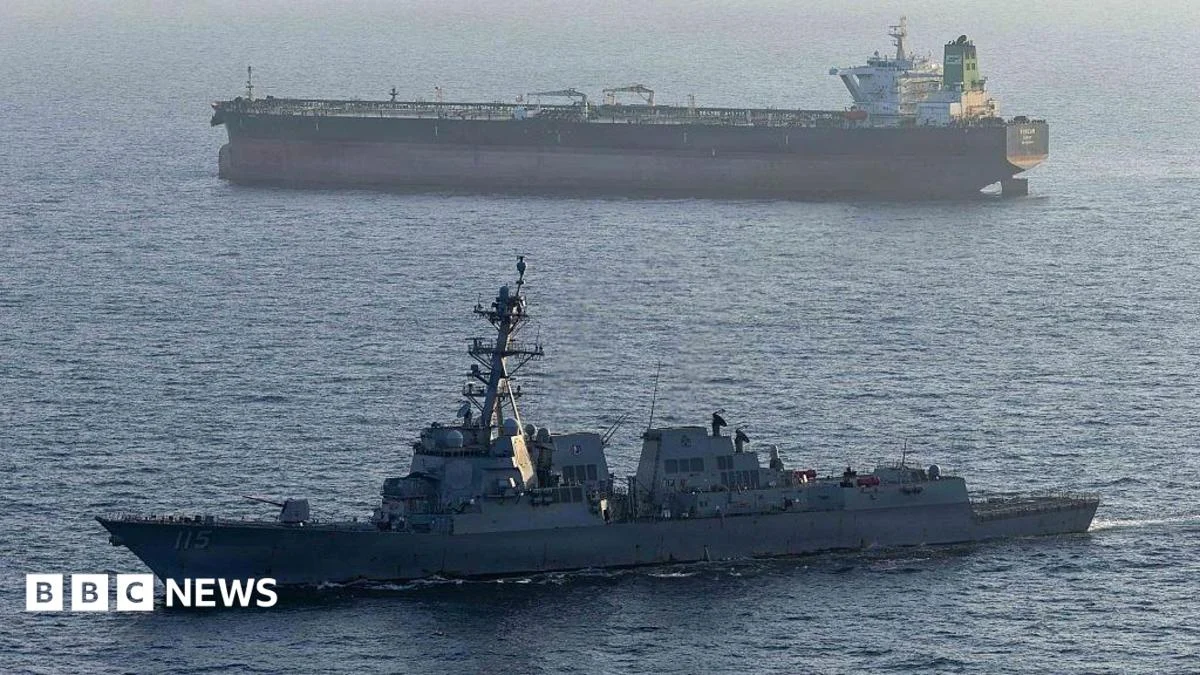
Currently, the benchmark Brent crude oil is trading over a third higher than its pre-conflict levels. This sharp increase is a direct consequence of escalating hostilities, particularly the recent US and Israeli air strikes on Iranian shipping and vital energy infrastructure. The most critical factor, however, has been the effective closure of the Strait of Hormuz, a narrow yet profoundly significant waterway that serves as the choke point for a staggering one-fifth of global oil supplies. Any disruption to this strategic passage sends immediate shockwaves through the world’s energy markets, highlighting the profound vulnerability of global supply chains.
Most discussions around international oil prices invariably revolve around Brent crude. Originating from oil fields in the North Sea, Brent crude is a light sweet crude oil, known for its low density and sulphur content, making it relatively easier and cheaper to refine into high-demand products like gasoline and diesel. Its geographical accessibility, combined with its consistent quality, established it as a critical international benchmark. Contracts to buy and sell oil globally frequently reference Brent as a pricing standard, giving it immense influence over the cost of energy worldwide. Therefore, when Brent crude experiences such dramatic shifts, it signals a far broader impact on global energy costs, from the fuel in our cars to the electricity powering our homes.
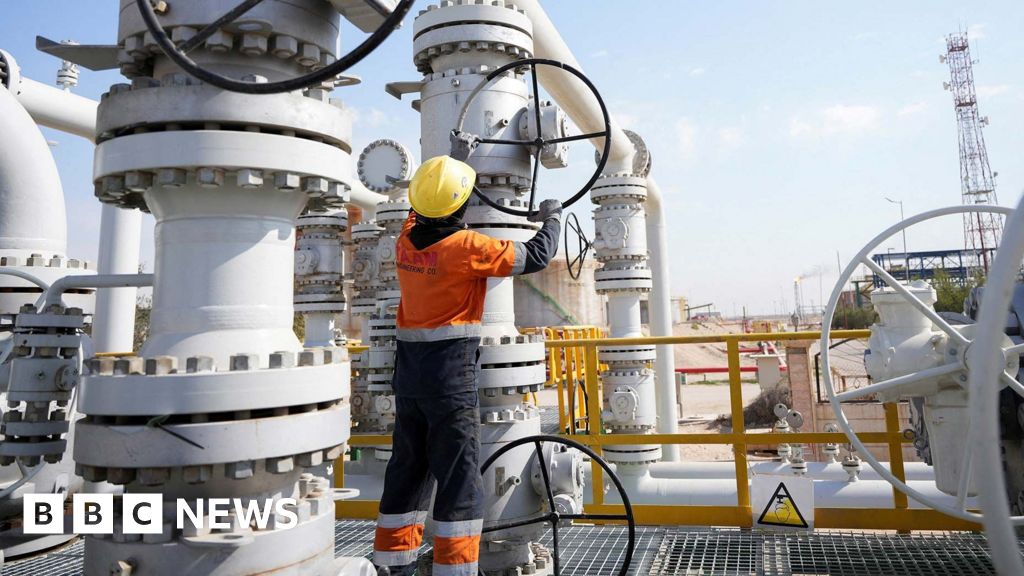
According to Lindsay James, an investment strategist at Quilter, the vast majority of oil is traded for delivery at a future date, often months in advance. The current meteoric rise in prices isn’t merely a reflection of today’s supply issues but is largely driven by deep-seated concerns about the availability of supplies in the months ahead. Traders and refiners are bidding aggressively now to secure future deliveries, anticipating prolonged disruptions and potential shortages, which in turn fuels the upward price spiral. This forward-looking nature of the market means that current events cast a long shadow, locking in higher costs for the foreseeable future.
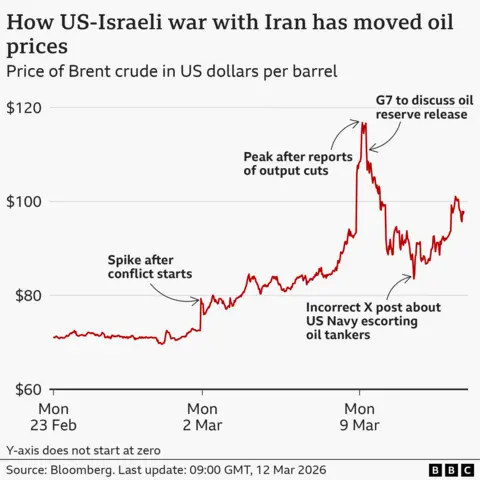
Before the US and Israeli strikes on Iran initiated the current phase of intense conflict, oil had been trading at a relatively stable $71 a barrel. However, as soon as the first reports of military engagement emerged, prices surged dramatically. The market’s initial reaction was one of panic, reflecting the immediate and tangible threat to supply. This fear-driven buying pushed prices upward at an alarming rate, fundamentally altering the market’s equilibrium.
The situation was further exacerbated by a series of statements from world leaders, which have contributed significantly to the extreme price fluctuations. When markets reopened after the weekend following the initial strikes, the price of Brent crude peaked at an astounding almost $120 a barrel. This represented an almost 70% increase in a matter of days, underscoring the severity of the perceived threat to global supply.
However, a glimmer of hope, or at least a temporary reprieve, emerged with reports suggesting a potential massive release of emergency oil stockpiles. These Strategic Petroleum Reserves (SPRs), maintained by countries like the United States and other members of the International Energy Agency (IEA), are designed precisely for such crises. The prospect of this coordinated release, intended to inject millions of barrels into the market, offered a psychological balm to anxious traders. Concurrently, US President Donald Trump’s declaration that the war was "very complete, pretty much" further buoyed hopes that the conflict would be swift and contained, rather than a drawn-out regional conflagration.
In response to these developments, the oil price went into an astonishing freefall. By the end of that same Monday, it had plummeted by nearly $30 from its peak earlier in the day. Quilter described this dramatic shift – occurring within the space of just a few hours – as "extraordinary even by the volatile standards of commodities," underscoring the unprecedented nature of the market’s reaction. Lindsay James further emphasized the gravity of the situation, stating that the world is now experiencing an "energy shock without modern precedent." This assessment highlights not just the scale but also the speed and geopolitical complexity driving the current crisis, distinguishing it from previous oil shocks.
Beyond the stark numbers and speculative trading, former BP boss Lord John Browne pointed out the immense practical complexities involved. He highlighted that "this is not just a speculative activity – it’s actually a matter of physical supply of oil, and people are bidding to make sure that they don’t run out." His comments underscore the intricate logistical challenges of global oil distribution, which involve not only securing crude but also ensuring the right type of oil reaches the right refinery at the right time. Different refineries are configured to process specific grades of crude, and disruptions can lead to bottlenecks and shortages of refined products, even if overall crude supply appears adequate.
Another pivotal moment that rattled the markets occurred when US Energy Secretary Chris Wright inadvertently triggered a rapid price swing. Wright posted on X (formerly Twitter) that the US had successfully escorted an oil tanker through the Strait of Hormuz. Given the ongoing hostilities and the critical importance of the Strait, this news initially sent a reassuring signal to the markets. At one point on Tuesday, the benchmark price plunged to $82 per barrel, reflecting a renewed sense of security regarding transit through the Gulf. However, the relief was short-lived. The price swiftly jumped back to $86 after the post mysteriously disappeared from his profile. The White House later confirmed the social media post was erroneous – the US Navy had not, in fact, escorted any tankers through the crucial Gulf passage. This incident vividly demonstrated how sensitive the market is to information, or misinformation, emanating from official sources, and how rapidly prices can react to perceived changes in the security landscape.
Bill Farren-Price, a senior research fellow at the Oxford Institute for Energy Studies, offered a sobering perspective on the release of strategic reserves, describing it as a "sticking plaster on a much bigger problem." He argued that the market had already "priced in" the expectation of such a move, meaning its actual impact on lowering prices was limited. Immediately following the confirmation of the reserve release, further ship attacks occurred, once again sending prices upwards. This sequence of events suggested that while the reserve release might prevent an even greater spike, it couldn’t fundamentally resolve the underlying geopolitical instability. Farren-Price emphasized that "inevitably the price reaction is going to continue until we see some sort of off-ramp for this conflict, and that could be very, very complicated and drawn out."
Furthermore, the issue isn’t solely about the availability of crude oil. There is also a significant shortage of refining capacity globally. This means that even if vast quantities of crude oil are released from reserves, it isn’t a magic switch to immediately increase the flow of refined products like petrol, diesel, and jet fuel. Refineries are complex facilities with limited throughput, and bringing more capacity online is a long-term endeavor. Thus, the releasing of reserves is more an attempt to boost market confidence by signalling that governments recognize the threats and are actively working to address them, rather than a direct solution to all supply chain issues. In short, it may not help oil prices fall significantly, but it may succeed in preventing them from climbing as much as they otherwise would have done.
As we are not yet two weeks into the war between the US, Israel, and Iran, the future remains shrouded in uncertainty. We simply do not know how long this conflict will last, nor can we accurately predict the full extent of its impact on global energy markets and the wider economy. Lord Browne articulated the prevailing sentiment among traders: they "can’t see the real direction." There is no clear foresight on how long the Strait of Hormuz will remain effectively closed, or indeed, whether the strategic releases of oil reserves agreed upon by the IEA will actually take place as intended and have the desired effect. "I think most people will look at all this and say ‘show me what’s really happening and I’ll tell you what the price is going to be’," he added, perfectly capturing the market’s demand for concrete developments rather than speculative predictions.
Jane Foley, head of FX Strategy at Rabobank, echoed this sentiment, noting that the market is "really quite wary" about the prospect of continued disruption. She underscored the central role of the Strait of Hormuz in the current crisis: "From the market’s perspective, it is all about that strait… and right now, Iran is in control of that." This highlights the immense strategic leverage Iran possesses by its geographical position. One thing, however, has become unequivocally clear: the tumultuous movements in oil prices this month have starkly exposed just how profoundly the global trade of one of our most valuable commodities depends on safe, uninterrupted transit through a single, narrow strait of water in what is undeniably a very volatile and dangerous part of the world. The world’s energy security, and by extension, its economic stability, hangs precariously on the geopolitical tightrope of the Middle East.




 Nana Banana

 George Anjay
 Ramos Leo