
 George Anjay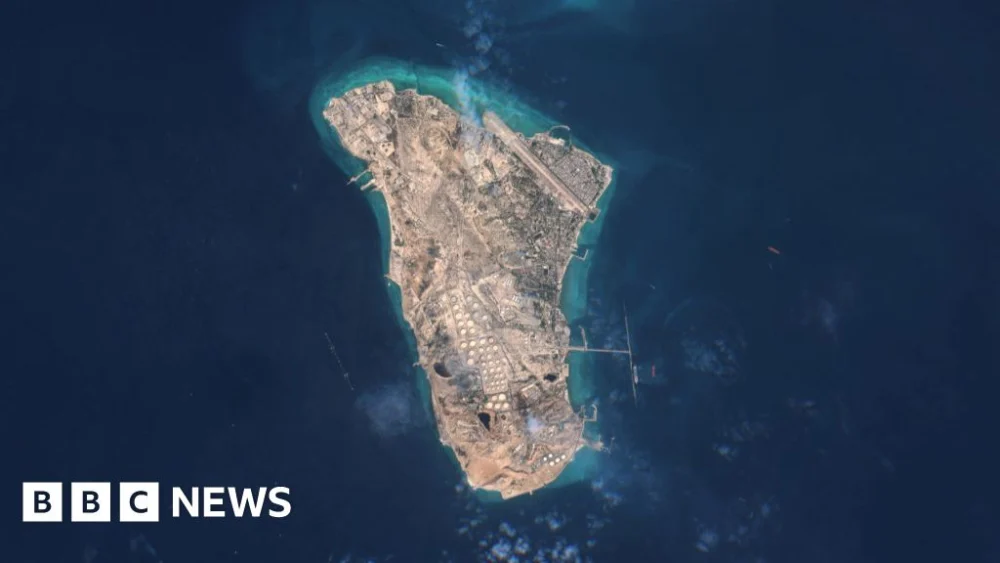
Alys Davies and Frank Gardner, security correspondent, in Riyadh, report on the US military’s targeted strikes on Kharg Island, a crucial oil hub for Iran, and the complex geopolitical implications of these actions.
Donald Trump announced that the US military had conducted a significant bombing operation against Kharg Island, a strategically vital offshore facility that serves as Iran’s primary oil export terminal and is considered the linchpin of its economy. While the US President asserted that the island’s military installations were "totally obliterated," he emphasized that the decision to refrain from targeting the critical oil infrastructure was a deliberate one, at least for the moment. This measured approach, however, was accompanied by a stern warning: should Iran, or any other entity, attempt to disrupt the free flow of maritime traffic through the Strait of Hormuz – a chokepoint of immense global importance situated south of Iran’s coastline – the US would swiftly reconsider its stance on Kharg Island’s oil facilities. In a swift and forceful retort, Iran’s military declared that any attack on Kharg Island’s oil and energy infrastructure, particularly facilities operated by companies collaborating with the US, would be met with immediate and decisive destruction.
The Strategic Significance of Kharg Island: Iran’s Economic Lifeline
Kharg Island, a modest, rocky landmass situated a mere 15 nautical miles (approximately 24 kilometers) off the Iranian coast, punches far above its weight in terms of strategic and economic importance. Despite its diminutive size, it represents a cornerstone of Iran’s formidable energy infrastructure. The US decision to strike this small yet indispensable island in the northern Persian Gulf is akin to targeting the very jugular vein of Iran’s economy. A staggering 90% of Iran’s crude oil exports transit through the island’s state-of-the-art terminal, a process facilitated by a network of pipelines that transport the oil from the mainland.
The island’s unique geography, with its coastline affording access to deep waters, is crucial for accommodating Very Large Crude Carriers (VLCCs). These colossal tankers, capable of transporting up to 85 million gallons of oil, dock at Kharg Island’s extensive jetties to load their precious cargo. This deep-water access is a distinct advantage over Iran’s mainland coastline, which is generally shallower. Once loaded, these tankers navigate the Persian Gulf and subsequently exit through the Strait of Hormuz, embarking on their journey to international markets, with China being the principal purchaser of Iranian oil. The terminal on Kharg Island is not just an export hub; it is a vital source of revenue, a significant portion of which directly benefits the Islamic Revolutionary Guard Corps (IRGC), Iran’s elite military and ideological force.
Official Statements and Conflicting Narratives: The US and Iran’s Perspectives
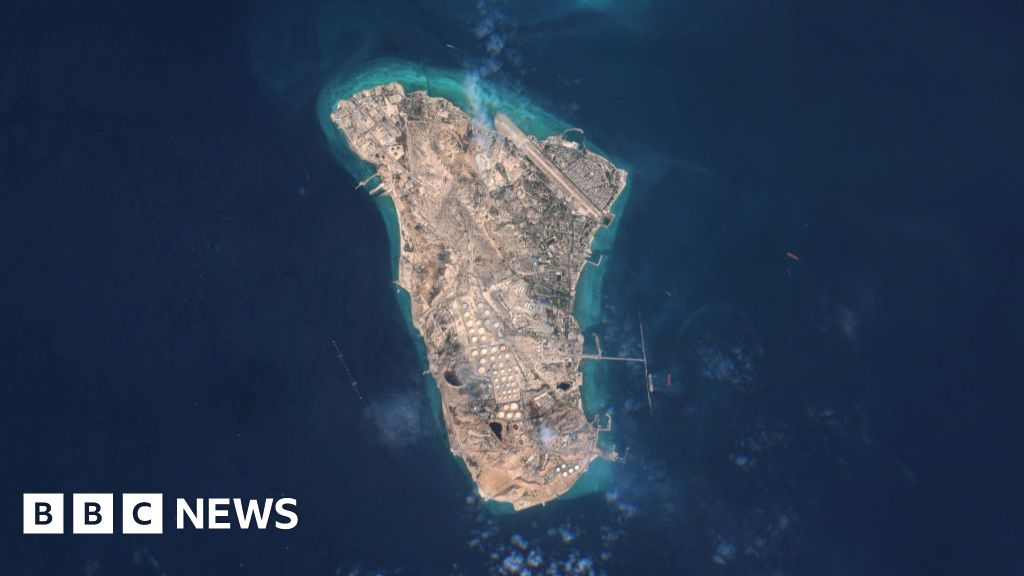
President Trump, in a statement released on Friday, declared that the US Central Command (Centcom) had "executed one of the most powerful bombing raids in the History of the Middle East and totally obliterated every MILITARY target in Iran’s crown jewel, Kharg Island." He further elaborated on his rationale for sparing the oil infrastructure, stating that "for reasons of decency" he had "chosen NOT to wipe out the Oil Infrastructure on the Island." Centcom corroborated the strike, announcing that US forces had targeted "more than 90 Iranian military targets on Kharg Island, while preserving the oil infrastructure." The regional military command unit specified that the operation had successfully destroyed naval mine storage facilities, missile storage bunkers, and a multitude of other military installations.
In contrast, Iranian state media reported that the strikes caused no damage to the island’s oil facilities. The semi-official Fars news agency indicated that the US attacks were directed at air defense systems, a naval base, an airport control tower, and a helicopter hangar. Ehsan Jahanian, the political deputy to the governor of Bushehr province in southern Iran, asserted that "no military personnel, oil company employees, or island residents suffered casualties in the attack, and all sectors are continuing their routine activities." According to a report by the IRGC-affiliated Tasnim news agency, Jahanian also confirmed that the process of exporting oil from Kharg was "fully under way" and that "the activities of companies based on the island are continuing without interruption." Following the US strikes, Iran’s military issued a strong warning: any attack on its energy facilities would result in the "immediate destruction and turning into a pile of ashes" of oil and energy infrastructure belonging to firms collaborating with the US.
The Strategic Calculation: Why the Oil Infrastructure Was Spared
The decision to deliberately avoid targeting Kharg Island’s oil infrastructure, despite its military importance, is rooted in a complex strategic calculation by the US. A direct assault on these facilities would inflict devastating economic damage on Iran, a nation already grappling with the impact of extensive international sanctions. Such an action would also represent a significant and potentially uncontrollable escalation of the ongoing conflict. Even two weeks into the current hostilities, Iran retains the capacity to launch a substantial volume of low-cost, high-explosive drones against its Gulf Arab neighbors and maritime shipping. Moreover, there is a tangible risk that Iran could expand its retaliatory targets to include critical infrastructure, such as desalination plants that are vital for providing drinking water to millions in the region.
Justin Crump, a military analyst and former British Army officer, posits that the bombing of Kharg Island’s military sites was a calculated move by President Trump to deter Iran from further escalating the conflict. Crump, who also serves as the CEO of the intelligence consultancy Sibylline, explained to BBC Radio 4’s Today programme that Trump’s approach was a demonstration of restraint, presenting the action as merciful while simultaneously signaling the potential for more severe punishment, specifically by targeting the oil facilities. Trump had previously articulated that a primary objective of the current conflict was to empower the Iranian populace to rise up and overthrow the Islamic Republic’s regime. While other motivations for the war have been subsequently articulated, Crump highlights the inherent difficulty in targeting the island’s oil infrastructure, as it would effectively cripple Iran’s economic lifeline for an extended period. He articulated concerns about the long-term implications for the Iranian people’s future, referencing the protracted rebuilding process required after the island’s oil infrastructure was targeted during the Iran-Iraq War in the 1980s.
The Question of Seizure: A Future US Objective?
Amidst the heightened tensions and targeted strikes, speculation has arisen regarding the possibility of US forces attempting to seize Kharg Island at some future juncture. Such a move would not only effectively choke off Iran’s oil exports but could also provide the US with a critical strategic platform from which to launch further operations against the Iranian mainland. The Pentagon, when approached for comment, has declined to offer any statements on this matter. Security analyst Mikey Kay, from the BBC’s Security Brief, suggests that taking control of Kharg Island would be a decisive blow, effectively severing the IRGC’s economic lifeline and severely curtailing its capacity to engage in warfare and maintain regional security. The strategic implications of such a potential move are profound, offering a direct pathway to cripple Iran’s war-making capabilities and its ability to project power.



 Nakalama John
 atisusanti
 Ramos Leo
 Roy Suryo
 Nana Banana