
 Roy Suryo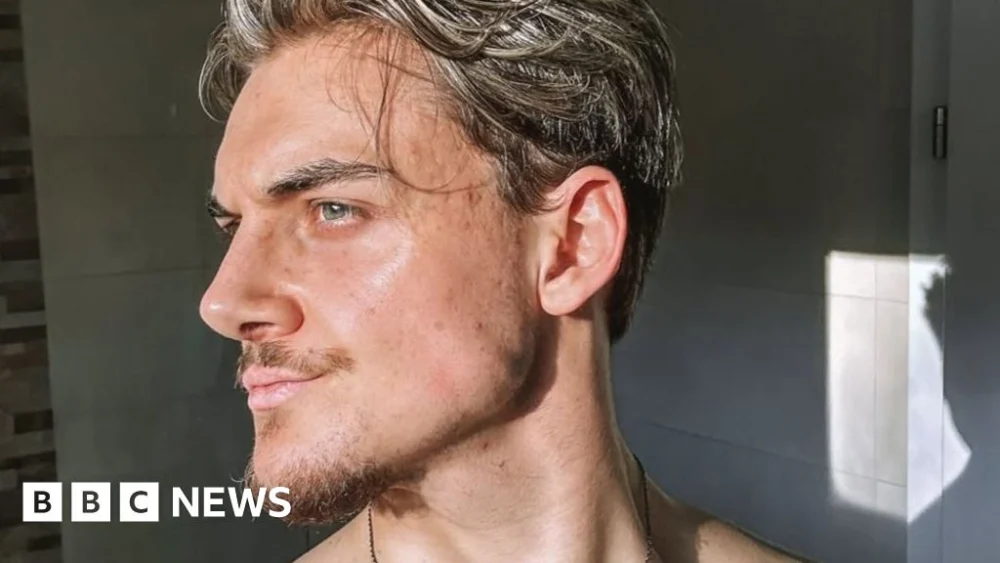
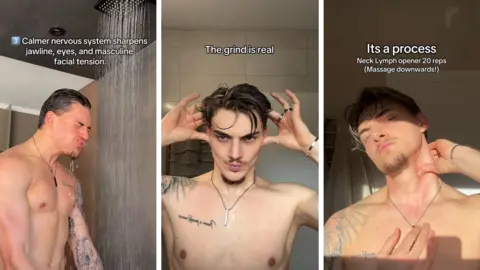
At 26, Marvin is a dedicated adherent to the burgeoning online subculture known as "looksmaxxing." His days are structured around an intense early morning gym regimen, followed by an intricate at-home routine. This begins with a bracing shower, alternating between hot and ice-cold water, before a thorough facial cleanse. He then applies a frozen cucumber to his face, a technique he claims reduces puffiness, combats acne, and brightens his complexion. The next stage involves a series of targeted jaw and facial exercises, the demonstrations of which he frequently shares with his 35,000 TikTok followers.
"This is the Zygopush," Marvin explains, demonstrating the technique by pressing his thumbs directly beneath his cheekbones and massaging upwards towards his ears, a method aimed at creating more hollowed cheeks. "Then there’s the Hunter squeeze," he continues, applying pressure to his temples with his index fingers and squeezing his eyes, a maneuver intended to achieve a more "wolf-like" eye shape. He laughs as he details his daily regimen, acknowledging the curiosity his practices often provoke. "People sometimes wonder, ‘What is this man doing?’"

Despite the potential for bemusement, Marvin is convinced his dedicated approach is yielding the desired aesthetic: a lean face with chiseled features, sharp, defined eyes, and a pronounced jawline. This particular look, he explains, signifies a man at his "peak." He contrasts his current life as an "online entrepreneur" with his former existence as an "unsatisfied carpenter working nine to five," attributing the transformation to his commitment to looksmaxxing.
Marvin’s journey introduces us to the online realm of "looksmaxxing," a community where an increasing number of young men are investing considerable effort into achieving what they perceive as the ideal facial and bodily structure, believing this will consequently lead to a more successful life. The practices within looksmaxxing encompass a wide spectrum, ranging from rigorous gym workouts and meticulous skincare routines (termed "softmaxxing") to the use of growth hormones and unregulated peptides. At the more extreme end, referred to as "hardmaxxing," individuals engage in practices like "bone-smashing" or undergo jaw surgery with the aim of "ascending" to a more rugged, almost Neanderthal-like appearance.
Failure to conform to this perceived aesthetic ideal, or a lack of effort in pursuing it, risks placing an individual in the "sub three" category, as Marvin describes it, essentially deeming them "not a very good-looking human." To aid in this pursuit, Marvin utilizes a face analysis application, which scrutinizes his photographs to identify areas for improvement. These apps boast thousands of positive reviews on various app stores, indicating their popularity within the community.
For some men, looksmaxxing has provided a prescriptive guide to achieving what they define as "successful masculinity," and crucially, how to attain it. Among the most influential figures is Braden Peters, widely known online as Clavicular. This 20-year-old, characterized by his sharp jawline, is recognized within looksmaxxing circles as a "giga chad," a perfect 10/10. In his own lexicon, he "mogs" everyone he encounters, meaning his presence and appearance are so superior that he outshines all others around him. Clavicular attributes his own striking features, in part, to taking testosterone from the age of 14 and, more controversially, to allegedly reshaping his jawbone by striking it with a hammer – neither of which are endorsed by health professionals. His content, and that of similar influencers, has been instrumental in propelling looksmaxxing from niche underground subcultures into the mainstream consciousness.
However, some researchers who study the "manosphere" – an ultra-masculine online subculture that recently garnered attention through a Louis Theroux documentary – view looksmaxxing as a potential gateway to more concerning ideologies. The term "looksmaxxing" itself originated in online forums frequented by incels, individuals who identify as "involuntary celibate." These communities are often rife with misogynistic rhetoric, blaming women for men’s lack of sexual relationships.
Journalist Matt Shea, who has produced documentaries and written extensively on the dangers of toxic masculinity, posits that influencers like Andrew Tate, whom he has interviewed, Clavicular, and many others share a common ideology that they leverage for financial gain. "They tell young men how worthless they are," Shea observes, "and then present themselves as the solution. They peddle courses on how to increase your sexual market value (SMV) – essentially a metric of attractiveness according to their system." A higher SMV, Shea explains, correlates with a greater likelihood of sexual success with women. Consequently, looksmaxxing, to a degree, becomes a means of ascending this perceived attractiveness ladder. The logic dictates that if a woman remains uninterested despite these efforts, the fault lies either with insufficient self-improvement on the man’s part or with the woman herself. "That," Shea concludes, "is when it becomes dangerous."
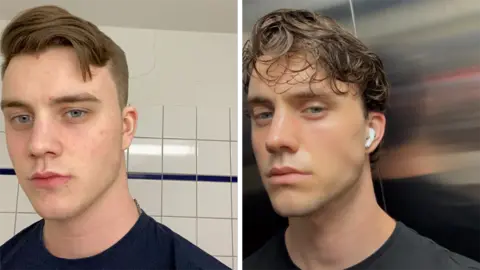
A review of online discourse reveals that not all looksmaxxing adherents subscribe to this overtly misogynistic ideology. Many explicitly state they do not identify with such sentiments. Leander, who agreed to speak only after emphasizing his dissociation from incel culture, identifies as a "softmaxxer," much like Marvin. He asserts that his pursuit of improved looks is primarily driven by a desire to enhance his own self-esteem. Following a breakup in 2023, Leander began researching looksmaxxing on social media and subsequently developed a daily routine. In addition to five weekly gym sessions, he incorporates regular ice-cold face baths to "reduce puffiness," consciously sleeps on his back, and, while not abstaining from masturbation, has eliminated all pornography from his life. "Pornography has become so normalized for many men that it completely destroys their image and attraction to women," he explains.
While Leander does not assign himself a numerical score like Marvin, he feels satisfied with his appearance "80% of the time." He expresses a desire not to sound "arrogant," but suggests that for individuals who are not "conventionally attractive," the impact of softmaxxing may be limited. If one falls into this category – the "non-conventionally attractive side," or, in Marvin’s terms, a sub-five out of ten – Leander acknowledges, "I can understand why it pushes you into an incel corner," though he himself does not endorse such affiliations.
Tom Thebe does not perceive himself as ranking low in terms of his appearance. A lifelong enthusiast of fitness and aesthetics, his engagement with looksmaxxing began when he started experiencing hair loss at the age of 21. "It really hit my confidence hard," the now 23-year-old recounts. "It felt out of control – scary. And it obviously makes you look older too, which is something nobody wants." He researched various treatments and began using finasteride and minoxidil, both legal prescription medications in the UK, to address his hair loss. Tom credits these treatments with making a significant difference, which then led him to explore other aspects of looksmaxxing.

Currently, alongside his gym routine and a diligent skincare regimen, Tom injects peptides – short chains of amino acids, essentially small proteins naturally produced by the body and crucial for skin health, immune function, and hormone regulation. These substances have become ubiquitous on social media platforms and are frequently stored by influencers. He uses GHK-Cu for skin and hair growth, and Melanotan II to deepen his tan. It is crucial to note that the majority of these unregulated peptides have undergone testing only on animals, not humans, and are therefore not considered safe or effective for human consumption. The Medicines and Healthcare products Regulatory Agency (MHRA) has issued warnings regarding their use, advising against their administration.
Despite these warnings, Tom, a resident of Manchester, remains unfazed. He dispenses advice on social media regarding self-enhancement and is contemplating launching his own coaching business, yet he does not categorize himself as an extreme looksmaxxer. "The problem arises when impressionable 18-year-olds witness people bone smashing and engaging in extreme looksmaxxing; it undeniably has a negative impact on their perception of what they should look like."
"There is a spectrum to looksmaxxing," explains Anda Solea, a researcher at the University of Portsmouth specializing in the insidious spread of incel culture into society. "There’s the positive aspect of men prioritizing their health and fitness, but the issue escalates when it becomes the sole focus, and individuals begin to take health risks to alter their appearance." Solea highlights how the content young men encounter on their social media feeds, often amplified by powerful algorithms, can lead them into the darker recesses of the manosphere. Here, they are frequently told that they must engage in looksmaxxing, or face ridicule. Solea poses a critical question: "If, after such extensive efforts to enhance their appearance, these men still find women uninterested, will they begin to resent women, blaming them for not desiring them?" It is at this juncture, Solea suggests, that some men may realize looksmaxxing is not the solution they sought. However, as the experiences of Marvin, Leander, and Tom illustrate, a man’s motivation for looksmaxxing can be as deeply rooted in his self-perception as it is in how he believes others perceive him.
Additional reporting: Elena Bailey.




 Nakalama John
 atisusanti
 Ramos Leo
