Nana Banana
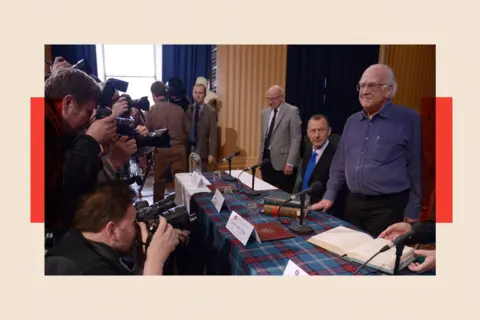
This momentous announcement, broadcast live from Sweden, marked the culmination of decades of tireless scientific endeavour. It was precisely what many scientists had ardently hoped for since a year earlier, when groundbreaking experiments at CERN, the European Organization for Nuclear Research, had finally provided empirical confirmation of Higgs’s theory. The discovery of the Higgs boson, often dubbed the "God particle" by the media for its foundational role in the Standard Model of particle physics, was hailed unequivocally as one of the biggest scientific breakthroughs in a generation, validating a cornerstone of modern physics.
At the time, Professor Higgs, who has since passed away, issued a statement reflecting on the significance of this recognition. He expressed his hope that "this recognition of fundamental science will help raise awareness of the value of blue-sky research." Blue-sky research, by its very definition, is curiosity-driven; it asks fundamental questions purely to understand the underlying principles of the universe, rather than to design new products or achieve immediate commercial applications. This type of foundational inquiry is an area in which British science has historically excelled, leading to transformative discoveries such as the electron, the elucidation of the structure of DNA, and the pioneering development of the first programmable electronic computer. Each of these monumental advancements was, at its inception, without any clear practical application, yet each has since formed the bedrock of technologies that have spawned multi-billion-pound industries and irrevocably transformed our modern world.
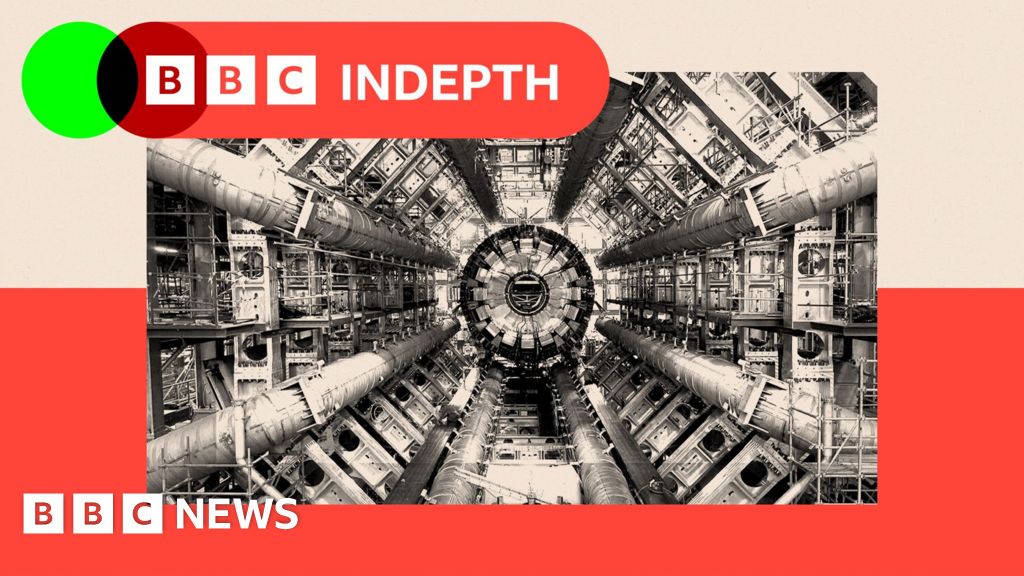
However, a decade after this celebrated triumph, a starkly different narrative is unfolding. Britain is now preparing to withdraw or significantly reduce its contribution to one of the Large Hadron Collider’s next major upgrades at CERN. This proposed withdrawal is not an isolated incident but rather one of several concerning cuts to UK involvement across various major international particle physics and astronomy projects. These sweeping reductions threaten to diminish, or even entirely sever, British scientists’ participation in the most exciting and collaborative international research initiatives dedicated to probing the fundamental nature of our universe. For many within the scientific community, it feels as if Professor Higgs’s prescient words, so celebrated in 2013, have been tragically forgotten or wilfully ignored.
Behind this alarming situation lies a simmering dispute that has seen the science minister, Lord Vallance, and the head of Britain’s overarching scientific research funding agency, UK Research and Innovation (UKRI), accused of systematically diverting funds away from pure, blue-sky research towards government-mandated scientific priorities aimed at stimulating economic growth. BBC News has obtained a leaked document that appears to corroborate this alleged shift in funding. Despite this internal evidence, Lord Vallance and the leadership of UK science funding bodies have consistently and firmly denied any such diversion.
This ongoing controversy cuts to the very heart of a perennial issue in science policy: to what extent should researchers be encouraged, or indeed mandated, to focus on "blue-sky research"—which pursues knowledge for its own sake, seeking to solve the universe’s grandest mysteries—as opposed to "applied research," which has clearer, more immediate real-world implications and commercial potential?

According to Dr. Simon Williams, a theoretical physicist at Durham University, both approaches are essential and interdependent. "You need both and you can’t have one without the other," he asserts. Dr. Williams’s own research exemplifies the bluest of blue-sky inquiry: he leverages quantum computers to predict the intricate behaviour of sub-atomic particles. His initial motivation was purely driven by scientific understanding, yet, serendipitously, his foundational work is now being utilized by a British-based company, demonstrating the unforeseen practical benefits of pure research.
Dr. Williams firmly believes that curtailing original blue-sky research is not only detrimental to the scientific community but also profoundly harms the very businesses that ultimately benefit from its outputs. "If the research is removed from the country, then I have a strong belief that the industry will be removed from the country," he warns. He highlights the immediate human cost of these cuts, noting that he is among approximately 30 young physicists who are currently unable to secure grants to continue their work in the UK this year. Many of these individuals are among the brightest minds in their respective fields, and they now face the grim prospect of being forced to seek research opportunities overseas, contributing to a significant brain drain, or abandoning research altogether to secure a livelihood. "You’re killing the tree by removing the roots," he passionately told MPs at a special hearing of the House of Commons Science Innovation and Technology select committee earlier this month, a committee actively investigating the scope and impact of the proposed cuts announced earlier this year. Dr. Williams and many other physicists fear that the physics budget has been disproportionately targeted because a recent reorganization in the science funding system has effectively siphoned money away from blue-sky to applied research.
Earlier this year, UKRI, the government body responsible for funding science, implemented a controversial new ‘bucket’ system. Under this revised framework, funding will now be allocated into three distinct categories: one for blue-sky research, a second for specific government priorities such as artificial intelligence (AI) and quantum computing, and a third for assisting businesses in developing new products and commercial applications. It is these latter two buckets that are classified as ‘applied research,’ representing the areas the government believes will most directly drive economic growth and societal benefit.

Concurrently, in February, a substantial 30% cut, amounting to £162 million, was announced for particle physics and astronomy research by the Science and Technology Facilities Council (STFC), one of UKRI’s constituent councils. Its head, Professor Michele Dougherty, informed MPs earlier this month that this drastic cut was necessitated because the Council had, in previous years, initiated projects for which it ultimately lacked sufficient funding, attributing this to "an overabundance of ambition." She further stated that the problem was exacerbated by prevailing inflation rates and adverse currency fluctuations.
However, a senior scientist with extensive prior involvement in the STFC vehemently disputes this explanation, suggesting it serves merely as a "fig leaf" to mask a deliberate reallocation of funds away from particle physics and astronomy. "We always had the money for these projects," he stated to this reporter, emphasizing his bewilderment. "I do not understand how we ended up with a 30% cut in the particle physics and astronomy budget unless at some point there must have been a choice to reduce that aspect of the budget." This strongly implies a deliberate diversion of funds from the first bucket (blue-sky) to the second (government priorities) or third (commercialization).
Adding further weight to these suspicions, the BBC has uncovered internal documents that reveal the STFC’s own belief in a deliberate funding shift, contrary to public statements. Minutes from STFC’s governing council meetings, which are not publicly accessible, record the Council’s head of strategy describing "a major shift of funding from curiosity-driven research to priority areas and targeted programmes."
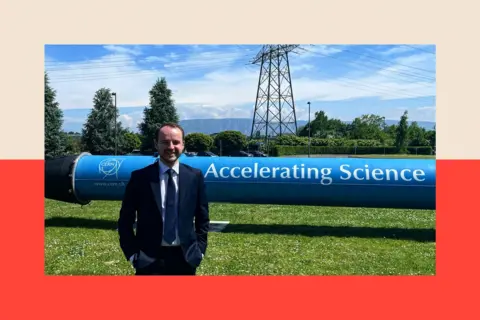
When directly confronted with this evidence, Professor Sir Ian Chapman, the head of UKRI, categorically denied any such diversion. "No, that is not a UKRI position," Chapman told me firmly. "Across the piece, we are protecting curiosity driven research." When pressed specifically about the statement made by his head of strategy in the leaked minutes, Chapman dismissed it as a "mis-statement." Both Professor Chapman and Science Minister Lord Vallance have consistently and robustly maintained that curiosity-driven science is not only protected but is, in fact, growing in cash terms.
Their challenge, however, lies in providing tangible proof of these assertions due to the historically opaque nature of UKRI’s accounting system. Chi Onwurah MP, who chairs the influential Science Innovation and Technology Select Committee, highlighted this critical lack of transparency when she requested a clear comparison of blue-sky spending before and after the reorganization at a recent select committee hearing. Professor Chapman initially claimed such a breakdown was not possible, but under sustained pressure, he agreed to provide a written explanation, which ultimately failed to satisfy Ms. Onwurah.
"The committee was very disappointed to learn that we couldn’t actually track how that funding was changing," Onwurah stated. She emphasized that the provided breakdown "doesn’t give us the level of detail we really need to be able to say, for example, is curiosity-driven research in particle or nuclear physics being cut or not." This opacity fuels mistrust and makes accountability extremely difficult.
Further complicating matters is the fact that just over 60% of the funding allocated to "bucket one" – for blue-sky research – goes directly to universities in the form of block grants, allowing them significant discretion in how the money is spent. While much of this is indeed dedicated to basic research, it is also frequently used to cover general institutional shortfalls, supporting a wide array of activities from staff costs and public engagement initiatives to the translational work of converting research into real-world products and services. This flexibility, while beneficial in some respects, makes it harder to track specific investments in pure curiosity-driven science.
Addressing the plight of young physicists like Dr. Williams, Lord Vallance told MPs on the Science Select Committee that the cuts that prevented them from securing jobs were a "mistake." He indicated that the government was urgently working to release additional funding to alleviate the problem, or at the very least, commit to twice as much funding for the next year. However, he maintained that proposed cuts to other physics experiments were a necessary part of a broader prioritization process. "It is not right to portray this as a massive cut to things. It’s not," he asserted. "It’s about managing a budget responsibly." He also reiterated that the UK was, and would continue to be, the second-biggest funder of particle physics experiments at CERN, implying that the UK’s global standing would remain robust despite the reallocations.
However, the scientific community’s concerns remain profound. Scotland’s Astronomer Royal, Catherine Heymans, speaking on behalf of the entire UK community of astronomers, warned the science select committee that the proposed cuts were "genuinely catastrophic and will be devastating for the UK." She, along with a prominent particle physicist, informed MPs that most of the potential cuts would inevitably force British scientists to drastically reduce their involvement or completely withdraw from some of the world’s most critical international astronomy and particle physics experiments.
These experiments are designed to address some of the most fundamental and profound questions in science, questions that have captivated humanity for centuries. They include efforts to understand the very beginning and eventual fate of the Universe, to detect the first ever signs of life on planets orbiting distant stars, to observe the elusive black holes that warp spacetime, to meticulously map newborn planets around distant stars, and to analyze their atmospheres for potential biosignatures. Historically, the UK has played a leading and often pivotal role in all these ambitious experiments. However, under the proposed funding structure, British scientists could find themselves largely excluded from these frontiers of discovery in the future if the STFC is unable to meet its financial commitments. Professor Jon Butterworth of University College London starkly described the level of these cuts as "existentially threatening" to the future of UK particle physics.
Despite these grave concerns, there are strong proponents of the funding reorganization. Among them is Dr. Stuart Wainwright OBE, chief executive of the UK Centre for Ecology & Hydrology and Group Director of the UK National Research Organisations, representing around 40 national research labs. "I think it’s right that UKRI and Ian (Chapman) are trying to bring a focus on doing amazing discovery science, but also working more with government and businesses, and getting that funding working together to do more to support the major government priorities we’re facing, and also drive commercialization and innovation," Wainwright stated. He believes that "the UKRI changes for us, if done correctly, will enable that great discovery science, [and] enable academia to do even more with our capabilities."
Yet, it is precisely the crucial caveat of "if done correctly" that constitutes the central point of contention, according to one of the country’s most respected and influential scientists. Nobel Prize winner Sir Paul Nurse believes that the introduction of the new bucket system has been executed far too quickly and with insufficient consultation across the scientific community. "I think it’s definitely been rushed," he told this reporter. "Some of the problems that have arisen could have been avoided if things had just been taken more slowly, in a more considered way."

Sir Paul emphasizes that the immediate priority must be to find a viable and sustainable way through the current crisis. "If we had to put more money in in the short-term I would just do it," he urged. "We need to stop before we tear each other’s hearts out, pause, think about it, consult, and work out together what should be done next."
Professor Chapman maintains that his reforms are ultimately designed to both protect and nurture curiosity-driven research, while simultaneously ensuring that science benefits society and contributes to economic growth. "I’m a physicist, I’m a scientist, I care deeply about the field. I’m the last person who wants to do any damage to it," he affirmed. "I really hope that in time, this transition to the buckets model makes it very clear what we’re trying to achieve." What is universally agreed upon by all parties involved is the urgent need for a resolution to the current crisis in physics funding. Only then can UKRI confidently move forward with its ambitious plans to translate Britain’s brilliant blue-sky research into tangible economic benefits, fostering new breakthroughs, creating new jobs, and building a better society for all.


 Ramos Leo
 atisusanti
 Roy Suryo
 George Anjay