George Anjay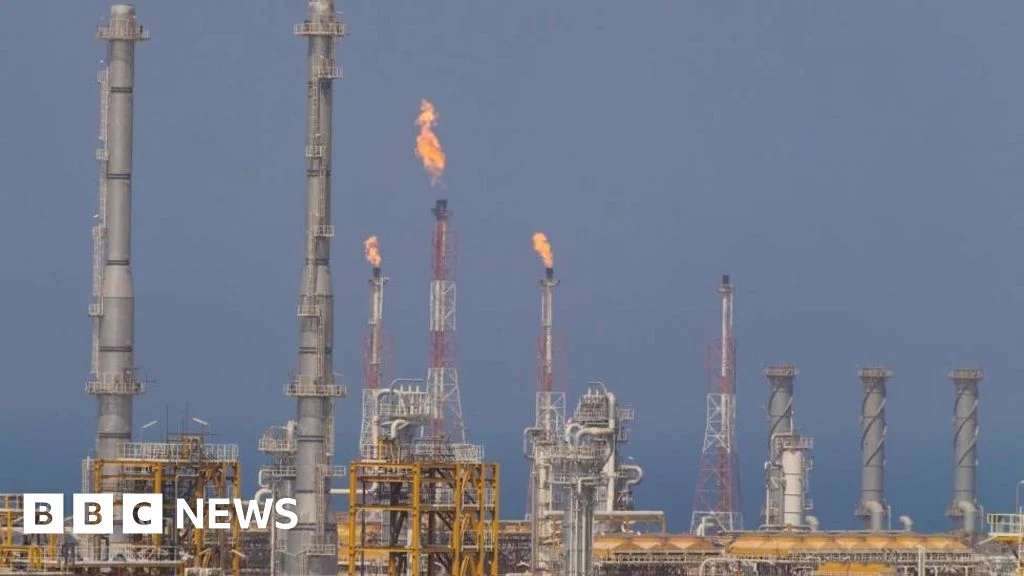
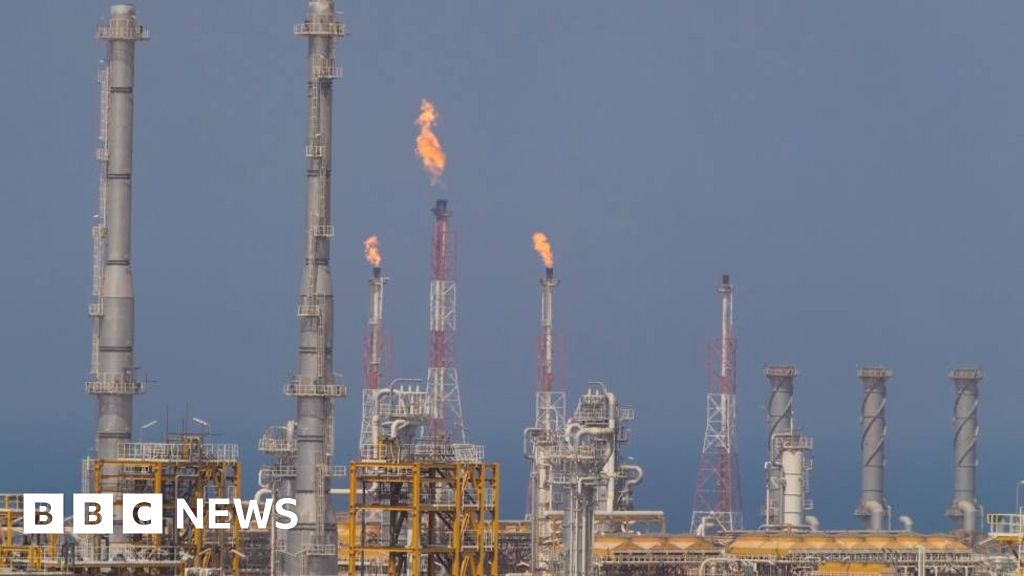
Oil prices surged towards the $110 a barrel mark following reports of an airstrike impacting a facility on the South Pars gas field, the largest natural gas field globally. The Brent crude oil benchmark climbed to $109.91 a barrel shortly after 14:30 GMT, marking a significant increase of over 5% from Tuesday’s closing prices, and has since remained above the $108 threshold. This sharp ascent was triggered by a report from Tasnim, a news agency closely associated with the Islamic Revolutionary Guard Corps, detailing an attack on Iran’s petrochemical complex situated on the South Pars gas field. The ripple effect extended to the energy markets, with the benchmark UK gas price experiencing a 6% jump to 143.53p a therm, though it later receded to below the 140p mark. Despite this upward movement, both oil and gas prices are still trading below their peak levels witnessed earlier in the ongoing geopolitical conflict. For context, oil had previously reached $116.78 a barrel on March 9th, while UK gas had peaked at 162.55p a therm on March 3rd.
Iran’s oil ministry, as reported by Tasnim, indicated that a fire at the petrochemical complex was brought under control on Wednesday afternoon. However, the full extent of the damage sustained by the facility remains uncertain. Adding to the tension, Iran’s military issued a stern warning of "decisive action" in retaliation for the strike on its energy infrastructure. The military statement, published by Tasnim, declared, "As previously warned, if the fuel, energy, gas, and economic infrastructures of our country are attacked by the American-Zionist enemy, in addition to a powerful counterattack against the enemy, we will severely strike the origin of that aggression as well." The statement further elaborated, "We consider targeting the fuel, energy, and gas infrastructures of the countries of origin legitimate and will retaliate strongly at the earliest opportunity." It is pertinent to note that Qatar also maintains operational facilities on the same gas field, which it refers to as the North Dome. However, Qatar, a major global producer of liquefied natural gas, accounting for a fifth of the world’s supply, had already suspended production earlier in March in response to the escalating conflict. Majed Al Ansari, a spokesperson for Qatar’s foreign ministry, emphasized that strikes against energy infrastructure "constitutes a threat to global energy security."
The recent attack and Iran’s subsequent retaliatory threats have "helped dial up the temperature once again and put renewed upward pressure on oil prices," observed Danni Hewson, head of financial analysis at AJ Bell. Hewson further commented, "Any solution to the blockage of the Strait of Hormuz looks pretty distant at this point and unless and, until there is progress on that front, energy markets will likely remain volatile." In a move aimed at addressing the rising oil prices, the White House announced on Wednesday the suspension of the Jones Act, a century-old law enacted in 1920 that mandates the exclusive use of American-made ships for transporting goods between U.S. ports. White House Press Secretary Karoline Leavitt stated that this 60-day waiver of the Jones Act, originally intended to bolster the American shipbuilding industry, would facilitate the "free flow of vital resources like oil, natural gas, fertilizer, and coal" by allowing the use of non-American-made vessels. However, industry groups within the U.S. maritime sector have downplayed the potential impact of this waiver, asserting that the current surge in oil prices is primarily driven by the cost of the commodity itself, rather than shipping expenses.
In a related development, a senior Iraqi official informed Reuters that Iran has also suspended the flow of gas to Iraq as a measure to bolster its domestic supplies in the wake of the attack. Data from the Gas Exporting Countries Forum reveals that the vast majority of Iran’s gas output, approximately 94%, is consumed domestically, underscoring the strategic importance of its energy infrastructure. The incident highlights the precarious balance of global energy markets, where disruptions in key production or transit regions can have immediate and significant price repercussions. The South Pars field, shared between Iran and Qatar, is a critical source of natural gas, and any threat to its operations sends ripples through international markets. The geopolitical implications of such strikes are profound, potentially leading to further escalation and exacerbating existing supply chain vulnerabilities. The market’s reaction, characterized by a rapid price increase, reflects the inherent sensitivity of oil and gas prices to perceived supply risks.
The airstrike, if confirmed to be a deliberate act targeting energy infrastructure, represents a significant escalation in regional tensions. Iran’s categorical threat of retaliation, particularly targeting the "origin of that aggression," suggests a willingness to engage in further military action, which could destabilize an already fragile geopolitical landscape. The international community will be closely monitoring the situation, as any wider conflict in the region could have catastrophic consequences for global energy security and economic stability. The involvement of the United States and its allies in the region adds another layer of complexity to the unfolding events, with the potential for a broader confrontation. The impact on global energy prices is not just a matter of immediate financial concern; it also carries implications for inflation, economic growth, and the energy transition efforts worldwide. Higher energy prices can stifle economic recovery, increase the cost of essential goods and services, and potentially slow down the shift towards renewable energy sources if fossil fuels become more economically attractive in the short term.
The suspension of the Jones Act by the U.S. administration, while presented as a measure to ensure the flow of vital resources, also underscores the urgency with which the U.S. is viewing potential energy supply disruptions. However, the skepticism from maritime groups about its effectiveness points to the deeper structural issues influencing energy prices. The reliance on a limited number of major energy producers and transit routes makes the global energy market inherently vulnerable to geopolitical shocks. The conflict in the Middle East, with its long history of volatility, remains a primary source of concern for energy market participants. The interconnectedness of global energy markets means that an incident in one region can quickly impact prices and availability worldwide. The South Pars gas field, being a major producer, is particularly sensitive.
The retaliatory actions by Iran, including the suspension of gas to Iraq, demonstrate a strategic approach to managing its domestic energy needs while simultaneously signaling its resolve to respond forcefully to perceived aggressions. This move by Iran also impacts regional energy dynamics, potentially creating energy shortages for its neighbors and further complicating efforts to ensure regional energy security. The global energy market, already under pressure from various factors including the ongoing war in Ukraine and increased demand, is finding itself further tested by these new developments. The volatility observed in oil and gas prices is likely to persist as long as these geopolitical tensions remain unresolved and the threat of further supply disruptions looms. Analysts are closely watching for any signs of de-escalation or further escalation, as these will significantly influence the trajectory of energy prices in the coming weeks and months. The long-term implications for energy security and the global economy will depend on how these complex geopolitical dynamics are managed and resolved. The current situation serves as a stark reminder of the fragility of global energy supplies and the profound impact that regional conflicts can have on the world economy. The continuous news of strikes and retaliations in energy-rich regions keeps the markets on edge, demanding constant vigilance from policymakers and market participants alike. The future of oil and gas prices will undoubtedly be shaped by the unfolding events in the Middle East and the broader geopolitical landscape.



 Nakalama John
 Ramos Leo
 Nana Banana