George Anjay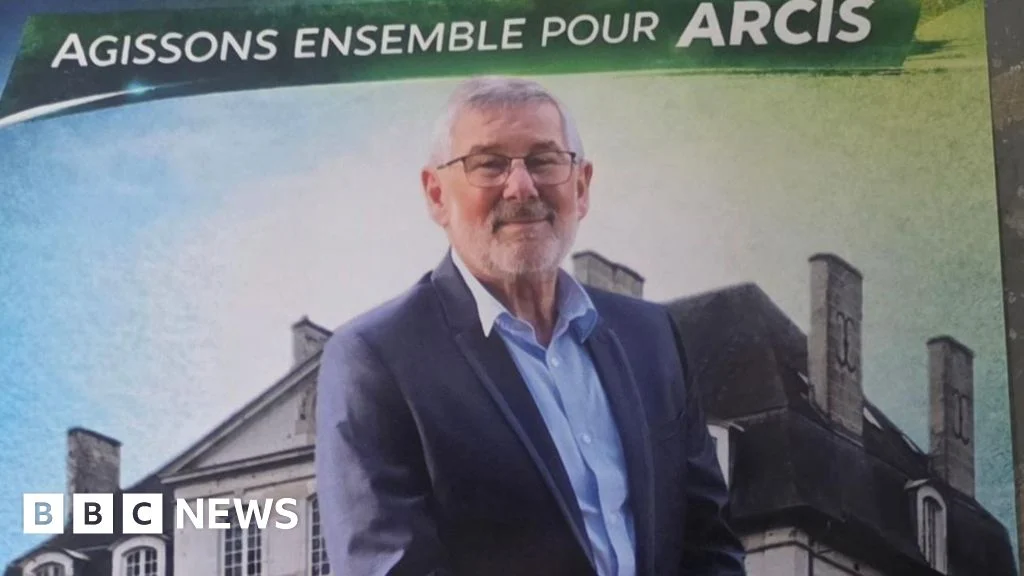
A small French town has catapulted itself into the global spotlight, not for its picturesque vineyards or historical significance, but for the utterly astonishing names of its mayoral candidates. Arcis-sur-Aube, a commune nestled in the Aube department of northeastern France, with a modest population of just 2,785 souls, has become an unlikely internet sensation as its municipal elections this Sunday pit a mayor named Hittler against an opponent named Zielinski. The ensuing online frenzy, fueled by social media’s insatiable appetite for the absurd, has transformed a local electoral contest into a viral phenomenon, prompting a mix of amusement and deep frustration from the principal figures involved.
Charles Hittler, the incumbent mayor and a man who has, for decades, navigated the mild inconveniences of his surname, finds himself overwhelmed by the current level of attention. "It has gone completely crazy," he lamented to the BBC, his voice tinged with exhaustion. "All my life I’ve had the occasional joke made about my name. Sometimes people drew moustaches on my election posters. It was never a big deal." However, the digital age, with its amplified reach and penchant for provocative juxtapositions, has rendered those past quips almost quaint. "But now it’s out of control. I’ve seen online articles saying ‘37% of the people of Arcis are Hitlerites!’. My wife is in tears." The irony of a historical name resonating in a modern political context, particularly when amplified by the digital echo chamber, has clearly taken a significant personal toll.
The phenomenon gripping French social media and spilling over into international news cycles revolves around the perceived, albeit purely coincidental, parallels between the names of the candidates and iconic figures of the 20th and 21st centuries. The narrative that has taken hold paints a darkly humorous picture of a battle between the late German dictator Adolf Hitler and Ukraine’s modern-day hero, President Volodymyr Zelensky. This facile comparison, while entirely devoid of substance in the local Arcis-sur-Aube context, has proven irresistible to online commentators, leading to a deluge of "humorous" posts.
Mayor Hittler expresses his deep dissatisfaction with the focus on nomenclature over policy. "If people were talking about the town and our policies, that would be one thing. But all they’re interested in is our names," he stated, underscoring the frustration of a local politician whose genuine efforts to serve his community are being overshadowed by a name that carries an immense, and in this instance, undeserved historical weight.
The genesis of the Hittler name in this French family is rooted in the historical landscape of Alsace, a region with a complex Franco-German heritage. Charles Hittler explained that his family hails from northern Alsace, a border region where such surnames are not entirely uncommon, though they carry a distinct historical resonance. His father, a shepherd, was tragically subjected to Germany’s forced labor program during the Second World War. Upon his return after the war, he was advised by many to change the family name, given the raw and recent trauma associated with it. "Everyone said, ‘You’ve got to change your name.’ This was 1949. The war was a recent memory. But it was a huge administrative headache and it would have cost a lot of money, so they didn’t." The decision, born out of practical and financial considerations at the time, has, generations later, thrust his descendants into an uncomfortable spotlight.
The Hittler surname is now a rarity, even within France. Charles Hittler notes that his cousins in Alsace, having had only daughters, have seen the lineage of the name dwindle. The burden of the name has even led to linguistic adaptations within his own family. "One of his sons pronounces the name ‘Hit-lay’, in order to escape embarrassment, and his grandchildren have taken their mothers’ names." This internal struggle to distance themselves from the historical connotations highlights the enduring impact of the name. Yet, the Hittler lineage persists in public life, with a Hittler daughter and a Hittler daughter-in-law also campaigning as councillors in municipal elections in other French towns, demonstrating a quiet resilience and a determination to be judged on their own merits.
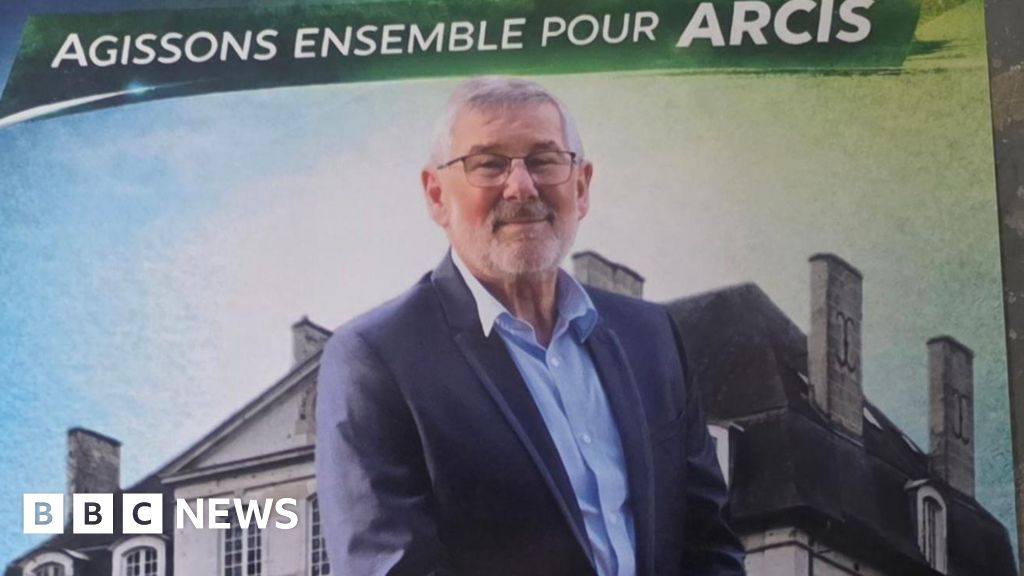
Charles Hittler’s decision to retain the name, despite its historical baggage, is rooted in a pragmatic understanding of identity and community. "Once you are known, the name begins not to matter. People look at the person behind the name. To my familiars, I was just ‘Monsieur Charles’. So I decided to keep it." This philosophy, which prioritizes personal recognition and local familiarity over external perceptions, has served him well in his mayoral duties but is now being severely tested by the global reach of online discourse.
The political landscape of Arcis-sur-Aube also adds a layer of complexity to the electoral narrative. Charles Hittler leads a centre-right list, a familiar political alignment in many French towns. His opponent, Antoine Renault-Zielinski, represents the far-right Patriot movement. This ideological contrast is significant in a region where the far-right National Rally has historically performed strongly, indicating a deeper political undercurrent beneath the viral sensation. The proximity of Arcis-sur-Aube to Paris, approximately 160km to the southeast, places it within a sphere of influence where national political trends often manifest at the local level.
Antoine Renault-Zielinski, a 28-year-old customs officer, brings his own unique linguistic and familial heritage to the contest. The "Zielinski" part of his name is inherited from his Polish mother, a common Slavic surname. He, too, has found himself fielding questions about his name, though his disambiguation is different from Hittler’s. "People are often asking me if I am related to Zelensky – to which I have to answer no, pointing out that the Polish name ends in an ‘i’ and the Ukrainian in a ‘y’," he explained to BFMTV, highlighting the subtle but crucial phonetic differences that distinguish his ancestry.
The viral nature of the election has caught Renault-Zielinski somewhat by surprise. "On Sunday I began seeing messages about our names circulating on X and I thought it was just a silly joke. But gradually I realised that everyone is talking about us!" he recounted. While he acknowledges the inherent amusement of the situation, his perspective is one of pragmatic acceptance rather than outright enjoyment. "I can see why people find it amusing. Personally, it doesn’t make me laugh, but it doesn’t bother me either. It would be better if people were talking about Arcis for other reasons, but at least we’re on the map." His sentiment reflects a common theme among those caught in the vortex of viral fame: a desire for genuine recognition of their locale and their efforts, rather than notoriety based on accidental nomenclature.
Adding a curious historical footnote to this unfolding drama is the fact that Arcis-sur-Aube lent its name to a town in Ukraine, near Odesa. This connection, forged in the crucible of Napoleonic history, dates back to 1814. Following Napoleon’s defeat at Arcis-sur-Aube against invading Austrian, Prussian, and Russian armies, German immigrants, encouraged by the Russian government, established a settlement named Artsyz two years later, an appellation derived from the very battle that had drawn attention to the French town. This historical echo, a town in Ukraine bearing a name linked to Arcis-sur-Aube, adds another layer of serendipitous coincidence to the current electoral narrative, though it is largely lost amidst the more immediate, name-driven online buzz.
The town of Arcis-sur-Aube also holds a significant place in French revolutionary history as the birthplace of Georges Jacques Danton, a prominent figure of the French Revolution. This rich historical tapestry, however, has been largely eclipsed by the contemporary viral sensation.
The electoral contest in Arcis-sur-Aube is set to culminate in a run-off election this Sunday. The final decision rests between Charles Hittler, leading a centre-right ticket, Antoine Renault-Zielinski, representing the far-right Patriot movement, and a third candidate, Annie Soucat. In the initial round of voting, Hittler secured a narrow lead over his two rivals, setting the stage for a potentially close contest. The global attention, however, has irrevocably altered the context of this local election, transforming it from a quiet municipal affair into an international talking point. The name "Hitler," notoriously rare in Germany even before the dictator’s rise to infamy, has become virtually nonexistent since the Second World War, making the presence of a French mayor bearing the surname all the more remarkable and, in the current digital climate, a catalyst for unprecedented viral attention.

 Nakalama John
 Ramos Leo
 Nana Banana