Nana Banana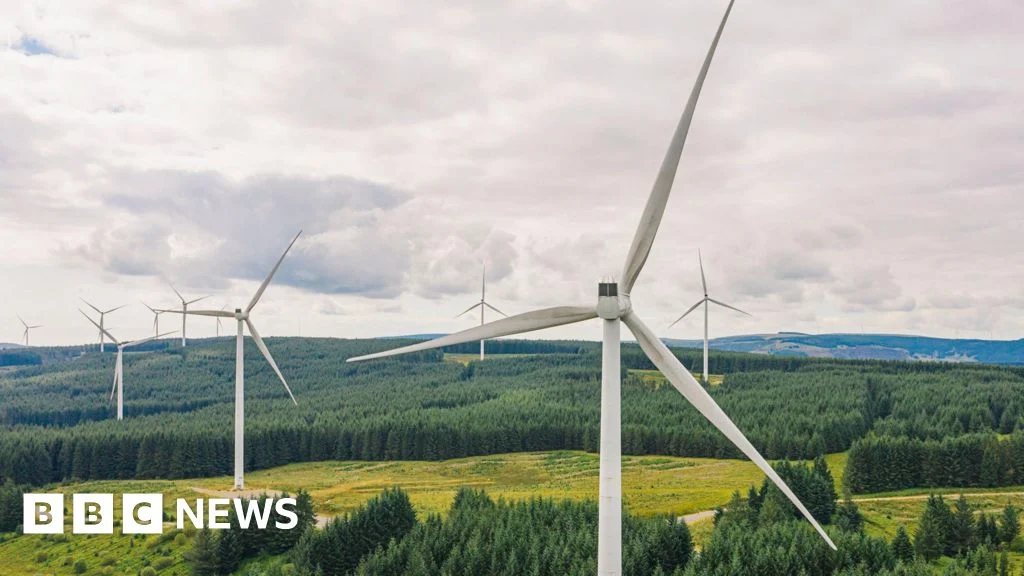
The ambitious goal is for Wales to generate 100% of its electricity from renewable sources by 2035, building on the progress already made, with renewable power meeting 54% of the country’s electricity use in 2024. The newly unveiled sector deal, championed by the Labour-led government in Cardiff Bay, outlines 78 specific commitments. These commitments are comprehensive, ranging from vital reforms to the planning process, which has historically been a significant bottleneck for developers, to extensive programmes focused on training and upskilling the workforce necessary to construct, operate, and maintain these new energy schemes.
Beyond administrative and labour aspects, the deal also places a strong emphasis on ensuring local communities are integral to the renewable energy revolution. Developers and community organisations were actively involved in shaping the commitments, with a view to guaranteeing that areas hosting these projects genuinely "reap the benefits." This holistic approach seeks to foster local buy-in and distribute the economic advantages more equitably, addressing concerns about large-scale developments being imposed without sufficient local return.
The announcement itself was strategically made on Anglesey (Ynys Môn), a location symbolic of Wales’ innovative potential in renewable energy. It took place at the headquarters of the Morlais tidal energy project, a pioneering scheme that exemplifies the kind of innovation the new deal aims to foster. Owned and managed by the social enterprise Menter Môn and bolstered by Welsh government funding, Morlais provides crucial infrastructure and grid connection for developers to install and trial underwater turbines. It currently stands as the largest scheme of its kind throughout Europe, showcasing Wales’ capacity for leading-edge marine energy technology.
Rebecca Evans, Cabinet Secretary for Economy, Energy and Planning, underscored the broader implications of the deal, stating that Wales is poised to become "a world leader in renewable energy, creating jobs and green growth." She further highlighted the geopolitical imperative for energy independence, noting that "The current conflict in the Middle East has further highlighted the importance of energy independence." This positions the Renewable Energy Sector Deal not just as an environmental or economic policy, but also as a critical component of national security and resilience, insulating Wales from volatile international energy markets.
The industry has largely welcomed the announcement, viewing it as a long-awaited catalyst. Renewable UK Cymru, a key industry body, expressed strong support, predicting that the deal would unlock a substantial "£10bn opportunity for Welsh businesses," create an estimated 8,000 new jobs, and generate £183m in community benefits. These figures underscore the potential economic transformation that robust investment in renewables could bring.
Earlier reports from Renewable UK Cymru had sharply criticised Wales’ performance in attracting green energy investment. In a report presented before May’s Senedd election, the organisation warned that Wales was failing to leverage its "world-class natural resources." It drew a stark comparison with Scotland, which had secured over £18bn in new clean energy investment over the past decade, while Wales had attracted less than £1bn. This significant disparity highlighted a pressing need for strategic intervention to avoid falling further behind economically. The report also pointed to rising electricity demand, driven by the proliferation of electric vehicles, heat pumps, data centres, and AI-driven industries. Without a "major increase in clean power generation," it cautioned, Wales risked "higher bills, weaker energy security and falling further behind economically." The new sector deal is designed to directly address these systemic issues and capitalise on Wales’ untapped potential.
However, the path forward is not without its critics and challenges. The Campaign for the Protection of Rural Wales (CPRW) on Anglesey, represented by its chair Jonathan Dean, voiced strong opposition to certain aspects of the plan, particularly regarding onshore developments. Dean argued that ministers were "tripping themselves up big time" by continuing to push for more onshore wind and solar power. While acknowledging that they are "not saying don’t build anything onshore" if communities genuinely desire it, he asserted there was "no pressing need for it," claiming Wales could meet its renewable energy targets predominantly through large offshore schemes. The CPRW’s primary concern revolves around the visual and environmental impact of "huge windfarms towering over their village" and expansive "fields of solar panels," which they believe should not be "forced on communities." Dean predicted that this issue would feature prominently in the upcoming election campaign, reflecting a deeply felt local resistance to certain types of renewable infrastructure.
The deal’s announcement also served as a political battleground, with various parties weighing in ahead of the Senedd elections. Welsh Liberal Democrat Leader Jane Dodds questioned the government’s "so-called ‘sector deal’," arguing it "raises more questions than it answers." Her criticisms focused on the lack of a clear plan for building the necessary workforce, with insufficient detail on training, skills, or apprenticeships. She also expressed skepticism about community benefits, stating that "without minimum standards or enforcement, there is no guarantee local people will see the rewards."
Wales Green Party Leader, Anthony Slaughter, claimed a measure of political victory, suggesting that "With Green support surging, other parties are desperately playing catch up." He asserted that "These headline targets are lifted straight from the Welsh Green manifesto – a clear sign of our growing appeal just six weeks before the Senedd elections," implying the government was acting under pressure. Slaughter affirmed that "Greens genuinely believe renewables will deliver, both for the climate and in reducing people’s energy bills."
Plaid Cymru’s energy spokesman, Luke Fletcher, offered an alternative vision, stating that "In our first 100 days in government, we would build new partnerships between government and key stakeholders and develop Trydan Gwyrdd Cymru into a single, consolidated energy company to develop renewables and to help reduce energy bills." This proposal for a national energy company represents a distinct approach to achieving renewable energy goals.
Reform UK Wales presented a starkly contrasting viewpoint in its manifesto, which includes a ban on new onshore wind farms and solar farms. The party contended that the country had "reached saturation point with unreliable, weather-dependent renewables that blight the Welsh countryside." A spokesperson for Reform UK Wales added that the party had "also announced plans to bring down energy bills by taking on green subsidies that have been piling misery on households," indicating a desire to roll back certain renewable energy policies.
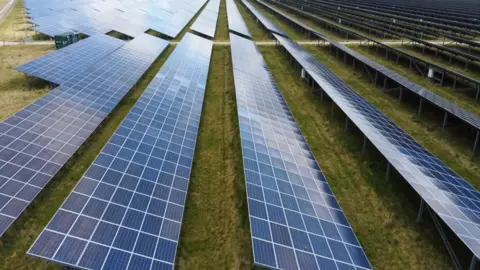
The Welsh Conservatives, through their spokesperson for energy, Samuel Kurtz, acknowledged that renewables "will play a role in our future energy mix, alongside reliable sources such as oil, gas and nuclear." Kurtz emphasized that "The priority must be ensuring that these projects deliver tangible outcomes: skilled jobs, investment and clear benefits for local communities." He further articulated the party’s commitment "to supporting the growth of marine energy, including floating offshore wind, while also advancing nuclear opportunities at Wylfa and Trawsfynydd," highlighting a diversified energy strategy that includes nuclear power as a stable base load.
As the Senedd election approaches, the debate over the pace, location, and economic distribution of renewable energy projects in Wales is set to intensify. The new deal marks a significant policy shift, aiming to overcome historical inertia and unlock Wales’ potential as a renewable energy powerhouse. However, it also brings to the forefront complex questions regarding environmental preservation, community autonomy, and the intricate balance between national energy security and local impact, ensuring that the journey towards 100% renewable energy by 2035 will be a dynamic and closely watched endeavour.


 George Anjay
 Ramos Leo