
 Roy Suryo
In response to the findings, OUH issued a statement expressing its sorrow for the experiences of mothers who feel let down by the care they received. The trust emphasized that the figures include mothers and babies referred from across the region for specialist care, and that every baby death undergoes a detailed review to ascertain the circumstances and identify areas for improvement. However, for families like Eleanor Taylor-Verlaan, the statistics represent a deeply personal tragedy, a haunting reminder of what might have been.
Eleanor is scheduled for a Caesarean section next month, a date poignantly close to the anniversary of her first daughter, Alissa’s, death in 2017. Alissa suffered severe brain damage due to a lack of oxygen when the placenta detached prematurely from the uterine wall. Eleanor firmly believes that had she received more attentive and timely care, her daughter might still be alive. "They should’ve got me in straight away, they should’ve seen me as soon as I turned up to hospital because I was classed as high risk," Eleanor recounted, her voice filled with lingering pain. "They should have listened to the midwives that were watching that CTG (cardiotocography) quite closely but everything got overruled [by the doctors]."
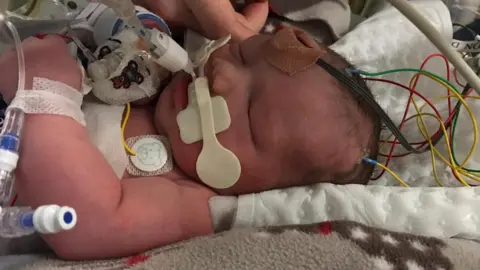
Eleanor, now 27, from Faringdon, Oxfordshire, had been identified as high-risk at her 20-week scan, with concerns raised about growth restriction, pre-eclampsia, and stillbirth. Despite this, she claims she was not adequately monitored. At 35 weeks pregnant, she experienced abdominal pain and sickness but was advised to remain at home and manage her symptoms with paracetamol. The tragic events unfolded on February 20, 2017, when, after a protracted wait of over two hours in the maternity assessment unit, her baby was delivered via emergency C-section in critical condition. Alissa tragically passed away six weeks later.
An internal review of Alissa’s case, which Eleanor has seen, acknowledged certain care issues but controversially concluded that these were unlikely to have "improved the outcome for this baby." Eleanor, who was unaware of her options for requesting an independent investigation at the time, is now pursuing legal avenues with birth injury lawyers to challenge these findings. Laura Cook, a partner at Medilaw, expressed deep concern over the practices within some NHS trusts. "They carry out a tick-box exercise with internal reviews to look like nothing could have been done," she stated. "It forces families to go to lawyers who then find there’s more to it… it puts families through hell." Cook specifically highlighted Oxford’s perceived defensiveness, suggesting that reputation appears to be prioritized over patient well-being, a stark contrast to other trusts she has encountered.
The trust maintains that it acknowledges the dissatisfaction of some families and takes their feedback seriously. However, the BBC investigation unearthed further concerning patterns. Between 2019 and 2024, OUH conducted 361 internal reviews using the Perinatal Mortality Review Tools (PMRTs). Alarmingly, at least 58 of these cases were graded C or D, indicating that different care "may" have or was "likely" to have influenced the outcome.

Adding to the grim picture is the case of Alice Topping. Identified as high-risk due to concerns about her baby’s growth at her 20-week scan, she was referred for an additional scan at 40 weeks. When no appointment was forthcoming, Alice made persistent attempts to secure one, making an astonishing 44 calls in a single day. However, she claims a consultant denied her request, stating the trust prioritized 36-week scans. Tragically, just a week later, her daughter Smokey was stillborn during labour at the John Radcliffe Hospital in September 2023. "At the most vulnerable time in my entire life I was failed… it’s just horrific knowing that with just basic care my daughter should be here, that’s not acceptable," Alice told the BBC, her voice heavy with sorrow. An initial internal review by the trust found no wrongdoing, but an independent investigation later revealed "a catalogue of failings" and recommended five safety measures that "could have made a difference to the outcome." Alice believes crucial information about her risk was withheld from her and asserts that bereaved and harmed families "deserve answers, truth and change."
In 2023, the year Alice lost her daughter, OUH’s stillbirth rate was the highest among 25 specialist trusts that care for the sickest babies. While recent figures from MBRRACE-UK show a slight decrease in OUH’s stillbirth rate in 2024 to 3.47 per 1,000 births, placing it in line with comparable trusts, and its overall mortality rates are below average for similar units, the historical data remains deeply concerning. The trust oversees over 7,000 births annually, and while the vast majority are safe and many women report receiving good care, the persistent issues cannot be ignored.
The Care Quality Commission (CQC) has previously taken action against the trust. Following concerns raised by five whistleblowers about bullying and dysfunctional teams, the CQC inspected the main maternity unit at the John Radcliffe Hospital in 2021. This led to a downgrade of the unit’s rating from "Good" to "Requires Improvement." In response, OUH has been receiving targeted maternity support from NHS England, aimed at improving decision-making for labour induction and strengthening management oversight to enhance safety and quality of care. This support is scheduled to continue until June. The CQC returned for a further inspection in October 2025, the results of which are still pending. However, on December 8, 2025, the CQC issued a warning notice, citing five breaches of legal regulations related to safe care and treatment, premises and equipment, good governance, and staffing.
A campaign group, Families Failed by OUH, is actively campaigning for a judge-led public inquiry into the trust’s maternity services, drawing parallels with independent reviews granted to hospitals in Leeds and Sussex. Michelle Welsh MP, chair of the All Party Parliamentary Group on Maternity, echoed these calls, stating, "There is a systematic toxic culture there that needs tackling and families deserve accountability and answers." A spokesperson for the Department for Health and Social Care confirmed that Baroness Amos will "set out clear steps to improve maternity and neonatal care across England." They also highlighted the ongoing rapid, targeted support provided to OUH’s maternity services by NHS England, involving regular meetings between hospital leaders and national experts to ensure progress.
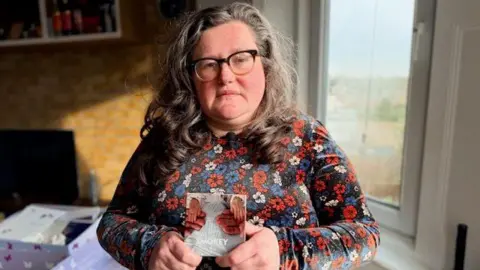
In response to the BBC’s investigation, Simon Crowther, interim chief executive for OUH, acknowledged the tragic nature of the stories shared and expressed understanding of the profound impact of child loss. He stated the trust is willing to review Eleanor’s case again and encouraged her to make contact. Regarding Alice’s case, Crowther noted its complexity and that it had been examined by multiple independent bodies. "The trust remains fully committed to learning from every family’s experience and to continually improving the safety and quality of maternity care," he affirmed.
The article concludes with a call for information, inviting anyone with further details about this story to reach out to the reporter, Katharine Da Costa, via email at [email protected] or through her Instagram account.




 Nakalama John
 atisusanti
 Ramos Leo
