
 Roy Suryo
Kent, UK – Health officials in Kent are unable to definitively state that a concerning outbreak of meningitis has been contained, according to the county’s director of public health. The gravity of the situation has prompted an urgent public health alert, urging healthcare professionals nationwide to remain vigilant for signs of infection. The UK Health Security Agency (UKHSA) is currently investigating 20 suspected cases, a number that tragically includes two fatalities.
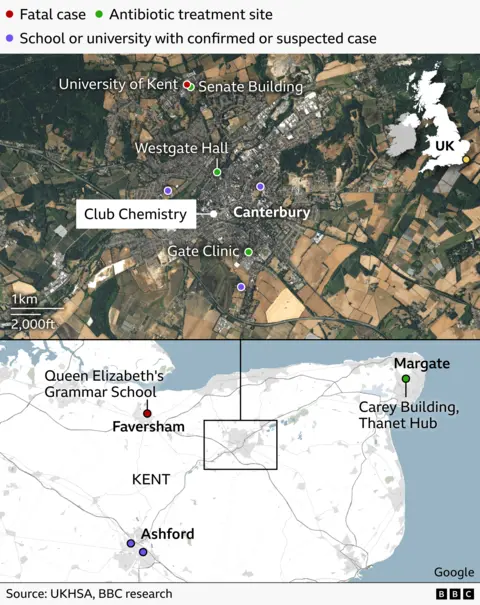
In response to the escalating crisis, a targeted vaccination programme has been rolled out for approximately 5,000 students at the University of Kent. The outbreak is believed to have originated at a popular Canterbury nightclub, "Club Chemistry," sending ripples of concern through the student community and beyond.
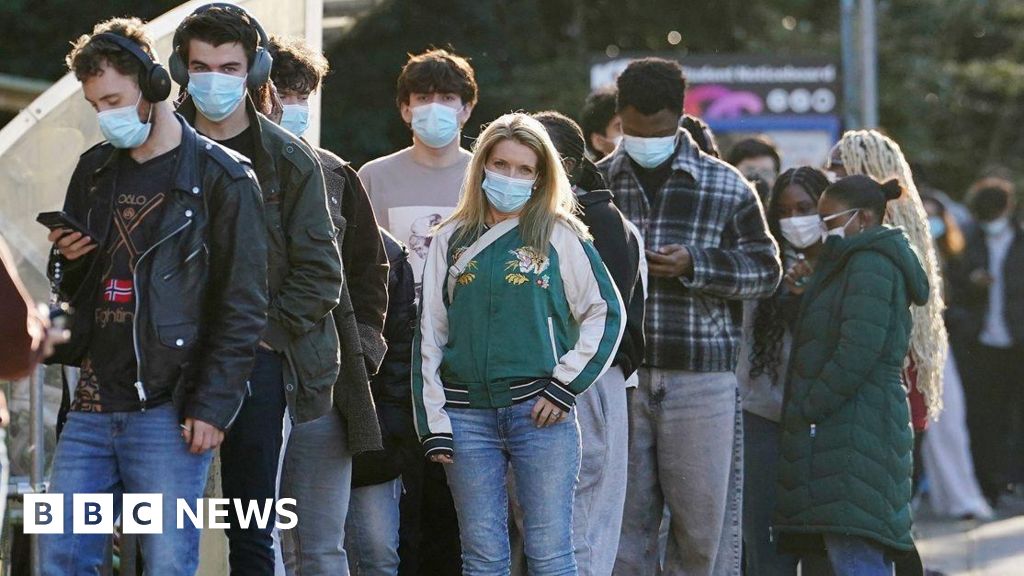
When pressed on the containment status of the outbreak, Dr. Anjan Ghosh, of Kent County Council, expressed caution in an interview with BBC Radio 4’s Today programme. "We are not in a position yet to say that definitively," he stated, highlighting the ongoing nature of the investigation. Dr. Ghosh elaborated on the challenges, explaining, "If you see the daily reporting that’s going on, there are more and more cases being reported, but these cases all relate more or less to that same period of time when the initial exposure happened."
The primary concern for health authorities is the potential for secondary transmission – instances where the infection spreads from an initial case to other individuals. "We need to rule that out before we can say it’s definitely contained," Dr. Ghosh emphasized, underscoring the meticulous nature of the containment efforts.
The human toll of the outbreak has been starkly evident. A 21-year-old University of Kent student and Juliette, a sixth former at Queen Elizabeth’s Grammar School in Faversham, are among the confirmed deaths. The total number of confirmed and suspected cases has now reached 20, underscoring the rapid spread of the disease. The issuance of a UKHSA alert is an unusual step, typically reserved for significant public health threats, having been employed in recent years for issues like MPox.

UKHSA chief executive, Dame Susan Hopkins, revealed to the BBC that a key focus of their investigation is understanding the specific factors contributing to the rapid spread of the infection within Canterbury. She confirmed that government-held vaccine stocks would be allocated to NHS patients, including students in Kent, while also considering the possibility of supplying some doses to pharmacies to broaden accessibility.
Adding to the widespread concern, a case has now been confirmed at Canterbury Christ Church University. Tyra Skinner, a 20-year-old student at the institution, contracted meningitis after reportedly visiting Club Chemistry, according to her parents. Tyra is currently receiving treatment at the William Harvey Hospital in Ashford and is reported to be in a stable condition after her parents rushed her to hospital when her symptoms escalated from what they initially believed to be flu and pink eye. Her mother, Candice Skinner, recounted the alarming progression of her daughter’s illness, stating, "She started developing a red eye over the weekend and I thought she had pink eye, and then on Monday she was really, really ill, slumped over, no energy, so we took her to hospital."
The proactive measures in Kent are proceeding at pace. On Wednesday, 600 vaccinations were administered to students on the University of Kent campus, with a second dose scheduled for a minimum of four weeks later. In addition to the vaccinations, over 8,400 precautionary antibiotics have been distributed to mitigate further spread. Currently, the vaccine is exclusively available to students residing in accommodation on the Canterbury campus. General practitioners across the country have been instructed to prescribe antibiotics to individuals who visited Club Chemistry between March 5th and 7th, as well as to students from the University of Kent. The UKHSA continues to stress that antibiotics remain the most effective immediate treatment for potential exposure.
Dame Susan Hopkins had previously indicated that the outbreak appeared to involve a "super spreader event" and was ongoing within university halls of residence, though she was unable to pinpoint the precise origin of the initial infection.
Professor Rama Thirunamachandran, Vice-Chancellor and Principal of Canterbury Christ Church University, confirmed a case of meningococcal disease involving a student and stated the university had reached out to offer support. He acknowledged this case was linked to the cluster associated with Club Chemistry but reassured the university community that the campus remains open, with core academic activities continuing uninterrupted.
The impact of the outbreak has extended to local schools, with five in the county confirming or suspecting cases. Students at the University of Kent have shared their experiences of attending social events prior to the outbreak being widely publicised. Oliver Contreras, a 22-year-old postgraduate law student, was among the first to receive the vaccination and expressed a wish for earlier information before attending social gatherings. Divine Nweze, an architecture student, shared that her parents were insistent she get vaccinated and were concerned about her returning home due to the ongoing situation.

The atmosphere on campus has been described as subdued. Economics student Mohammed Olayinka noted that the campus had become "a bit of a ghost town," with some students opting to stay for vaccinations while others "panicked and left." Architecture student Sophie echoed this sentiment, describing the campus as "so quiet now, most of our friends have gone home, it’s weird." She and her housemate were preparing to leave, with Sophie awaiting further information on close contacts before deciding on antibiotic treatment.
The vaccination drive at the University of Kent commenced on Wednesday afternoon, with nurses administering jabs in a sports hall, drawing parallels to the public health response during the Covid-19 pandemic. A university spokesperson confirmed the vaccination process was underway and that staff and students were being offered precautionary antibiotics as a swift and reassuring measure. Vaccinations are scheduled to continue on Thursday, with arrangements being made for students to receive their second dose on campus. The heightened demand for vaccines has led pharmacies like Boots to implement queuing systems, while Superdrug has established a waiting list.
Meanwhile, French authorities have reported that an individual admitted to hospital in France after returning from England is in a "stable" condition, indicating the potential for international spread.

Health Secretary Wes Streeting clarified that while the outbreak is geographically concentrated in Kent, the response is being managed at a national level. He noted that meningitis is a common illness, with at least 350 cases annually across the UK, and that unconnected cases could arise in other regions. However, he highlighted the unprecedented nature of the Canterbury outbreak’s "pace and extent of the spread of the disease," which has necessitated a highly proactive approach to providing antibiotics and implementing vaccinations at an accelerated rate.
Prime Minister Sir Keir Starmer acknowledged the "deeply difficult" period for the families affected by the outbreak and commended the efforts of health experts in identifying close contacts, distributing antibiotics, and initiating targeted vaccinations to control the situation.




 Nakalama John
 atisusanti
 Ramos Leo
