George Anjay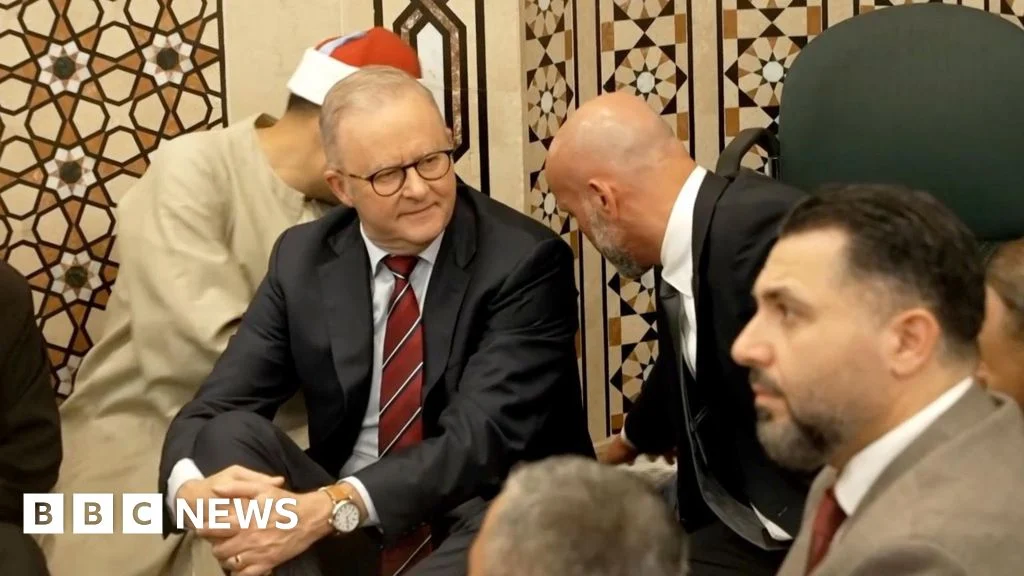
Australia’s Prime Minister Anthony Albanese faced a hostile reception at a Sydney mosque during a significant Eid al-Fitr celebration, marking the end of the holy month of Ramadan. The incident, which occurred on Friday morning at Lakemba Mosque, one of Australia’s largest and most prominent Muslim community centres, saw a segment of attendees express their profound discontent with the government’s foreign policy and domestic handling of community relations. Accompanied by Home Affairs Minister Tony Burke, Albanese had accepted an invitation from community leaders to attend the Eid prayers, a customary gesture of engagement during this important religious observance.
However, the atmosphere turned tense as several individuals directed accusations of "genocide supporters" at the Prime Minister and the Minister. Shouts of "boo" and "get out of here" punctuated the air as a mosque leader delivered a speech that urged the government to foster a more meaningful dialogue with Australian Muslims. The underlying cause of this palpable anger stems from deep-seated frustration within a significant portion of Australia’s Muslim community regarding the government’s stance on the ongoing Israel-Gaza war and a perceived rise in Islamophobia within the country.
In the immediate aftermath of the vocal dissent, a man who was actively shouting at Prime Minister Albanese was removed from the mosque premises by police. According to reports from the Australian Associated Press, the individual was later released without charge and instructed to move along. The disruption did not cease entirely upon the conclusion of the formal proceedings. As the Prime Minister made his exit through the gathered worshippers, he continued to be subjected to verbal abuse from a number of individuals. One particularly pointed remark captured the sentiment of some present: "Why is he here? Get him out of here! It’s a disgrace."
Following the event, the Lebanese Muslim Association, the organisation responsible for the mosque’s operations, issued a statement emphasizing that Prime Minister Albanese’s presence was welcomed and affirming their commitment to maintaining an open-door policy. "We understand that emotions are high, particularly given the ongoing suffering in Gaza and the devastation in Lebanon," the statement read. "These are not distant issues for our community. But we also need to be clear. Choosing to engage with the elected leadership of this country is not a betrayal of those concerns. It is how we give them a voice."
Prime Minister Albanese, speaking to the media shortly after the event, asserted that the reception from the vast majority of the more than 30,000 attendees at the mosque was overwhelmingly positive. He suggested that the vocal opposition from a few individuals might be linked to his government’s recent actions in outlawing extremist organizations, specifically mentioning Hizb ut-Tahrir. This group, which advocates for a unified Islamic government across the Muslim world, has faced accusations of celebrating terrorism.
Earlier in the day, Albanese had shared his participation on social media, describing it as an "honour" to join the prayers and accompanying his post with photographs of him greeting worshippers. During his address within the mosque, community leader Gamel Kheir articulated a nuanced perspective on political engagement, stating that the community could "neither totally disengage nor invite politicians for some cheap token photo opportunity." The mosque also indicated, via a social media post, that this was the first time the Prime Minister had been invited to attend prayers since the commencement of the Israel-Gaza conflict.
The current climate of heightened community tensions in Australia, marked by reports of both antisemitism and Islamophobia, has intensified significantly since the Hamas attacks on Israel on October 7, 2023, which resulted in the deaths of over 1,200 people and the taking of 251 hostages. Israel’s subsequent military offensive in Gaza has led to a devastating loss of life, with the Hamas-run health ministry reporting over 72,000 Palestinian deaths.
This incident at Lakemba Mosque is not an isolated occurrence of politicians facing mixed receptions at Eid events. In recent years, critics have argued that such religious celebrations should remain apolitical. During the federal election campaign last year, Jason Wood, a member of the conservative Liberal Party, had to be escorted from an Eid event in Melbourne after being heckled at a mosque.
The Albanese government, which joined the United Kingdom and Canada in recognizing a Palestinian state late last year, has found itself under considerable scrutiny for its response to the Gaza conflict. This criticism has been compounded by the tragic Bondi mass shooting in December, which claimed the lives of 15 people at a Jewish community event. The gunman, allegedly inspired by Islamic State ideology, was shot dead at the scene, and another individual is currently facing legal proceedings. This event represented Australia’s deadliest mass shooting in nearly three decades. The complexities of foreign policy, domestic sensitivities, and the deeply felt impact of global events on diverse communities continue to shape the political landscape in Australia, as evidenced by the events at Lakemba Mosque. The Prime Minister’s visit, intended as a gesture of goodwill and engagement, inadvertently highlighted the profound divisions and anxieties present within parts of the Australian Muslim community. The Lebanese Muslim Association’s statement underscored the delicate balance between expressing solidarity with those suffering abroad and engaging constructively with national leadership. The incident serves as a stark reminder of the challenges faced by political leaders in navigating these sensitive issues and the importance of fostering genuine dialogue and understanding in an increasingly polarized world. The continued focus on the Israel-Gaza conflict, coupled with domestic concerns about rising prejudice, will undoubtedly remain a significant factor in shaping the relationship between the Australian government and its Muslim citizens.


 Nakalama John
 Ramos Leo
 Nana Banana