George Anjay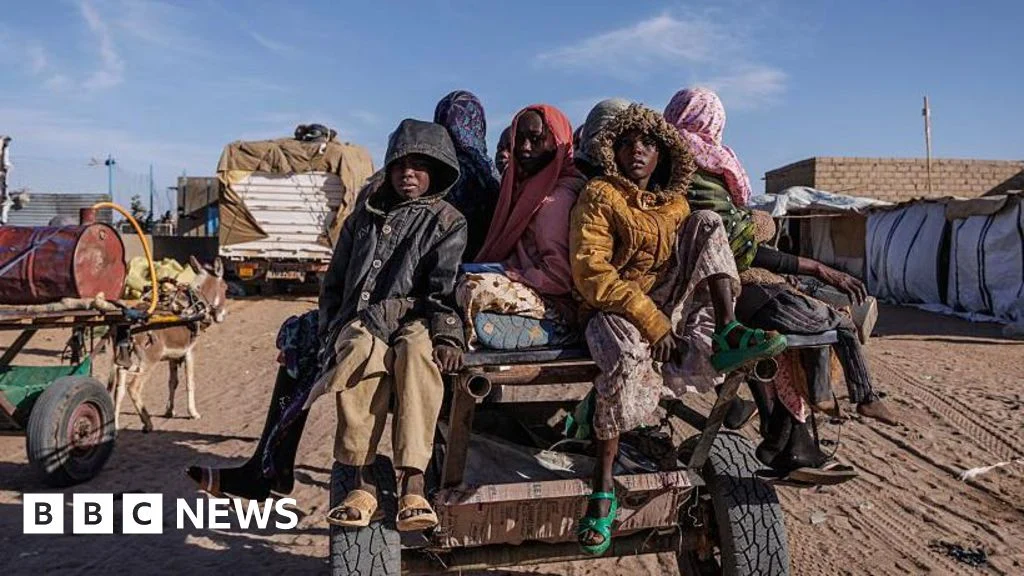
Chad’s President, Idris Mahamat Déby, has issued a stark warning to Sudan, vowing retaliation following a devastating drone strike that targeted mourners in the border town of Tiné, claiming the lives of at least 17 civilians and leaving several others injured. The president, visibly angered and clad in military attire, convened an emergency security meeting on Wednesday evening, where he issued a direct order to the Chadian military to be on high alert and to prepare for offensive actions against future Sudanese aggression. In a decisive move to stem the flow of conflict across its volatile frontier, Déby also announced a "total closure" of the border with Sudan, a measure intended to prevent further incursions by warring factions.
President Déby unequivocally condemned the attack, denouncing it as an "outrageous and a blatant aggression" against Chad’s sovereignty and territorial integrity. He highlighted the grave nature of the incident, emphasizing that it occurred despite prior warnings issued to the warring parties in Sudan and a previous attempt by Chad to seal its border. This latest escalation marks a significant deterioration in relations between the two neighboring nations, already strained by the ongoing civil war in Sudan.
Just last month, Chad had initially declared a closure of its border with Sudan "until further notice" in an effort to curb repeated incursions by Sudanese armed groups. However, this measure had been softened to allow for "exceptional exemptions" on humanitarian grounds, requiring prior authorization from relevant Chadian authorities. The drone strike on Tiné appears to have shattered any remaining semblance of peaceful coexistence along the shared border.
Eyewitness accounts from Tiné paint a harrowing picture of the attack. Residents described the victims as individuals gathered for a funeral ceremony, engaged in the solemn act of reading the Koran. The indiscriminate nature of the strike, targeting a civilian gathering, has sent shockwaves through the community and amplified international concerns about the devastating humanitarian consequences of the Sudanese conflict spilling over into neighboring countries.
The brazen attack has drawn widespread condemnation from various quarters within Chad. The National Assembly and Members of Parliament from the ruling party have voiced their outrage and solidarity with the victims. A statement released by the government spokesman conveyed profound sorrow and extended the nation’s deepest condolences to the bereaved families. "The government bows with deep dismay to the memory of the victims and extends its deepest condolences to the bereaved families," the statement read, underscoring the gravity of the loss.
The spokesman further elaborated on Chad’s response, stating that the nation has now "strengthened the posture of its defence and security forces" and is prepared to assert its rights within Sudanese territory. Crucially, this assertion of rights will be undertaken "in strict compliance with the rules of international law," a statement that aims to reassure the international community while signaling Chad’s resolve.
While the specific perpetrator of the drone strike remains officially unconfirmed, suspicion has fallen heavily on the paramilitary Rapid Support Forces (RSF). The RSF, which currently controls a significant portion of the western Darfur region that borders Chad, has been accused by Chad of orchestrating the attack. However, the RSF has vehemently denied any involvement, instead pointing fingers at Sudan’s national army. The Sudanese army, in turn, has also blamed the RSF. This attribution of blame highlights the complex and deeply fractured nature of the conflict in Sudan, where accusations and counter-accusations are rife.
The Sudanese government has a history of accusing Chad of complicity in the conflict, frequently alleging that N’Djamena provides weapons and mercenaries to the RSF. These claims have been consistently and firmly denied by the Chadian government. This latest incident, however, risks further exacerbating these existing tensions and deepening the mistrust between the two nations.
Sudan has been engulfed in a brutal civil war since April 2023, a conflict that erupted from a vicious power struggle between its national army and the RSF. The war has unleashed a catastrophic humanitarian crisis, claiming hundreds of thousands of lives and displacing over 13 million people. According to the United Nations, nearly one million of these displaced individuals have sought refuge in Chad, placing an immense strain on the country’s resources and infrastructure. The influx of refugees has transformed Chad into one of the primary host nations for those fleeing the violence, underscoring its direct vulnerability to the conflict.
The border between Chad and Sudan stretches for approximately 1,400 kilometers (870 miles) and is notoriously porous and challenging to control. This vast and often lawless frontier has become a breeding ground for instability, allowing for the easy movement of combatants, weapons, and refugees. Chad’s decision to order retaliation against future attacks from Sudan, therefore, carries significant implications. It raises grave fears of a potential escalation of the violence, not only within Sudan but also across its borders, potentially drawing Chad into direct military confrontation and further destabilizing an already volatile region. The international community will be watching closely as Chad seeks to protect its sovereignty and respond to this grave provocation.



 Nakalama John
 Ramos Leo
 Nana Banana