George Anjay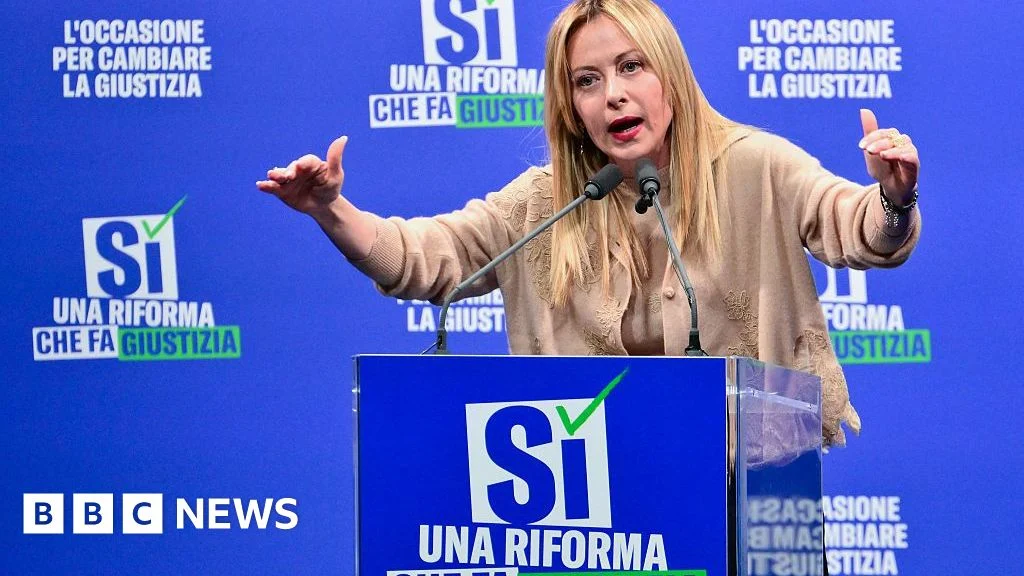
Italy Heads to Polls for Crucial Constitutional Referendum: A Defining Moment for Prime Minister Meloni
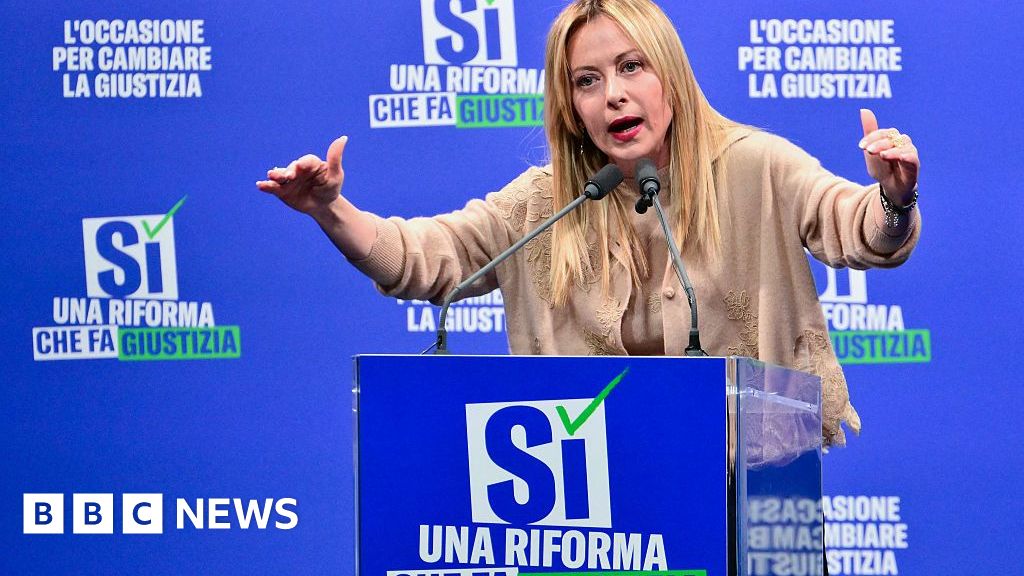
Italy is currently engaged in a significant national referendum, asking citizens to decide on proposed changes to the country’s foundational constitution. This vote carries substantial weight, not only for the future legal and political landscape of Italy but also as a critical barometer of Prime Minister Giorgia Meloni’s political standing and the stability of her right-wing government. Meloni, who has been in power for a considerable duration by Italian standards, has championed the proposed reforms, framing them as essential for a more efficient and just judicial system. However, the opposition has vehemently contested these changes, portraying them as a dangerous erosion of democratic principles and transforming the referendum into a proxy vote of confidence in Meloni’s leadership.
In a determined effort to sway public opinion, Prime Minister Meloni has embarked on an intensive campaign, reaching out to a diverse range of audiences. Her strategy has included unconventional appearances, such as joining popular rapper Fedez and podcaster Mr Marra on their widely-listened-to "Pulp" podcast. Donning a sparkling woolly jumper instead of her usual formal attire, Meloni engaged in an hour-long discussion, fielding questions and articulating her vision for a "more just" judicial system. This outreach was specifically aimed at capturing the attention and support of younger voters, a demographic often perceived as less engaged with traditional political discourse.
The proposed constitutional reforms, spearheaded by Meloni’s government, aim to fundamentally alter the structure and operation of Italy’s judiciary. Key provisions include separating the career paths of judges and prosecutors, establishing distinct governing bodies for each, and introducing a new disciplinary court. Meloni asserts that these changes will foster a more meritocratic, responsible, and efficient judicial process. She has also argued that her opponents are resorting to personal attacks and framing the referendum as a judgment on her premiership because they lack substantive arguments against the reform itself.
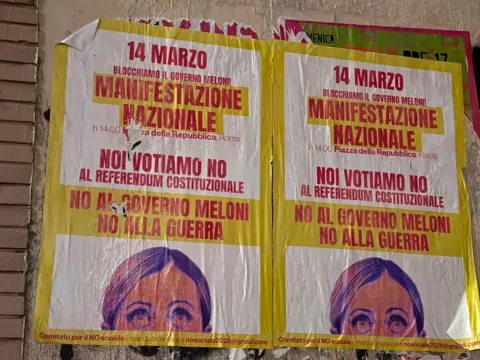
However, the "no" campaign has mounted a robust counter-offensive, successfully transforming the vote into a protest against Meloni’s administration. Opposition parties, including trade unions and various left-leaning groups, have rallied against the reform, warning of potential threats to democratic checks and balances. They express concerns that the changes could lead to increased political influence over the judiciary, a historical anxiety in Italy, particularly given the legacy of Silvio Berlusconi’s party, Forza Italia, a coalition partner in Meloni’s government. Berlusconi, a long-serving prime minister, frequently criticized the judiciary, which he often characterized as a politically motivated obstacle to his power.

The complexity of the referendum has left many Italians struggling to fully grasp its implications. While Meloni insists the reform is a necessary step towards a more functional justice system, critics fear it is a veiled attempt to consolidate power. Meloni herself has publicly clashed with the courts, alleging that "powerful factions" obstruct her policy initiatives, particularly concerning migration. In a recent, unsubstantiated claim made in Milan, she suggested that a "no" vote would result in the release of criminals, thereby jeopardizing public safety. This type of rhetoric has fueled opposition fears that the reforms are intended to subjugate the judiciary to political control.
The current geopolitical climate, marked by global uncertainty and rising living costs, exacerbated by an unpopular war, adds another layer of complexity. These economic pressures have contributed to a generally negative public sentiment, which opposition parties are keen to leverage. Andrea di Giuseppe, a member of Meloni’s Fratelli d’Italia party, acknowledged the challenging external context but urged voters to focus on the referendum’s merits, suggesting that dissatisfaction with the government could be addressed in the general election scheduled for 2027. He emphasized, "If you are not happy about this government, then in 2027 [you can] just kick it off the bus, change to another government. Now, the matter of the referendum is what counts."
Despite the political polarization, there are voices even on the left who acknowledge potential flaws in the current judicial structure. Alessandro Sterpa, a constitutional law professor at Tuscia University, points to the close ties between judges and prosecutors as a potential source of cronyism, describing it as an unhealthy "little parliament." He argues that the proposed reform, while initiated by a right-wing government, does not inherently increase governmental control over the judiciary and addresses long-standing concerns about political factions, known as "correnti," influencing judicial proceedings. Sterpa, whose family fought against fascism, views the reform as potentially beneficial for the country, challenging the notion that only the left can safeguard the constitution.
The "no" campaign’s final rally in Rome’s Piazza del Popolo was a vibrant display of dissent. Demonstrators spelled out "Vote No" on the cobblestones, while an inflatable unicorn with a rainbow tail and a "Leave the Constitution in Peace" sign symbolized a playful yet firm rejection of the proposed changes. Speakers passionately called for the defense of democracy, drawing parallels to the post-fasc era when the constitution was drafted to ensure a balance of powers. Andrea Malpassi of the CGIL trade union expressed deep-seated wariness of constitutional amendments by a prime minister whose early political career was marked by admiration for Benito Mussolini. He voiced concerns that the reforms could undermine future accountability for government actions.

The outcome of this referendum is far from assured. While Meloni has the authority to pursue further constitutional changes, including potentially expanding the powers of her office, should she win, this vote comes at a particularly sensitive juncture for her government. Political scientist Roberto D’Alimonte of Luiss University notes that a "no" vote would undoubtedly weaken her politically, even if she does not resign. The Italian public’s apprehension about engaging in international conflicts and the economic strain of rising gas prices have created a challenging environment for Meloni’s administration. The stability she has striven to bring to Italy could be significantly tested by the referendum’s results.
The Italian judicial system, while facing challenges of chronic overload and lengthy trial durations, is the subject of this complex debate. The proposed reforms, originating from the political legacy of Silvio Berlusconi, aim to create structural changes within the judiciary, a move that has ignited passionate debate across the political spectrum. Whether Italians will embrace Meloni’s vision for a more efficient, albeit potentially more politically influenced, justice system, or opt to preserve the existing constitutional framework, remains to be seen as the votes are tallied. The referendum’s conclusion will offer a clear indication of public sentiment towards both the proposed constitutional changes and the leadership of Prime Minister Giorgia Meloni.



 Nakalama John
 Ramos Leo
 Nana Banana