
 George Anjay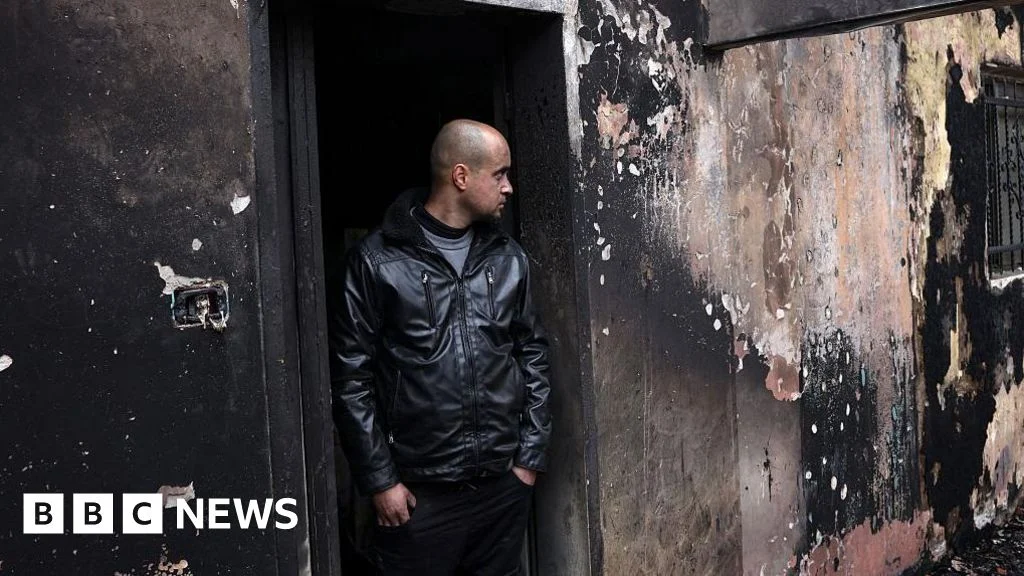
Extremist Jewish settlers launched a wave of brutal attacks on Palestinian villages across the occupied West Bank, unleashing a campaign of terror marked by the deliberate burning of homes, vehicles, and vital agricultural lands. This escalation of settler violence followed the death of an 18-year-old Israeli settler, Yehuda Sherman, who was killed on Saturday after reportedly being struck by a Palestinian vehicle while riding his quad bike. While Israeli police stated they were investigating the incident to determine if it was accidental or intentional, settler groups immediately mobilized, with reports from the Israeli newspaper Haaretz indicating that WhatsApp groups used by settlers called for a "revenge campaign" in response to Sherman’s death. The scale of the retaliatory violence was significant, with a defense official cited by Israeli media reporting over 20 separate settler attacks occurring overnight.
The surge in settler violence has been a disturbing trend, and this latest outbreak coincides with a period of heightened regional tension following an attack by the US and Israel on Iran. According to figures compiled by the United Nations (UN), six Palestinians have been killed by settlers since March 1st, a stark indicator of the escalating conflict. In response to the reported attacks, the Israel Defense Forces (IDF) confirmed that its troops and border police units were deployed to several Palestinian villages on Saturday night. In a statement, the IDF acknowledged receiving reports of Israeli civilians "committing acts of arson against structures and property, as well as engaging in disturbances in the area," a tacit admission of the unfolding events.
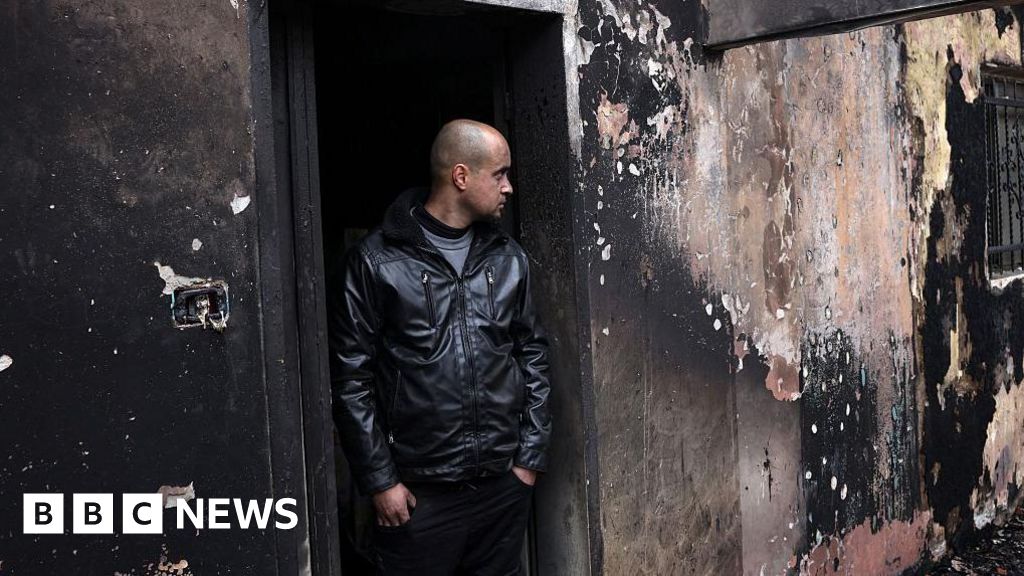
The Palestinian villages of Jalud, Qaryut, al-Funduqmiya, and Silat al-Dhah were among those that bore the brunt of these violent assaults. Disturbing footage, which the BBC has been unable to independently verify, emerged online, appearing to show more than 90 individuals, many of them masked and clad in black, descending upon the village of Jalud. Further visual evidence, purportedly from the same village, depicted multiple vehicles engulfed in flames, buildings with shattered windows, and the piercing wail of sirens as ambulances rushed to the scene to tend to the injured. A particularly chilling photograph revealed the words "Avenge Yehuda" spray-painted in stark letters onto the wall of a building, a clear declaration of the attackers’ motive.
The human toll of these attacks was significant. The Palestinian Red Crescent Society reported that at least three Palestinians sustained head injuries and required hospitalization after attempting to confront the assailants. Some of the settlers involved were also reportedly injured during the confrontations. The inflammatory rhetoric circulating within settler communities was laid bare by Israeli media reports, which cited messages from WhatsApp groups. One post chillingly stated, "Jews won’t remain silent over spilled Jewish blood," while another declared, "We demand vengeance and expulsion of the enemy."
The Palestinian Ministry of Foreign Affairs issued a strong condemnation of the assault, denouncing it as a brutal act involving "the burning of homes and property, terrorising and killing of civilians, and the targeting of vital roads, junctions, and main streets during Eid al-Fitr." The timing of these attacks, coinciding with the Islamic holiday of Eid al-Fitr, added another layer of cruelty to the already heinous acts.
The funeral of Yehuda Sherman on Sunday afternoon drew a significant crowd, with Israeli media reporting over 500 attendees, including prominent figures such as Israel’s far-right finance minister, Bezalel Smotrich. This attendance underscores the deep emotional resonance of Sherman’s death within certain segments of Israeli society and the political backing that some of these extremist elements may enjoy.
As Sunday evening descended, tensions remained high, with reports of Jewish settlers blocking roads in protest across the occupied West Bank. Unconfirmed reports also emerged of settler groups re-gathering outside some Palestinian villages, with the local news agency WAFA reporting that a car wash located north-west of Nablus had been set ablaze. This indicates a persistent and organized nature to the settler actions, with a clear intent to inflict further damage and sow fear.
This recent wave of violence is not an isolated incident but part of a disturbing pattern. Earlier this month, the European Union and the United Kingdom issued a joint demand for Israel to halt the escalating settler violence against Palestinians, a plea that appears to have gone unheeded. The UN’s grim statistics paint a stark picture of the escalating crisis: since the beginning of the year, seven Palestinians have been killed by Israeli settlers, and an additional 18 have been killed by Israeli forces, with 15 of these fatalities occurring since the conflict with Iran escalated on February 28th.
The historical context of the Israeli occupation is crucial to understanding the current situation. Since the 1967 Middle East war, Israel has established approximately 160 settlements in the occupied West Bank and East Jerusalem, areas that Palestinians envision as the heart of their future independent state, alongside Gaza. These settlements are home to an estimated 700,000 Jewish Israelis, who live in close proximity to approximately 3.3 million Palestinians. It is important to note that, under international law, these Israeli settlements are considered illegal. The ongoing expansion of these settlements and the pervasive violence perpetrated by settlers represent a significant impediment to any prospect of a lasting peace and a two-state solution. The international community’s calls for accountability and an end to the violence have so far failed to deter these acts of aggression, leaving Palestinian communities vulnerable and facing constant threats to their lives and livelihoods.



 Nakalama John
 atisusanti
 Ramos Leo
 Roy Suryo
 Nana Banana