Nakalama John
The profound shift in how we heat our homes, moving away from millennia of burning fuels, is a topic I’ve become thoroughly engrossed in. My fascination stems partly from personal experience: my French husband and I purchased an ancient, characterful yet leaky house in northern France several years ago, which surprisingly came equipped with a heat pump. Initially, it was a source of frustration, failing to perform as expected. However, once replaced under guarantee, its efficiency and effectiveness were remarkable, prompting us to install a second unit during a loft extension project.
This personal journey has intertwined with my broader interest in witnessing a historic transformation akin to the transition from horses to automobiles. For much of human history, warmth has been synonymous with combustion – whether it’s wood and coal in an open fire, or oil and gas in modern boilers. A widespread societal adoption of electric heat pumps would signify a fundamental re-engineering of domestic heating, marking an epochal move towards a cleaner, more sustainable future driven by the urgent need to address climate change.
The current UK government, like its predecessor, champions the adoption of heat pumps, setting ambitious targets like 600,000 installations per year by 2028. However, this ambitious transition is fraught with complexities, particularly given the elevated cost of electricity in Britain. At present, the upfront installation costs for heat pumps generally exceed those of conventional gas boilers, and their operational expenses can also be higher. This financial hurdle largely positions them as a viable option primarily for the environmentally conscious and more affluent segments of society. The critical questions remain: can the economics ever align to deliver tangible savings for the average consumer? And, in a nation where natural gas is deeply entrenched as the primary heating fuel, are heat pumps truly the optimal technology to underpin a greener future, especially considering the UK’s challenging housing stock of older, often less insulated homes?
The Happy Family’s Journey
Emily and Stephen Boynton, residing in a verdant London suburb, made the decision to install a heat pump in their four-bedroom detached home during the height of the pandemic. For Emily, who had just celebrated her 50th birthday, it was a moment of profound reflection on life, retirement, and environmental responsibility. "If you’ve got the money to do it, and you’ve got the space, then you should probably get on with it," she reflects on their proactive choice. Their home, a typical British detached house from the mid-20th century, had previously relied on a conventional gas boiler system.
Installing a heat pump is rarely a simple swap for a gas boiler. It typically necessitates significant alterations, including new pipework, and often an upgrade to larger radiators or the introduction of underfloor heating to maximise efficiency. Recognising this, Emily and Stephen shrewdly timed their heat pump installation to coincide with a major kitchen renovation, allowing for the inherently disruptive work, such as lifting floors and re-routing plumbing, to be integrated seamlessly into the broader home improvement project.
Their system features a substantial air source heat pump located outdoors, which efficiently extracts latent heat from the ambient air. This warmth is then transferred to water circulating through buried pipes, feeding their home’s radiators and the newly installed underfloor heating in the kitchen. Crucially, before installation, they invested in improving their home’s thermal envelope, including loft insulation and cavity wall insulation, which is fundamental to a heat pump’s effective operation.
Emily, meticulous with household finances, meticulously tracks their energy expenditure. Her spreadsheets reveal a compelling story. In a year prior to the heat pump’s installation, their home consumed approximately 28,000 kilowatt hours (kWh), predominantly for gas heating. In the most recent year, post-installation, this figure plummeted to a mere 10,000 kWh, despite the additional heating demands from adult children who had moved back home. This represents an extraordinary reduction in overall energy consumption of almost two-thirds. "I guess that reflects how much more efficient the heat pump is and also the impact of the insulation," Emily observes, underscoring the dual benefits of their investment.
The initial capital outlay was significant: £5,000 for comprehensive insulation upgrades – a crucial prerequisite for optimising heat pump performance – followed by the cost of the heat pump system and underfloor heating, bringing the total to £17,000. This sum was partially offset by a generous £5,000 government grant, bringing their net expenditure to £12,000. To put this capital investment into perspective, financing the net cost over a 25-year mortgage at a 4.5% interest rate would add approximately £66 to monthly repayments. However, this is significantly offset by the substantial reduction in energy bills.

The Boyntons’ experience serves as a powerful testament. While heat pumps often spark fervent debate, sometimes even vitriol, they are a proven technology, already heating hundreds of thousands of homes across the UK and tens of millions more throughout Europe. Satisfied customers, like Emily and Stephen, are not hard to find, consistently praising the comfort and dramatic energy savings they achieve.
The Science Behind the Warmth
So, how exactly does a heat pump generate heat, and what underpins its remarkable energy efficiency? At its core, a heat pump operates on the principles of the refrigeration cycle, but in reverse – akin to a refrigerator that extracts heat from its interior and expels it, but a heat pump extracts heat from the outside and brings it indoors. A special chemical, known as a refrigerant, is continuously circulated within a sealed loop, transitioning between hot and cold states, and between gas and liquid phases, undergoing compression and decompression.
At one critical point in the cycle, when the refrigerant is in its gaseous state, the heat pump’s compressor intensifies its pressure, causing its temperature to soar – much like how a bicycle pump heats up during use. This superheated gas then passes through a heat exchanger, transferring its thermal energy to the water that circulates through your home’s radiators. As the gas sheds its heat, it condenses back into a liquid. This liquid then flows through an expansion valve, which rapidly reduces its pressure, causing its temperature to plummet dramatically.
This is where the ‘magic’ truly unfolds: the refrigerant, now incredibly cold, becomes receptive to even frigid outdoor air, which by comparison seems warm. The ambient air, even at temperatures well below freezing, possesses enough thermal energy to boil the refrigerant, turning it back into a gas. This completes the cycle, allowing the compressor to squeeze it again, making it super-hot and ready to heat more radiator water. The fundamental advantage lies in the "free" energy harnessed from the outside environment, significantly reducing the electrical input required to generate heat. This efficiency is often measured by the Coefficient of Performance (CoP), indicating how many units of heat energy are produced for each unit of electrical energy consumed.

It can be counterintuitive to grasp that heat can be extracted from air at -5C to warm water to 50C, but this thermodynamic marvel is precisely what makes air source heat pumps so efficient. While ground source heat pumps, which draw heat from the earth, can offer even greater stability, air source models are far more common due to their lower installation complexity and cost. Richard Fitton, Professor of Building Performance at the University of Salford, confirms the Boyntons’ observed energy reduction as typical. His work at "Energy House 2" – a unique laboratory featuring new-build homes within a massive, climate-controlled warehouse – allows for precise testing of various heating methods, including heat pumps, under rigorously controlled conditions. This "Truman Show-like" environment enables accurate measurement of energy input versus heat output. "You’re literally putting in one unit of energy, one kilowatt hour, and getting three out," Fitton explains, highlighting the impressive CoP of modern heat pumps, a stark contrast to gas boilers which yield less than one unit of heat per unit of fuel input. This represents a genuine paradigm shift in energy efficiency.
A Different Kind of Warmth
Despite their efficiency, heat pumps present a nuanced challenge: the nature of the heat they produce. For optimal performance, heat pumps typically operate at lower flow temperatures, often around 45C, compared to the 70C or higher delivered by traditional gas boilers. This gentler warmth necessitates a re-evaluation of a home’s heat distribution system. If radiators are not adequately sized for these lower temperatures, occupants may find their rooms insufficiently warm, leading to discomfort.
Dale Vince, the founder of Ecotricity and a long-time heat pump user, minces no words on this point. While a proponent of the technology, he stresses the importance of transparency regarding their limitations. "The typical experience is coloured by the fact that heat pumps make colder water than gas boilers, and if you don’t change your radiators your house will be cold," he warns. The temptation, when faced with a chilly interior, is to increase the heat pump’s output temperature, but this significantly diminishes its efficiency, squandering much of its inherent advantage. Furthermore, a poorly insulated home will struggle to retain this gentler heat, demanding an even larger, more powerful, and less efficient heat pump system to maintain comfort. Concerns about noise from the outdoor unit are also sometimes raised, though modern designs have significantly reduced this.
While debates continue regarding the precise efficiency losses at higher flow temperatures, it is generally prudent to conceive of heat pumps as delivering a distinct, more gradual form of heating. Unlike gas or oil boilers, which can rapidly elevate room temperatures, heat pumps are designed for continuous operation at a steady, lower temperature. This "set and forget" approach maintains a consistent ambient temperature throughout the day, leveraging the thermal mass of the house. "We don’t touch it, and we don’t think about it, which sounds bizarre," Emily Boynton affirms, "It just sits there, and the house is warm enough."

That phrase, "warm enough," is key. A well-configured heat pump system will undeniably keep a home comfortable on a cold day. However, based on personal experience and anecdotal evidence, it may not achieve the "hot hot" sensation some are accustomed to with conventional boilers. For those desiring occasional intense warmth, a supplementary heating device might be a practical consideration.
The Right Choice for Britain?
The fundamental question of whether heat pumps are a sensible national strategy for the UK boils down to a stark economic reality. A highly efficient heat pump might consume only a quarter of the energy of an equivalent gas boiler. However, in the UK, the cost of electricity per kilowatt hour is approximately four times that of gas. These are broad averages, but they highlight a critical imbalance: how can heat pumps become financially attractive to the mass market, given their higher upfront costs and the disproportionate price of electricity?
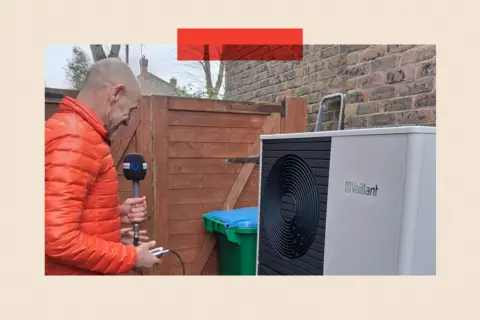
The situation is markedly different in other European countries. In my French home, electricity costs around 18p per kWh during the day, significantly less at night. In contrast, my latest London bill shows a rate of 28p per kWh. This 10p disparity is pivotal. Greg Jackson, CEO of Octopus Energy – Britain’s largest retail energy supplier and a leading heat pump installer – is a vocal enthusiast, reporting "around 1,000 a month" installations. He acknowledges, however, the "crazy high" price of UK electricity as a major impediment. "In the UK, currently, electricity is about four and a bit times more expensive than gas. In Germany, it’s three times, in France it’s just over twice as expensive as gas. And in Scandinavia, it’s in places almost at parity," he elaborates, highlighting how this pricing structure disadvantages not only heat pumps but also electric vehicles and industrial electrification.
Part of this price disparity stems from historical policy decisions, where environmental levies were primarily placed on electricity bills rather than gas, artificially suppressing gas prices relative to electricity. Policy adjustments, such as rebalancing these levies or introducing bespoke, lower-cost "heat pump tariffs" (especially off-peak ones), are vital to making heat pumps a financially compelling option. A reduction in VAT on heat pump installations and related components could also significantly boost uptake. Jackson points out that consumers can already achieve savings by switching to smart tariffs that encourage off-peak heating, often facilitated by smart meters.
Despite these challenges, Jackson firmly believes in the imperative for Britain to embrace heat pumps. "The technologies of fossil fuels are mature – they’re not getting any better," he argues, "But the technology of electrification… is improving exponentially. If you lock your way into a fossil fuel world now, then in 10 or 20 years you’ll truly regret it. Electrification gives us more energy security, and it’s getting better all the time."
The current geopolitical landscape, with surging European gas prices exacerbated by conflicts like the Iran situation, underscores the broader question of national energy resilience. While heat pumps won’t immediately transform our energy stability – as a significant portion of UK electricity is still generated from gas – they are a crucial component of a long-term strategy. As the UK progressively transitions away from gas towards a grid powered predominantly by renewables and nuclear energy, alongside necessary grid modernization, heat pumps will indeed make us less susceptible to the volatility of international fossil fuel markets.
Net Zero Ambitions and the Path Forward
Ultimately, the debate over heat pumps is inextricably linked to the UK’s ambitious net-zero targets. For those who dismiss climate change concerns, the path is simple: continue burning gas for as long as possible, echoing a "drill, baby, drill" philosophy. However, if the government is genuinely committed to phasing out fossil fuels – as stated policy dictates – then electrifying the vast majority of our domestic heating and transportation is not merely an option, but an absolute necessity. Currently, the mechanisms to facilitate this natural transition for the average consumer are not fully in place, with alternatives like hydrogen heating facing significant hurdles in terms of production and infrastructure, and district heating suitable only for specific urban areas.
Heat pumps are destined to play a pivotal role in this energy transition. To succeed, the financial equation must be rebalanced, making the decision to install a heat pump a clear money-saver for the typical household. Paradoxically, the high cost of electricity in the UK actually reinforces the need for heat pumps, as they represent the most energy-efficient form of electrical heating available. Without their remarkable efficiency, electrifying home heating would be even more prohibitively expensive.

Much like the profound and challenging societal shift from horsepower to mechanical engines in the early 20th Century, the transition to widespread heat pump adoption will undoubtedly be complex, requiring sustained policy support, technological innovation, and a significant cultural shift in how we perceive and manage home heating. Overcoming the current financial and infrastructural barriers is not just about environmental conscience; it’s about making a practical, affordable choice for millions of British homes, ensuring the UK can meet its critical climate goals.




 George Anjay
 atisusanti
 Ramos Leo
 Nana Banana