George Anjay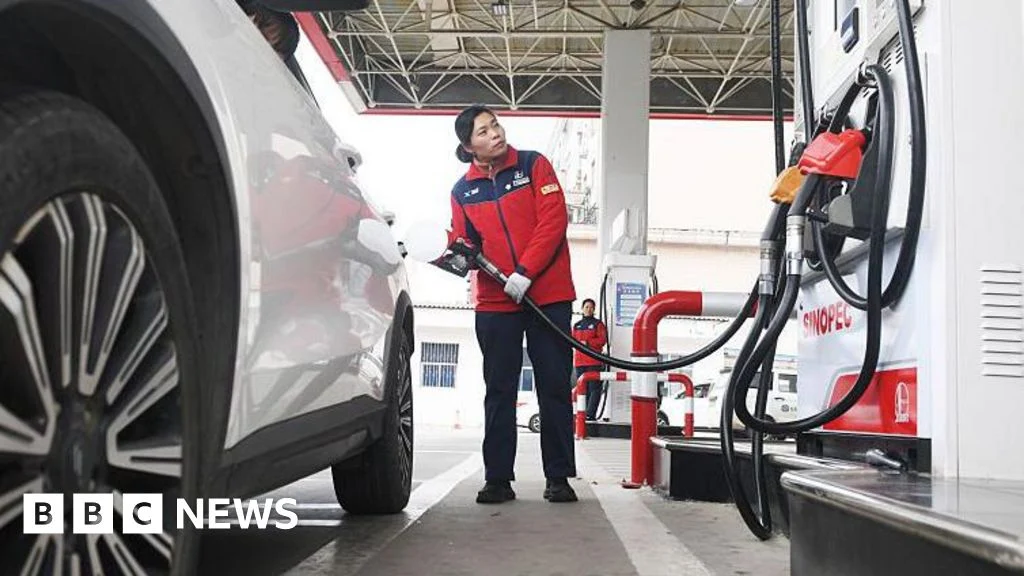
Beijing dials back on planned fuel price increases to "reduce the burden" on drivers amidst a widening energy crisis gripping Asia, a situation exacerbated by the ongoing conflict involving Iran and its impact on global oil supply routes. The local price of petrol in China had been slated for a substantial jump, reflecting a broader trend of escalating energy costs worldwide. Since the onset of the conflict with Iran, which has led to the effective closure of the strategically vital Strait of Hormuz, a critical chokepoint for global oil shipments, the price of petrol has already surged by approximately 20%.
Initially, the planned adjustments by China’s National Development and Reform Commission (NDRC) would have seen gasoline and diesel prices rise by 2,205 yuan and 2,120 yuan per tonne, respectively. However, following government intervention and adjustments, these increases have been significantly curtailed, nearly halved to 1,160 yuan for gasoline and 1,115 yuan for diesel, effective from Tuesday. This decision underscores Beijing’s commitment to mitigating the economic impact on its vast automotive sector, which comprises over 300 million vehicles running on petrol or diesel. The close ties between China and Gulf countries, major suppliers of its oil, make the nation particularly susceptible to geopolitical shifts in the region.
The announcement of the reduced price hikes followed a weekend of palpable concern among Chinese consumers, with long queues forming outside petrol stations in numerous cities. Some stations were forced to display notices indicating depleted stocks, highlighting the immediate anxieties surrounding fuel availability and affordability. The latest price adjustment, even with the reduction, represents the fifth and largest increase of its kind in China this year, signaling the persistent pressure from global energy markets.
The volatile global oil market has been a dominant factor in these pricing decisions. On Tuesday, Brent crude oil prices briefly surged above $100 a barrel, a day after experiencing a sharp decline, a fluctuation attributed to conflicting reports regarding potential diplomatic talks between the United States and Iran. This volatility underscores the delicate balance of global energy supply and demand.
Ole Hansen, Saxo Bank’s head of commodity strategy, elaborated on China’s strategic approach to energy security, noting that Beijing has historically leveraged periods of lower crude prices and abundant supply from Gulf states to build one of the world’s most substantial oil reserves. Official customs administration data reveals that in January and February of the current year, Beijing increased its crude oil imports by a significant 16% compared to the same period a year prior. This strategic stockpiling is a key component of China’s energy security strategy.
Iran, a nation subject to US oil sanctions, has been a crucial supplier of affordable crude for China. Reports indicate that Beijing procures more than 80% of Iran’s oil exports, highlighting the deep integration of their energy relationship. Hansen estimates that China has amassed oil reserves of approximately 900 million barrels, which translates to nearly three months’ worth of its import needs. Further figures cited by Chinese state media from Columbia University suggest even higher petrol reserves, potentially reaching 1.4 billion barrels.
Despite these substantial reserves, Beijing has exhibited a degree of caution in managing its short-term energy supplies. In an effort to maintain domestic price stability, authorities in China reportedly mandated temporary cessation of fuel exports by its oil refineries. While the Chinese government has not officially commented on these specific directives when queried by the BBC, the move indicates a proactive approach to safeguarding domestic availability. The US Energy Information Administration (EIA) reports that both Saudi Arabia and Iran individually account for over 10% of China’s oil imports, underscoring the importance of these supply chains.
The NDRC’s statement on Monday explicitly addressed the rationale behind these temporary regulatory measures, stating, "To mitigate the impact of abnormal increases in international oil prices, ease the burden on downstream users and ensure stable economic operations and public welfare, temporary regulatory measures have been adopted." The NDRC, responsible for reviewing and adjusting petrol and diesel prices every 10 days based on global crude oil benchmarks, plays a pivotal role in managing China’s domestic fuel market.
The energy crisis, however, is not confined to China. Across Asia, a multitude of countries are grappling with soaring energy costs and implementing various cost-cutting and conservation measures. In the Philippines, government employees have been directed to adopt a four-day work week to reduce commuting and energy consumption. Sri Lanka has declared every Wednesday a public holiday for state institutions, a drastic measure aimed at curbing fuel usage. Thailand and Vietnam have encouraged their citizens to work from home, further reducing the demand for transportation fuels.
Thailand has also implemented more stringent measures for its civil servants, including the suspension of overseas travel, the encouragement to wear short-sleeve shirts to conserve energy on air conditioning, and the use of stairs instead of elevators. Sri Lanka’s private bus services have faced significant disruption, with operators striking to demand fare revisions that would account for the escalating fuel costs. Similarly, in the Philippines, over 20 transport groups have announced a strike to protest rising fuel prices and demand government intervention.
Japan and South Korea, both heavily reliant on oil and gas imports that typically transit through the Strait of Hormuz, have been particularly hard-hit by the geopolitical tensions. Gasoline prices in Japan have reached record highs, with the average retail price of gasoline climbing to 191 yen per litre last week, an 18% increase from the previous week, according to data from the country’s economy ministry. In South Korea, President Lee Jae Myung announced that public institutions would curtail their use of passenger cars. Furthermore, President Lee’s office revealed that he had postponed plans to attend an international forum in China to remain in South Korea and personally lead the nation’s emergency economic response efforts. This decision highlights the gravity with which the South Korean government is treating the unfolding energy crisis.




 Nakalama John
 Ramos Leo
 Nana Banana