Nana Banana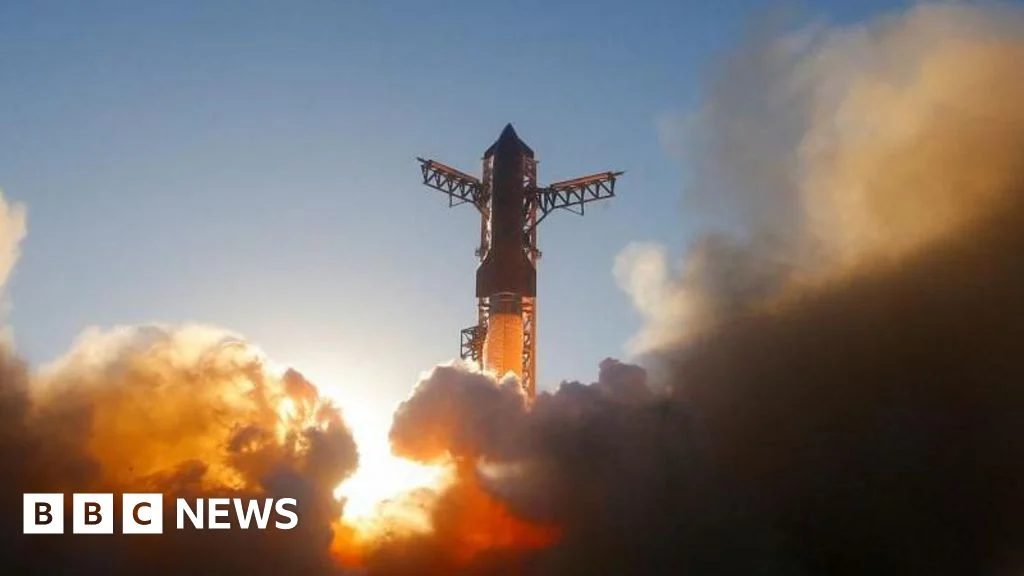
The report suggested that SpaceX, already a titan in the private space economy, is eyeing a valuation in the colossal vicinity of $1.75 trillion (£1.31 trillion) upon its anticipated public debut. If realized, this valuation would not only solidify SpaceX’s position as one of the world’s most valuable companies but also potentially mark the largest stock market debut in history, dwarfing previous record-holders and fundamentally reshaping perceptions of the commercial space industry’s financial capabilities. The sheer scale of this prospective initial public offering (IPO) sent ripples of optimism through related enterprises.
Following the news, the stock prices of several publicly traded rocket manufacturers and space technology firms saw immediate and substantial gains. Companies like Firefly Aerospace and Rocket Lab, both key players in the launch services market, witnessed their shares jump by more than 10%. This robust performance was indicative of a broader market sentiment that a successful SpaceX IPO could validate and energize the entire "New Space" economy, attracting increased investor confidence and capital flows into a sector historically viewed as high-risk and capital-intensive.
SpaceX, officially known as Space Exploration Technologies Corp., was founded in 2002 by the visionary entrepreneur Elon Musk. His audacious goal was to revolutionize space transportation, making it more affordable and reliable, with the ultimate ambition of enabling human colonization of Mars. Over two decades, SpaceX has achieved a series of unprecedented milestones that have fundamentally reshaped the aerospace landscape. These include the development of the Falcon 9 and Falcon Heavy reusable rocket systems, which have drastically reduced launch costs by allowing booster stages to land vertically and be reflown. This reusability paradigm shift has been a game-changer, breaking decades of traditional expendable rocket design.
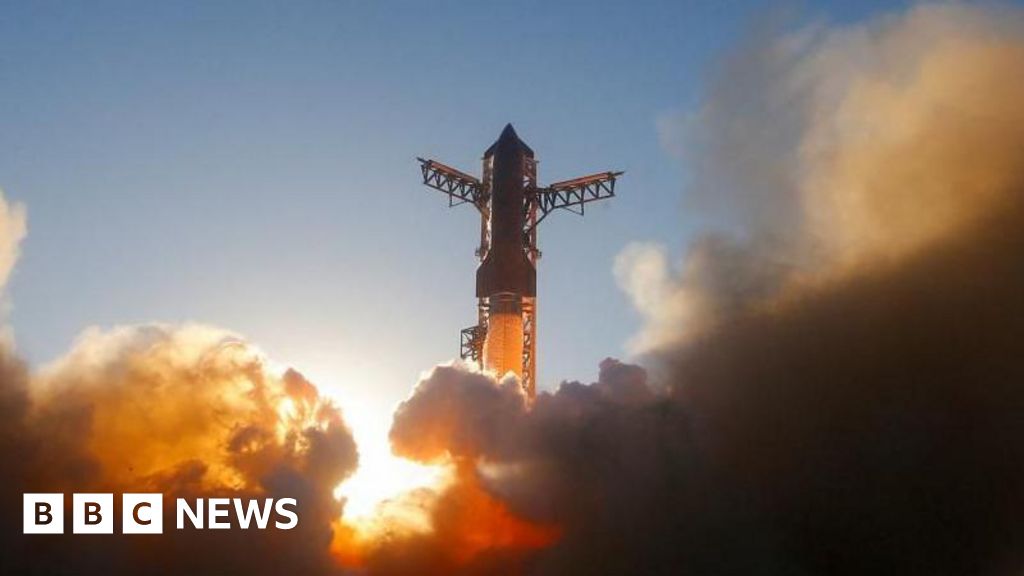
Beyond launch services, SpaceX has diversified its portfolio significantly. Its Dragon spacecraft has become a crucial workhorse for NASA, transporting both cargo and astronauts to and from the International Space Station (ISS), effectively restoring American human spaceflight capability after the retirement of the Space Shuttle program. The company is also at the forefront of developing Starship, a fully reusable, super heavy-lift launch system designed to carry both cargo and humans to the Moon, Mars, and beyond. Starship represents a significant leap in ambition and engineering, promising capabilities that could redefine interstellar travel.
Another colossal undertaking by SpaceX is Starlink, its rapidly expanding constellation of thousands of low Earth orbit (LEO) satellites providing high-speed, low-latency broadband internet access globally. Starlink has already amassed millions of subscribers worldwide, generating substantial recurring revenue and demonstrating the commercial viability of satellite internet. The success of Starlink not only provides a diversified revenue stream for SpaceX but also serves as a proof-of-concept for large-scale, privately funded space infrastructure projects. The potential for Starlink’s continued growth and its strategic importance in connecting underserved regions likely plays a significant role in the rumored $1.75 trillion valuation.
The BBC has reached out to SpaceX for an official comment regarding the IPO reports, but as of now, no confirmation or denial has been issued by the company. This silence, however, has done little to dampen the enthusiasm, with analysts and investors keenly watching for any official filings with the Securities and Exchange Commission (SEC) that would signal the commencement of the IPO process. The report from The Information further indicated that SpaceX could potentially raise in excess of $75 billion from the share sale. Such an immense capital injection would provide SpaceX with unprecedented resources to accelerate its ambitious projects, particularly the costly and complex development of Starship and the continued expansion of the Starlink network.
The positive sentiment generated by the SpaceX IPO rumors was not confined to direct competitors in the launch sector. Other firms operating within the broader space industry also experienced substantial gains. Intuitive Machines, a company focused on lunar exploration and known for its recent successful Odysseus lunar lander mission (IM-1), saw its stock climb by nearly 15%. This highlights the interconnectedness of the space ecosystem; a rising tide for one major player like SpaceX lifts many boats, especially those demonstrating cutting-edge capabilities and achieving significant milestones.
Similarly, Planet Labs, an Earth-imaging company that operates a vast constellation of satellites to provide daily imagery and geospatial data, saw its shares jump by more than 10%. Planet Labs’ business model relies on subscription services for its data, serving diverse clients from agriculture and defense to environmental monitoring. The increased investor appetite for space-related stocks suggests a growing recognition of the commercial applications and data-driven opportunities emerging from orbit.
Further illustrating the widespread impact, satellite maker Sidus Space gained nearly 19%. Sidus Space specializes in satellite manufacturing, data solutions, and space-as-a-service offerings, catering to a niche but growing market for small satellite missions. Even AST SpaceMobile, a company developing a space-based cellular broadband network designed to connect directly to standard mobile phones, saw its shares rise by 10%. AST SpaceMobile’s innovative approach promises to extend mobile connectivity to remote and underserved areas globally, representing another frontier in commercial space utilization.
The anticipated public listing of SpaceX is not merely a financial event; it’s a cultural and industrial one. Elon Musk, often described as the world’s richest man, is central to this narrative. His public persona, his relentless pursuit of ambitious goals, and his track record with other ventures like electric vehicle giant Tesla, the social media platform X (formerly Twitter), and brain implant firm Neuralink, all contribute to the immense interest surrounding SpaceX. Investors often view SpaceX through the lens of Musk’s disruptive innovation and his ability to attract top talent and capital. However, his public controversies and the inherent risks of pioneering space technology also mean that a public SpaceX would face intense scrutiny and new pressures.
Going public would likely provide several strategic advantages for SpaceX. It would offer liquidity to early investors and employees who have supported the company through its private growth phase, potentially freeing up capital for further investment in the sector. More importantly, it would provide a massive influx of capital for SpaceX’s incredibly ambitious and capital-intensive projects, particularly the development and scaling of Starship and the global expansion of Starlink. While SpaceX has successfully secured significant government contracts and private funding rounds, an IPO would unlock an even larger pool of capital, accelerating its long-term vision.
However, a public listing also introduces new challenges. SpaceX would be subjected to the rigors of quarterly reporting, increased regulatory oversight, and constant market scrutiny. Its highly experimental and long-term projects, which often involve spectacular failures as part of the learning process, would be under a microscope, potentially leading to stock volatility. Furthermore, the company’s reliance on government contracts and the whims of a highly competitive and technically demanding industry represent ongoing risks.
The broader market context also plays a role in this excitement. The "New Space" economy, encompassing everything from satellite manufacturing and launch services to in-orbit servicing and space tourism, is projected to grow exponentially in the coming decades. A successful SpaceX IPO would serve as a powerful signal that this sector has matured into a viable and attractive investment frontier, potentially spurring further innovation and attracting more talent and capital into the industry. It could democratize access to space-related investments, allowing a wider range of individuals and institutions to participate in what was once the exclusive domain of governments and specialized venture capitalists.
In conclusion, the prospect of SpaceX entering the public market has sent a clear message: the commercial space era is here, and it’s poised for unprecedented growth. The immediate surge in "rocket stocks" and other space-related companies underscores the significant influence SpaceX wields and the collective belief that its public listing would be a transformative event, not just for the company itself, but for the entire space industry, signaling a new era of capital, innovation, and ambition beyond Earth’s atmosphere.




 George Anjay
 Nakalama John
 atisusanti
 Ramos Leo