Nana Banana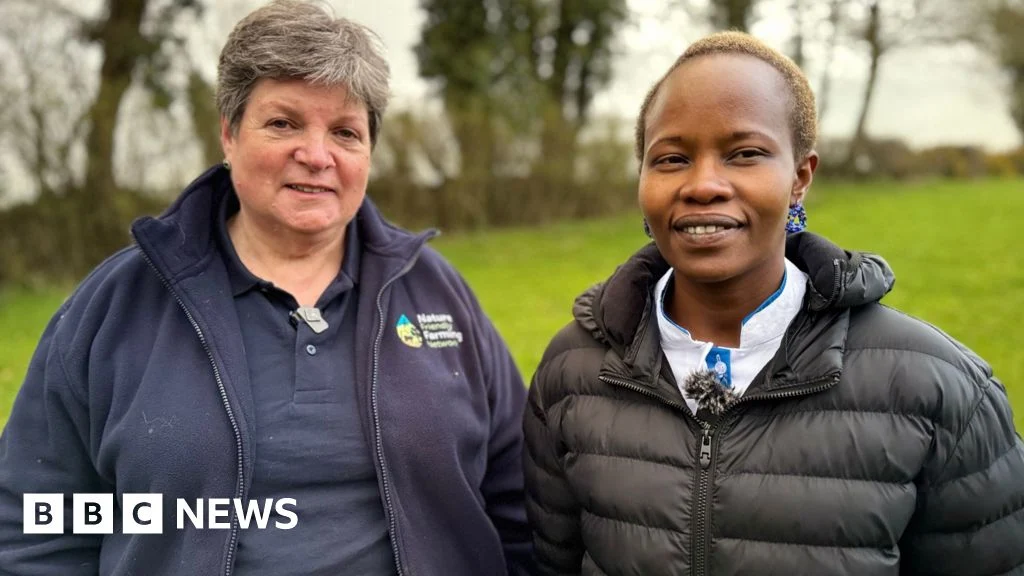
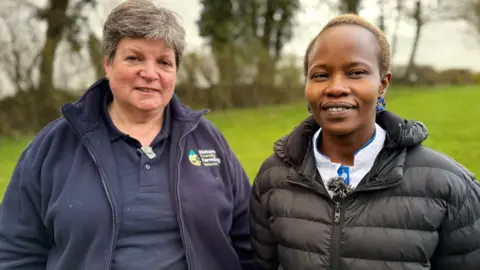
In a powerful testament to the global reach of environmental challenges, two women, separated by vast continents and vastly different socio-economic landscapes, have discovered a shared struggle against the relentless tide of climate change affecting their farms. Jackline Mugoboka, a farmer from rural Rwanda, and Louise Skelly, a sheep farmer in County Down, Northern Ireland, recently converged to exchange their personal accounts of extreme weather and the profound impact it has had on their livelihoods and communities. This poignant meeting, facilitated by the Irish charity Trocaire, illuminated not only the stark realities of a warming planet but also the universal spirit of resilience and adaptation.
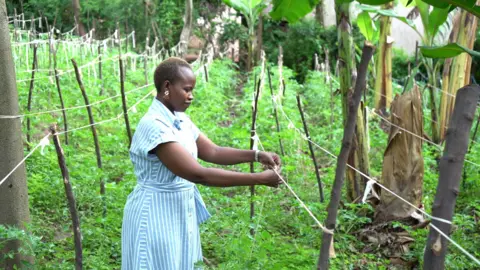
Jackline Mugoboka cultivates a modest one-hectare (2.5 acre) farm in Rwanda, a landlocked East African nation known for its verdant hills and agricultural reliance. Her farm is dedicated to growing essential crops like bananas, beans, and tomatoes, which form the staple diet for her family and often provide a vital source of income through local markets. While her farm might seem tiny by Western European standards, it is, in fact, more than double the size of the average Rwandan farm, highlighting the prevalent subsistence farming model in the region. This makes her farm a significant asset, yet also a highly vulnerable one in the face of climatic shifts.
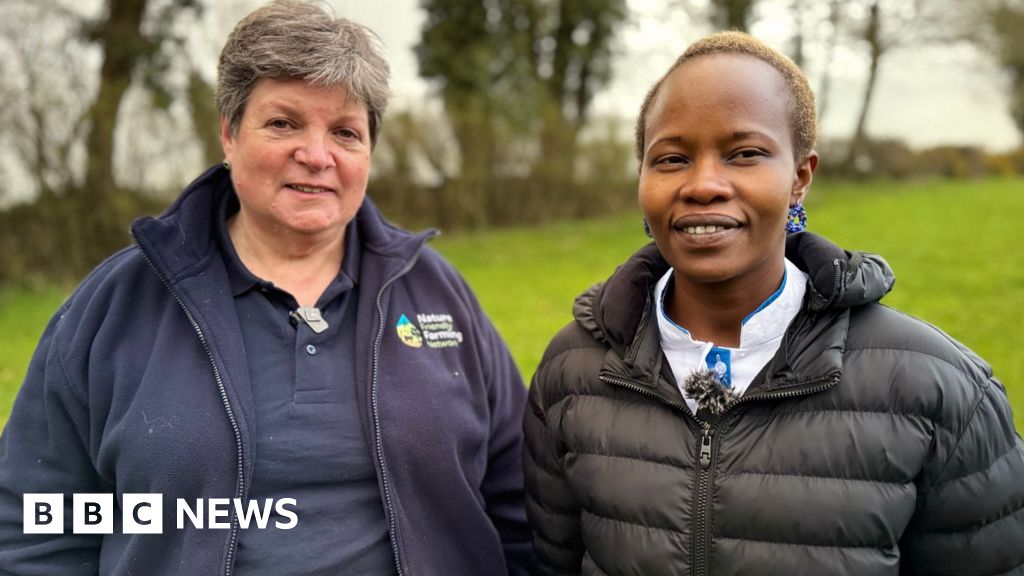
Mugoboka’s experiences underscore a critical demographic reality in Rwandan agriculture: women constitute almost 90% of the farming workforce. This statistic is not merely a number; it represents the backbone of the nation’s food security and economy, with women traditionally shouldering the immense responsibility of planting, harvesting, and providing for their families. During her visit to the island of Ireland, where she toured farms on both sides of the border, Mugoboka articulated with profound gravity how climate change was having a "profound" effect on these women. "This has given them a workload – they are the ones that go for firewood, fetching water, doing all the farming work," she explained. "So with this climate change crisis, it’s really profound to them. They are losing everything." This loss extends beyond crops; it means food insecurity, diminished income, increased health risks due to malnutrition and stress, and a heavier burden of daily survival, often forcing women to travel further in search of dwindling resources. The unpredictable shifts between devastating droughts and torrential floods decimate their harvests, wash away fertile topsoil, and destroy their homes, leaving them in a perpetual cycle of rebuilding and despair.
Thousands of miles away, in the rolling green fields of County Down, Louise Skelly grapples with her own set of climate-induced challenges. Skelly has been farming sheep on her land in Shanaghan Hill, near Katesbridge on the River Bann, for 44 years. Her farm, deeply rooted in the agricultural traditions of Northern Ireland, is currently buzzing with the anticipation of lambing season, a critical period that dictates the success of her year. Yet, even in this temperate climate, the subtle but undeniable changes in weather patterns have become a growing concern. Skelly recounts a significant increase in the frequency and intensity of extreme weather events over the past decade. "In the last 10 years, we’ve had more extremes of floods than we’ve ever had, and that’s the thing that’s most striking about it," she observed. These floods not only damage pastures and disrupt grazing patterns but also pose a direct threat to livestock and infrastructure, leading to significant financial losses and increased workload for farmers like Skelly. The debate surrounding climate change may rage on, but for those directly dependent on the land, the evidence is tangible and immediate. "So there’s a lot of debate about climate change, but I can only tell you what I know. And it’s pretty obvious to me that we are experiencing more extremes in our weather from the point of view of trying to run this farm."
The meeting between Jackline and Louise was a powerful exchange, breaking down geographical barriers to reveal a deeply shared human experience. Mugoboka, who dedicates her work with Trocaire to empowering Rwandan farmers with sustainable practices, expressed genuine surprise upon learning that flooding was a significant issue for farms in Northern Ireland. This revelation brought a poignant sense of global solidarity. "Learning that you’ve had flooding, I realised that no one is immune from climate shocks – only that maybe you have different coping strategies as we are just limited on that," she reflected. "That’s the only difference. Otherwise, we are all having these issues of climate change." Her words underscored a critical point: while the intensity of the impact and the available resources for mitigation may vary dramatically, the fundamental threat of climate change is universal.
Mugoboka further highlighted the stark injustice inherent in the climate crisis. Africa, despite contributing a mere "4%" of global greenhouse gas emissions, is disproportionately bearing the brunt of its impacts. This continent, home to a vast and vulnerable population, lacks the necessary "resources to be able to do adaptation and mitigation strategies" to ease the devastating consequences. This disparity means that communities like Jackline’s are forced to confront the full force of climate change with minimal external support, relying heavily on their own resilience and the aid of organisations like Trocaire.
Beyond the shared experience of extreme weather, both women identified another alarming trend exacerbated by a changing climate: the emergence of new and intensifying disease challenges for their livestock and crops. Mugoboka spoke of farmers in Rwanda grappling with disease outbreaks "out of nowhere," threatening their yields and animal health. These unforeseen epidemics add another layer of uncertainty and economic strain to an already precarious existence.
Skelly echoed these concerns, revealing a new and worrying development in Northern Ireland: the potential arrival of bluetongue virus. This disease, transmitted by biting midges, has historically been confined to warmer climates, predominantly Africa. However, rising global temperatures and altered weather patterns are extending the geographical range of these insect vectors. Skelly is now contemplating the costly and time-consuming process of vaccinating her ewes and lambs against bluetongue, a disease that has seen almost 300 cases in England since July. Experts believe plumes of infected midges have been carried by winds up the eastern Irish seaboard, bringing a previously exotic threat to her doorstep. This phenomenon serves as a stark, living example of how interconnected global ecosystems are and how climate change in one region can have direct and devastating consequences in another, thousands of miles away.
In response to the increasingly unpredictable environment, Skelly has already implemented proactive adaptation strategies on her farm. She proudly showed Mugoboka the extensive tree planting she has undertaken, a multi-faceted approach to enhance environmental resilience. Native trees such as alder, spruce, and rowan are carefully interspersed with hawthorn shrubs, forming natural windbreaks and flood defences. These trees help to stabilise soil, reduce water runoff, and create microclimates that provide crucial shade for her animals during increasingly hotter and drier summers, protecting them from heat stress. Additionally, bird boxes nestled among the branches support local wildlife, promoting biodiversity and ecological balance, further illustrating a holistic approach to sustainable farming.
For Jackline Mugoboka, witnessing these efforts and sharing stories with Louise Skelly was a transformative experience. She described the meeting and seeing the dedicated work put into protecting the environment on Skelly’s farm as "life-changing." It provided her with valuable insights into different coping mechanisms and a renewed sense of shared purpose. The exchange transcended mere information sharing; it fostered a deep sense of connection and understanding between two women on the front lines of climate change.
Despite the daunting challenges, both women radiated a powerful sense of hope and unwavering commitment to their agricultural callings. Skelly articulated this sentiment eloquently, stating that neither she nor Mugoboka, particularly as mothers, would choose to be farmers if they were not fundamentally hopeful. Their roles as caregivers, both for their families and their land, fuel their determination to find solutions and adapt. "I think Northern Ireland has an amazing future in family farms," Skelly concluded, a vision implicitly rooted in sustainable practices and a deep respect for the environment. This hopeful outlook, shared across continents, serves as a poignant reminder that while the problems posed by climate change are immense, the collective human spirit, driven by knowledge, collaboration, and an enduring connection to the land, offers a powerful pathway towards a more resilient and sustainable future. The meeting of these two women, from such disparate worlds, epitomises the urgent need for global dialogue and action, demonstrating that the fight against climate change is truly a shared endeavour.

 George Anjay
 Nakalama John
 atisusanti
 Ramos Leo