
 Nana Banana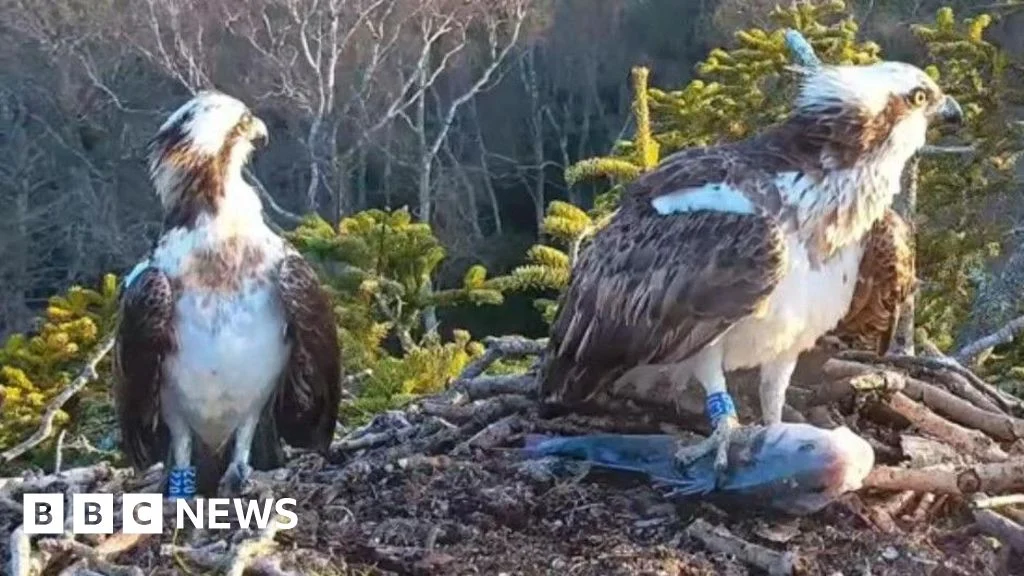
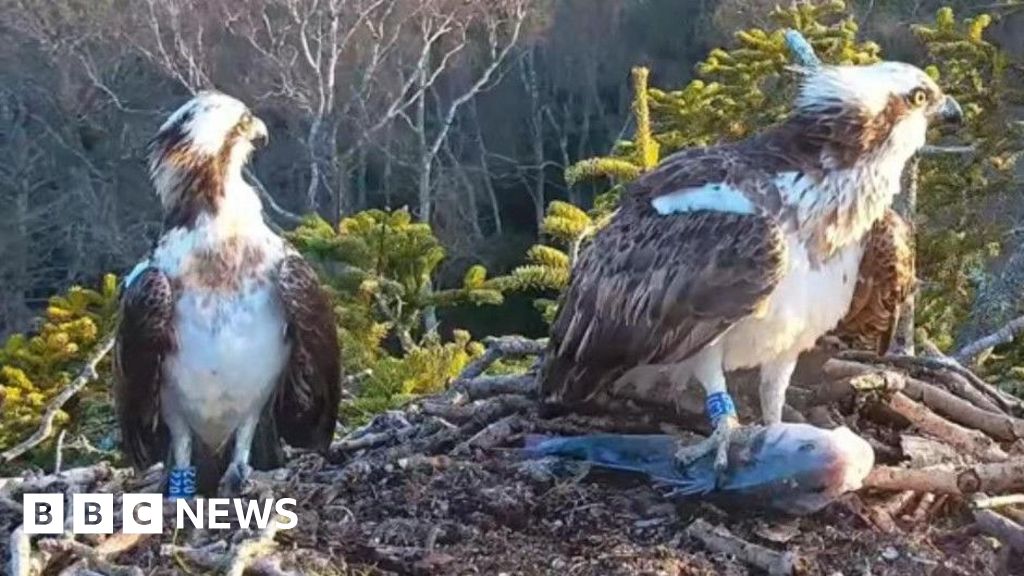
The drama unfolded last season when 022, known for his punctuality, arrived first at the carefully constructed platform in Poole Harbour. Before his long-term mate, CJ7, could complete her own epic journey, another female osprey, 1H1, made an unexpected appearance. Hailing from Rutland, a renowned osprey reintroduction site in central England, 1H1 decided to make the Dorset nest her temporary abode, spending several days with 022. This brief, albeit significant, dalliance sparked a flurry of speculation among the dedicated community of osprey watchers, who monitor the birds via live webcams. The tension was palpable as the days passed, and the question loomed: how would CJ7 react to a rival on her territory, especially one who had potentially paired with her mate?
The resolution came swiftly and decisively upon CJ7’s arrival. Ospreys are fiercely territorial, particularly the females when it comes to their nest sites and chosen partners. True to her nature, CJ7 wasted no time in asserting her dominance, engaging in aerial displays and vocalizations that left no doubt as to her rightful claim. Her assertive presence effectively "saw off" the intruding 1H1, who, perhaps sensing the futility of her challenge, eventually departed the prime nesting site. This swift resolution ensured the established pair, CJ7 and 022, could proceed with their breeding season, which ultimately proved successful, yielding another four healthy chicks. The relief among project leaders and fans was immense; the foundational pair’s continued bond was crucial for the burgeoning reintroduction programme.
Ospreys, magnificent fish-eating birds of prey, are iconic symbols of wetland ecosystems. With their striking brown upperparts, pristine white underparts, and distinctive dark eye stripes, they are unmistakable. Their diet, consisting almost exclusively of fish, necessitates their presence near healthy bodies of water, making their return a strong indicator of environmental well-being. The species suffered a severe decline in the UK during the 19th century, primarily due to persecution and habitat loss. The last recorded breeding pair in southern England was in 1847, making the current efforts in Dorset incredibly significant.
The reintroduction programme, spearheaded by the Birds of Poole Harbour charity in collaboration with the Roy Dennis Wildlife Foundation and Poole Harbour Commissioners, commenced in 2017. Its long-term vision is to establish a self-sustaining breeding population of ospreys across the south coast of England. This ambitious project involves translocating young ospreys from healthy populations in Scotland to release sites in Poole Harbour. The aim is that these birds, once mature, will "imprint" on Poole Harbour as their natal area and return there to breed after their first few migratory cycles.
CJ7 and 022 exemplify the success of this programme. CJ7, a female originally translocated from Scotland, first nested with 022 in 2022 at Careys Secret Garden. This landmark event marked the first osprey breeding success in southern England in 180 years. Their partnership has been remarkably fruitful, producing four chicks in 2024 and another four in 2025. These fledglings, equipped with leg rings for identification, embarked on their own perilous migrations, hopefully to return in future years to contribute to the growing population. The consistent success of CJ7 and 022 is a testament to the meticulous planning and dedication of the conservation teams, as well as the suitability of Poole Harbour’s rich estuarine environment.
The location at Careys Secret Garden, a private estate that works closely with the conservation charity, provides a secure and undisturbed environment for the nesting pair. The nest platform itself is strategically placed within a walled garden, offering a degree of protection from terrestrial predators and human disturbance, while still being observable via discreetly placed webcams. These webcams have played a pivotal role in engaging the public, allowing thousands worldwide to witness the intimate details of osprey life, from egg-laying and hatching to the dramatic first flights of the young. This direct connection fosters appreciation and support for conservation efforts.
Following last year’s romantic drama, the story of 1H1 also took a positive turn. After being displaced from the primary nest, she did not abandon Poole Harbour. Instead, she found a new mate, male 374, at a different platform within the harbour. Their successful pairing meant that in 2025, they became the second pair of breeding ospreys in southern England since 1847. This development was a huge boost for the project, demonstrating that multiple pairs could successfully establish territories and breed within the same area. The charity now holds high hopes for the current season, anticipating the return of 1H1 and 374, and perhaps even the arrival of a third breeding pair.
To facilitate this expansion, the Birds of Poole Harbour charity has established a network of ten nest platforms across the harbour. These platforms are carefully designed to mimic natural nesting sites and are placed in areas rich in fish and with minimal disturbance. While many of the ospreys involved in the reintroduction are ringed for identification, not all carry satellite trackers. This means their annual return from their wintering grounds, predominantly in western Africa, is always a moment of suspense and excitement for the monitoring teams. The birds typically arrive back in late March, guided by an innate migratory instinct that is one of nature’s great wonders. Their journey spans thousands of miles, navigating diverse landscapes and overcoming numerous challenges, including adverse weather, lack of food, and potential predation. The fact that these birds return to the precise location where they were either hatched or first bred is a remarkable feat of navigation and endurance.
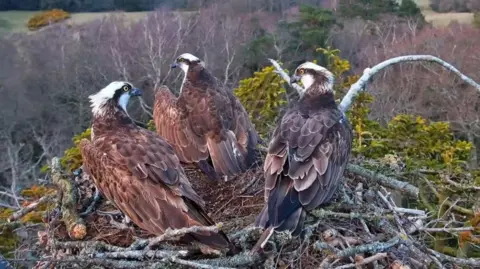
The successful re-establishment of ospreys in Dorset is more than just a local triumph; it represents a significant victory for UK wildlife conservation. It demonstrates that targeted reintroduction programmes, coupled with habitat protection and public engagement, can bring back species that were once lost. As the population grows, it contributes to the overall biodiversity of the region and highlights the ecological health of Poole Harbour. The charity continues its vital work, not only in monitoring the existing pairs but also in educating the public and advocating for further environmental protection. Each year’s return of these magnificent birds is a new chapter in a compelling conservation story, and this season’s drama-free start for CJ7 and 022 promises another successful season for Dorset’s beloved ospreys.



 George Anjay
 Nakalama John
 atisusanti
 Ramos Leo
 Roy Suryo