Ramos Leo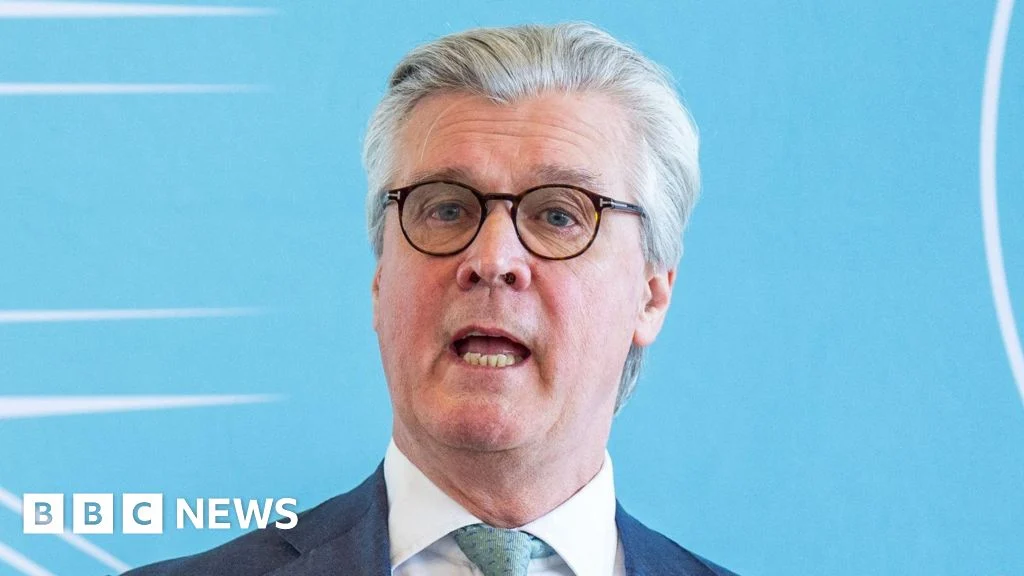
The controversy stems from an "off the cuff" remark made by Offord at a Burns Supper hosted by the Kings Cross Steelers, an inclusive rugby club for gay and bisexual men and their allies. While the exact nature of the joke has not been publicly detailed, its characterisation as "homophobic" has been widely accepted, including by Offord himself. He admitted that the joke "probably was" homophobic, describing it as "a mistake" and expressing regret for the offence it caused. However, he maintained there was "no malice" intended in his comments. Following the incident, Offord publicly apologised and made a donation of £2,000 to an LGBT rugby club, an act he now highlights as evidence of his sincerity and efforts to atone.
"It’s for other people to judge my character, my integrity, and that’s why I’m putting myself forward," Offord stated emphatically, positioning himself as a transparent figure. He stressed that he had not "hidden a single thing" about the incident, arguing that such honesty was a "key character for any politician." He further elaborated, "I would have been mistaken for thinking I’d done some serious misconduct or some criminal offence – instead I told a bad joke for which I’ve apologised." This framing seeks to minimise the severity of his actions by contrasting them with what he implies are far more egregious, but unnamed, political transgressions. He claimed to have received "a huge amount of public support from people" following the resurfacing of the remarks, suggesting public understanding and forgiveness for what he portrays as a past error.
Offord also pointed out that the comments were made "eight years ago," predating his entry into formal political office. "This happened eight years ago, it was not meant to cause any offence but it did cause offence, and I rectified that offence. All the people involved were satisfied with that," he affirmed. He drew a distinction between the standards applied to a "private individual" versus those expected of someone in "public office," acknowledging that the latter demands "a higher standard." He framed the incident as an "error of judgement," a learning experience from which he has grown. "Obviously when you are in public office it is a higher standard and we are all learning on the way," he remarked, implying that his journey into politics has refined his understanding of public conduct.
In a move that further underscored his defence by deflection, Offord made an unsubtle comparison to other hypothetical, more severe political scandals. "You might have thought based on what we have heard in the last week I was guilty of something serious, like for example sexual assaults against five young men, or maybe I had tried to defraud the taxpayer for £11,000 for my iPad bill," he said, without naming specific individuals or incidents. This rhetorical tactic aimed to diminish the perceived gravity of his own past misstep by juxtaposing it with deeply damaging allegations that have, at various times, plagued the political landscape, urging a "get real" perspective on his situation.
Reform UK leader Nigel Farage, known for his provocative style and often controversial pronouncements, publicly defended Offord, aligning with his Scottish counterpart’s narrative. Farage dismissed the criticism as part of an overly sensitive political culture. "If we’re going to drum people out of public life for telling a joke at a boozy rugby club dinner that’s amongst friends, we’ll finish up with the dullest group of individuals, looking a bit like, sounding a bit like Keir Starmer," Farage declared on Thursday. This statement not only supported Offord but also served as a broader critique of perceived "cancel culture" and a swipe at the Labour leader, Keir Starmer, implying he represents a bland, politically correct establishment. Farage’s defence underscores Reform UK’s brand as an anti-establishment party unafraid to challenge conventional political norms and embrace figures who might be deemed controversial by mainstream standards.
The controversy surrounding Offord’s past comments emerges amidst a challenging period for Reform UK, particularly concerning its candidate roster. The party has faced a string of withdrawals and suspensions, highlighting the difficulties a rapidly expanding, relatively new political force encounters in vetting and retaining candidates under intense media scrutiny. On Thursday, Linda Holt, Reform UK’s candidate for Fife North East, announced her withdrawal. Holt cited a "lack of support from the party" after she had publicly described former First Minister Humza Yousaf as a "grandstanding Islamist moron." This incendiary language, while reflecting a certain anti-establishment rhetoric, evidently crossed a line for the party, leading to her departure.
The domino effect continued on Friday when James Glen, who had been slated to stand in Edinburgh North Western, also withdrew his candidacy. Glen explicitly stated his full support for Holt’s decision and her stated "reasons behind it," suggesting a potential internal rift or at least a shared frustration among some candidates with the party’s approach or perceived lack of support. Further compounding the issue, Jordan Brown, the Aberdeen Central candidate, and Roland Jackson, the hopeful for Mid Fife and Glenrothes, have also recently withdrawn their names from the election race.
Responding to the spate of candidate withdrawals, Lord Offord acknowledged the challenges but framed them within the context of rapid growth and intense public scrutiny. "I would say we’ve done an extraordinary thing in a short space of time," he commented, referring to the party’s recruitment efforts. "To interview over 300 candidates to get 73 wanting to stand and it’s not easy to stand as an MSP and a lot of people find that out." He attributed some of the withdrawals to the "intense" media scrutiny, stating that such an environment is "not for everybody so some people have pulled out." Despite these setbacks, Offord expressed confidence in the party’s ability to field a complete list of candidates, assuring that Reform UK has "back-up candidates" and would be "providing a full slate" for the upcoming elections. This indicates a proactive approach to candidate management, crucial for a party aiming to establish a significant presence in the Scottish political landscape.
Malcolm Offord, a former businessman and Conservative peer, was elevated to the House of Lords in 2020. He served as a Parliamentary Under-Secretary of State at the Scotland Office before joining Reform UK and taking on the leadership role for the party in Scotland. His background, straddling both traditional conservative politics and the more populist Reform movement, positions him as a figure with established political experience but also one embracing a new, often confrontational, political style. Reform UK itself, a right-wing populist party founded by Nigel Farage, has sought to capitalise on discontent with mainstream politics, advocating for lower taxes, reduced immigration, and a strong pro-Brexit stance. The party aims to challenge the established order and capture votes from disaffected segments of the electorate, making figures like Offord, who can articulate a strong anti-establishment message while possessing a degree of political gravitas, valuable assets.
As the election campaign intensifies, the fitness of political leaders, their past actions, and the integrity of their candidate lists will remain central themes. Offord’s defence of his past remarks and his party’s struggle with candidate retention highlight the pressures on new and insurgent political movements as they seek to gain traction and legitimacy in the highly scrutinised arena of public life. His insistence on his suitability for First Minister, despite the shadow of a past homophobic joke, sets a clear benchmark for the debate surrounding his leadership and Reform UK’s broader electoral ambitions in Scotland.


 Roy Suryo
 Nakalama John
 atisusanti