
 George Anjay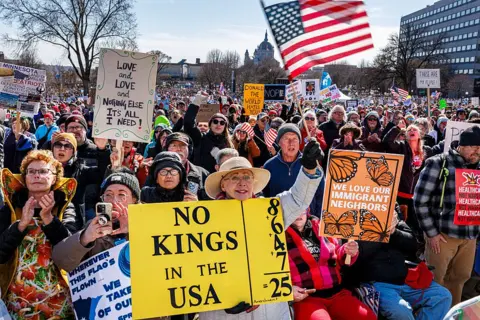
Thousands of protestors took to the streets in cities across the United States on Saturday for the third iteration of the "No Kings" rallies, a series of demonstrations that have previously mobilized millions against the policies and perceived overreach of the Trump administration. Organizers stated that the protests were a direct response to a range of grievances, including the ongoing military engagement in Iran, the federal government’s stringent immigration enforcement policies, and the escalating cost of living that disproportionately affects working-class Americans.
"Trump wants to rule over us as a tyrant," declared a statement released by the protest organizers. "But this is America, and power belongs to the people – not to wannabe kings or their billionaire cronies." This sentiment echoed through the throngs of demonstrators, many of whom held effigies and signs explicitly criticizing President Donald Trump and his administration.
A White House spokesperson, in a dismissive statement, characterized the protests as "Trump Derangement Therapy Sessions," asserting that "the only people who care are the reporters who are paid to cover them." This response, however, did little to quell the widespread dissent, as demonstrations unfolded in nearly every major American city, including New York, Washington D.C., and Los Angeles, with significant turnouts reported.
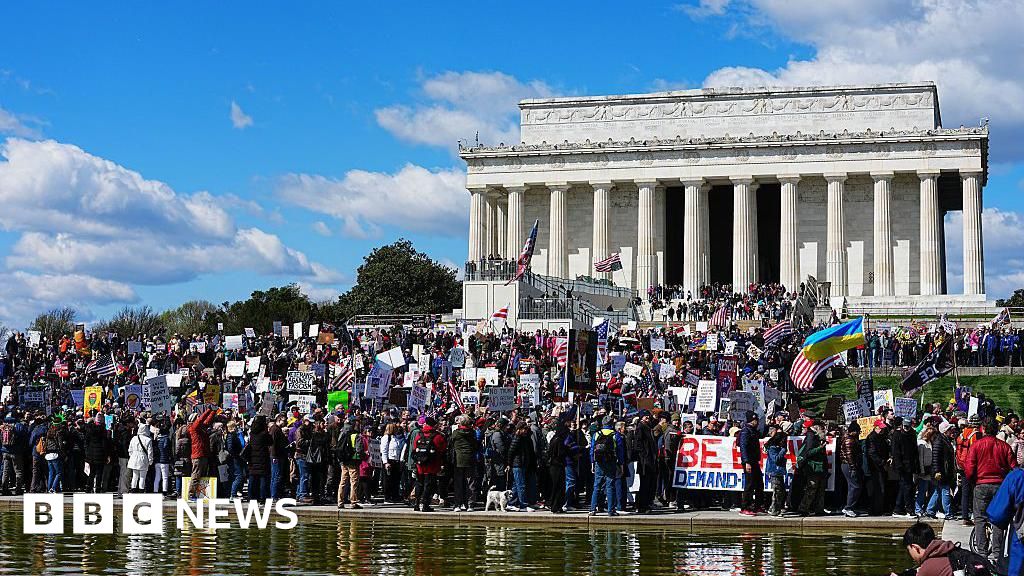
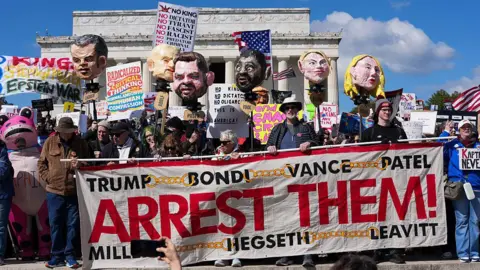
In the nation’s capital, Washington D.C., the afternoon was marked by large gatherings that converged on the National Mall. Protestors lined the iconic steps of the Lincoln Memorial, their voices rising in unison as they marched through the heart of the city. Similar to previous "No Kings" rallies, many participants carried and displayed effigies of President Trump, Vice President JD Vance, and other key administration officials, with chants calling for their ousting and arrest.
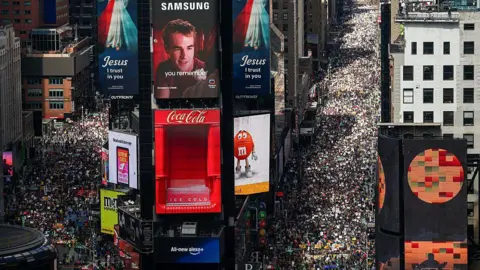
The demonstrations extended beyond Washington D.C., with New York City’s Times Square becoming a focal point for thousands of demonstrators. The normally bustling streets of Manhattan’s Midtown neighborhood were brought to a standstill as protestors marched, forcing police to shut down traffic to accommodate the massive crowds. This latest rally in New York followed a significant demonstration in October, where the New York Police Department reported over 100,000 people gathered across all five boroughs.
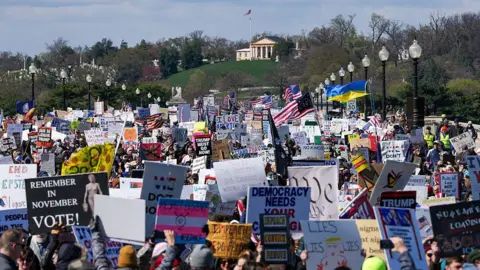
The scale of these protests underscores a deep and persistent dissatisfaction with the Trump presidency. The previous "No Kings" rally in October reportedly drew close to seven million participants nationwide, indicating a broad base of opposition. While several states had mobilized the National Guard in anticipation of the protests, organizers have consistently emphasized the peaceful nature of their gatherings.
Critics argue that President Trump’s actions since returning to the White House in January have demonstrated an alarming expansion of presidential power. This includes the extensive use of executive orders to dismantle federal agencies and the controversial deployment of National Guard troops to American cities, often bypassing the objections of state governors. These actions have fueled concerns about a disregard for established democratic norms and checks and balances.
A particularly contentious issue that has galvanized public anger is the administration’s immigration policies. Earlier this year, the fatal shootings of two U.S. citizens, Alex Pretti and Renee Good, by federal immigration agents in Minneapolis ignited widespread outrage and contributed to the momentum of the anti-Trump movement. The president’s calls for law enforcement officials to prosecute his perceived political opponents have further exacerbated these fears, leading many to accuse him of authoritarian tendencies.
President Trump has consistently defended his actions, framing them as necessary measures to "rebuild a country in crisis." He has publicly dismissed accusations of dictatorial behavior as "hysterical," stating in an interview with Fox News in October, "They’re referring to me as a king. I’m not a king." However, opponents contend that several of his administration’s initiatives are unconstitutional and pose a significant threat to the foundations of American democracy.
The "No Kings" movement has also gained traction among American expatriates living abroad. Demonstrations have been organized in international capitals such as Paris, London, and Lisbon, where participants have held signs labeling the president a "fascist" and a "war criminal," while also calling for his impeachment and removal from office. These international protests highlight the global perception of the Trump administration’s policies and leadership.
The geographical reach of the protests is extensive, spanning major metropolises and smaller communities alike. Rallies are scheduled to take place in cities like Boston, Massachusetts, Nashville, Tennessee, and Houston, Texas, with more large-scale demonstrations anticipated throughout the day. Even in towns with populations as small as Howell, Michigan, and Shelbyville, Kentucky, residents have taken to the streets, holding signs that protest against issues such as the war in Iran and the practices of Immigration and Customs Enforcement (ICE). The diversity of locations and the shared grievances underscore the widespread opposition to the administration’s agenda.
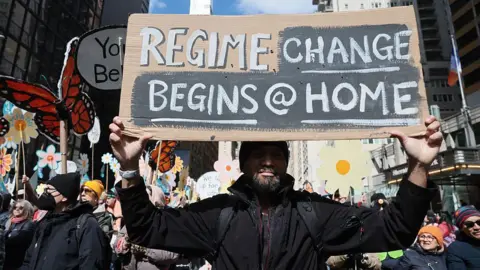
In Houston, Texas, protestors held signs that read "Hate Won’t Make America Great," a sentiment that resonated with many participants. The protests in Shelbyville, Kentucky, became particularly poignant as they occurred in a state that has been central to the national debate over immigration tactics, especially after the January incident involving federal immigration agents. The presence of such widespread dissent, from the halls of power in Washington D.C. to the smallest of towns and even in international cities, signifies a powerful and sustained movement challenging the direction of the United States under President Trump.


 Nakalama John
 atisusanti
 Ramos Leo
 Roy Suryo
 Nana Banana